
Building the Bank Branch of the Future
The landscape of modern banking continues to evolve in 2026. The sector is seeing increased technological adoption and balancing the needs of the customer remains paramount. A formula for success will require balancing digital transformation with the enduring importance of human interaction, local relevance, and “signature” customer experiences.
Banking in Transition
Modern banking is at a pivotal turning point. Even as digital options proliferate, physical branches remain vital to the U.S. banking ecosystem, serving as places for trust-building, community connection, and integral financial guidance. When assessing operations, banking leaders will be well-served by focusing on five primary areas:
- User experience
- Technological advances
- Experiential graphic design
- Branch renovation
- Future of local branches
User Experience in Banking Means Guiding the Customer
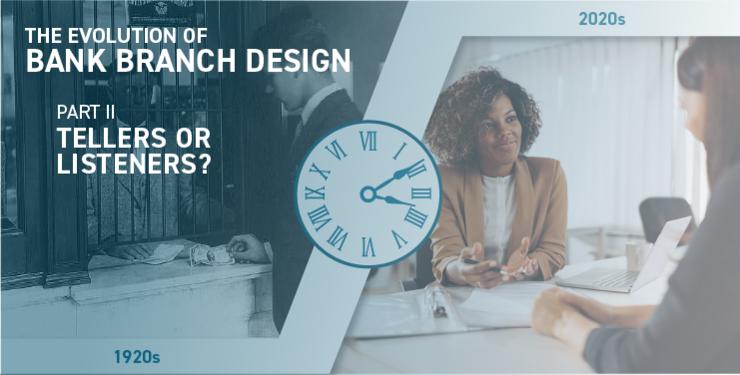
It’s hard to discuss the current state of retail banking without acknowledging the ongoing shift from transactional to consultative service. The question of whether branches are oriented toward “telling” or “listening” is top of mind, and proprietary anecdotal data suggests the best branches may be transitioning toward utilizing “listeners”. These trusted advisors help people navigate financial complexity, not just process transactions.
There are many functional challenges with the shift from telling to listening: traditional branch layouts, with tellers in rigid lines, don’t always invite consultative exchanges. Many branches struggle to break free from legacy expectations, as customers still seek familiar structures. A long arc is required to retrain staff, update roles, and evolve recruitment and retention strategies. Upskilling entails more than customer experience; it impacts employee engagement and job satisfaction. Clarity is crucial: branches must guide customers confidently, even as new formats blur the familiar barriers between counters and offices.
It has become clear that while progress is real, the journey from “telling” to “listening” is gradual. Successful branches embrace change management, incremental design updates, and ongoing staff investment. Customer experience shouldn’t be sacrificed in the rush to modernize; people will always seek connection, reassurance, and trust at their financial institution.
Integrating Technology and Human Connection
Technology is now the baseline in banking, but how it integrates is the key question. Essentially, should technology enable, support, or dominate branch strategy? And further, does digital transformation fit all markets equally well?
Tech-centric pilots have yielded mixed results, and, according to our findings, efficiency improvements can come at the cost of personal engagement. Technology is essential (routine self-service options are expected by many) but most customers look for in-person, empathetic advice when decisions matter most. These preferences can fall along generational and urban/rural divides, with consensus that “one size fits all” simply doesn’t apply in branch innovation. Reliability, seamless integration, and robust backup all continue to be must-haves. The general consensus points to technology as the backbone, but not the “face” of the branch, implying that technology should improve interactions and build trust, serving as a platform for human empathy rather than a replacement for it.
The technology conversation circles back to the simple truth: banks are, and must remain, in the business of human connection. Tech is an enabler, but people are the differentiator. Fundamental transformation happens by blending digital tools with empathetic guidance, not overwhelming customers with screens or queues.
Encouraging Engagement Through Experiential Graphic Design
Experiential graphic design (EGD) is a consistent cornerstone of customer experience in retail branches. Its evolution as a field has gone from basic branding and regulatory signage to dynamic and engaging components, showcasing how localized environments can enhance identity and engagement.
Examples of well-executed EGD reinforcing community ties include:
- Bank branches featuring meaningful local artwork
- Offices integrating stories of regional heritage
- Digital graphics offering personalized financial education.
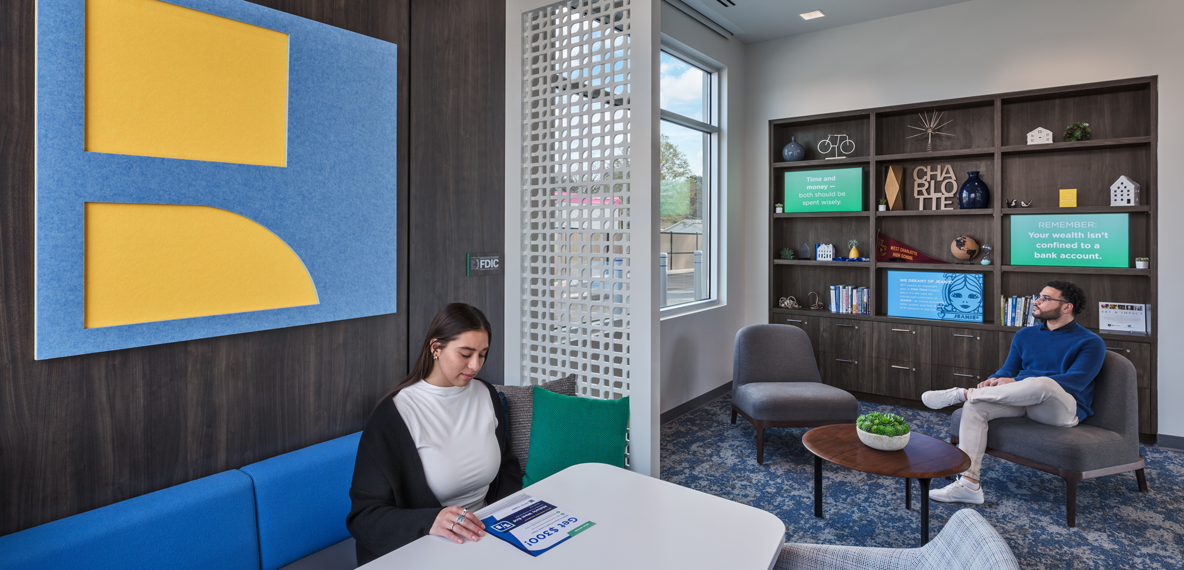
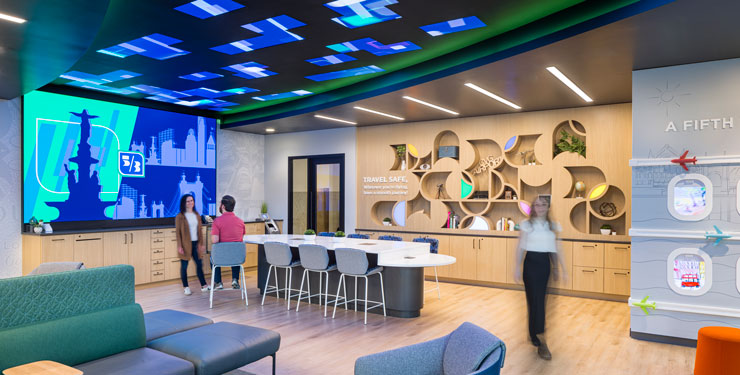
EGD can be deployed to further underscore the importance of authenticity: genuine, market-specific design wins hearts and trust. At the same time, it behooves banking leaders to avoid over-reliance on interactive screens or touchpoints, which may not appeal universally, and can even become a pain point if poorly executed. Static and digital graphics seem to serve a dual role in today’s branch bank, anchoring brand, providing wayfinding, and conveying the “personality” of each branch. The goal is to blend inspiration, information, and community recognition at every touchpoint.
EGD works best when it is subtle but powerful, making banking environments less sterile, enhancing navigation, and signaling that a bank understands and belongs to its community. Every environment communicates with customers. To do so effectively, bank branches must use graphics, art, and digital content to tell their unique stories, supporting both the brand and every customer’s journey.
Race to Refresh: Branch Renovation with a Purpose
The “Race to Refresh” captures the surge of investments in branch renovations, balancing market analytics, competitive differentiation, and long-term brand standards in environments where tens of thousands of locations haven’t been modernized in a decade or more.
A frank assessment of renovation ROI covers the need for clear, data-driven strategies that direct resources where they have the most impact. Not every branch warrants the same investment, and “refreshes” are more than technology overlays. They must reflect local market needs, associate productivity, and the evolving expectations of new and established clients. Hospitality again emerged as a guiding principle, with the best results coming from upgrades that blend comfort, style, and contemporary technology — without ever feeling forced or superficial. Ongoing maintenance, continuous improvement, and responsiveness to customer and staff feedback were all emphasized.
The refreshed branch is both symbolic and practical: a maintained, up-to-date environment signals confidence, trust, and lasting presence. Strategic, targeted refreshes that integrate digital tools and authentic design upgrades will set the pace in the coming years, but community and comfort must remain at the heart of every decision.
The Branch of the Future
Looking ahead, it’s important to imagine the “Branch of 2030”: a multi-functional, inspiring space that is welcoming, deeply localized, technologically advanced, and reflective of hospitality and human experience.
Real innovation is found at the intersection of flexibility, personalization, and community engagement. The future branch is less a static service window and more a dynamic community hub: part retail experience, part learning center, part financial sanctuary. Successful iterations will feature modular spaces, technology that recedes into the background, and truly hospitality-driven service.
Examples in action include:
- Appointment-based consultations
- Community meetups
- Wellness programming
- Integration of local partnerships to keep branches relevant and vibrant.
Future success requires banks to move beyond operational convenience and design for belonging and impact. The “branch of the future” will thrive by aligning with human behaviors: it will adapt, inspire, and foster genuine connections. Technology, design, and staff must work together to provide a sense of safety, belonging, and genuine care — distinct from anything that can be replicated digitally or remotely.
Inspire People, Impact Results, By Design
In 2026 and beyond, banking must combine new thinking, human-centered service, and a bold commitment to local identity and trust. The physical branch remains a cornerstone of the industry not because it can outpace digital offerings, but because it can deliver something technology cannot: connection, reassurance, and a uniquely crafted experience for every customer.
Takeaways to Consider
- Prioritize ongoing staff training and upskilling to advance the shift from transactional to consultative, “listener” roles across branches.
- Adopt a targeted, data-driven approach to branch refreshes, focusing investments where they will yield the greatest customer and community impact.
- Integrate technology as a supportive, seamless enhancement to human service (not as a replacement), tailored to the needs of each branch’s customer base.
- Enrich branch environments with authentic, locally relevant experiential graphic design, building trust and reinforcing community ties.
- Design physical spaces with flexibility in mind, enabling branches to adapt to evolving customer, community, and operational needs.
Build Your Own Bank Branch of the Future
Transformation in banking is about defining what works for each community and customer and designing boldly for those needs. Working with a trusted partner like BHDP makes that possible.
BHDP, an award-winning, international, multi-disciplinary firm, is recognized for innovative and inspiring solutions across a spectrum of services, including strategic consulting and applied research. Our team of experts helps bridge the gap between theory and practice, providing the necessary groundwork for innovations that directly influence the design of places where people live, work, and grow.
Ready to build your own branch of the future? Fill out the contact form below to see how BHDP can help.
Author
Content Type
Date
February 13, 2026
Market
Practice
Topic
Branch Bank Design

Declan McCormack, Client Leader
Declan McCormack has more than 25 years of retail expertise including branding, strategy, design, and implementation. Starting his career in London, he has managed projects internationally and worked with global brands. He is passionate about all things retail and serves as primary client contact and team leader for BHDP’s Retail and Retail Banking groups.