
From Plant to Platform: What the First Six Weeks of 2026 Are Telling Us About Industrial Real Estate
The first six weeks of 2026 have provided a concentrated snapshot of where the industrial economy is heading.
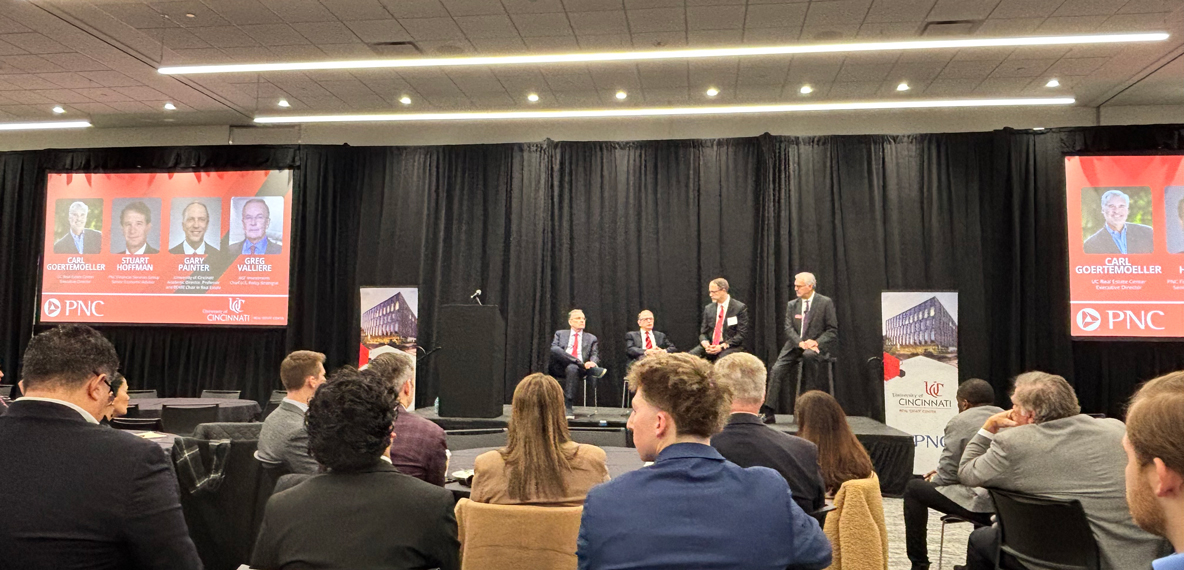
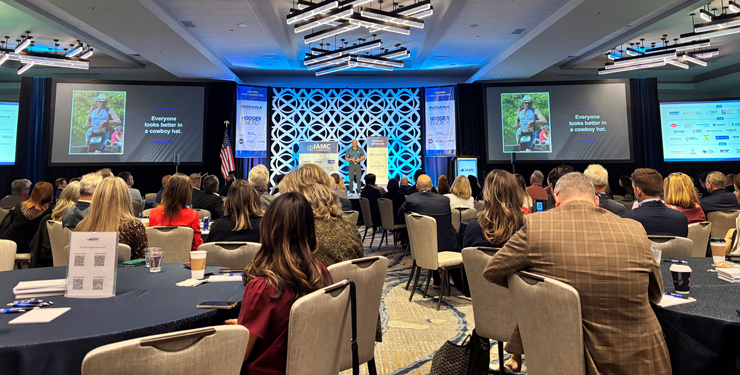
Through conversations at REDI Cincinnati, the UC Real Estate Center Economic Forum featuring Stuart Hoffman, Senior Economic Advisor at PNC Financial, and Greg Valliere, Chief U.S. Policy Strategist AGF Investments, and the Business Courier Economic Outlook with Rodrigo Serrano, GWIM Chief Investment Officer at Bank of America, a consistent theme has emerged: the industrial economy is not slowing. It is restructuring.
And the facilities supporting it must evolve accordingly.
Measured Growth, Strong Fundamentals
Insights from experts at all three forums projected GDP growth for 2026 to range from 2% to 2.5%. Inflation is expected to decline gradually, though not reach 2%. The Federal Reserve is signaling modest rate cuts in the second half of 2026, with additional easing in 2027.
Rodrigo Serrano described 2025 as “bumpy,” yet emphasized that markets remain resilient because the long-term outlook is positive. He framed the economy as operating on four wheels: capital, infrastructure investment, the consumer, and the non-technology economy.
All four remain active.
Stuart Hoffman reinforced that growth is increasingly driven by productivity rather than job creation. That distinction matters. When productivity drives expansion, facilities must work harder—more automation, denser systems, greater power demand, and higher performance expectations.
Sector Signals: Regional Strength and National Trends
Regional economic leaders continue to highlight steady engagement across key sectors. In Greater Cincinnati, momentum remains particularly strong in these industries:
- Food and Beverage
- Life Sciences
- Aerospace
- Data Centers
These sectors align with the region’s infrastructure, workforce depth, and supply chain access. They also demand facilities that are highly technical, utility-intensive, and designed for long-term adaptability.
Nationally, AI and data-center-related investment has been one of the primary drivers of U.S. economic growth in 2025, accounting for an outsized share of private domestic demand expansion in the first half of the year.
But data centers do not operate in isolation. Power infrastructure must scale alongside them. Transmission capacity, substation investment, and grid resiliency are quickly becoming primary site drivers. In many markets, access to reliable power is now more critical than highway frontage.
Regions that proactively coordinate utilities, infrastructure planning, and site readiness will have a competitive advantage.
Reshoring and Supply-Side Investment
Beyond technology infrastructure, non-technology investment is accelerating—driven not only by reshoring and supply chain diversification, but increasingly by trade policy and national security priorities.
Reshoring, deregulation efforts, and supply chain diversification are fueling capital expenditure growth. Federal investment programs are placing more money into the system, while companies are investing heavily in productivity-enhancing capital improvements.
Manufacturing activity increased in January for the first time since early 2023—a meaningful inflection point.
Trade policy and national security concerns are increasingly shaping where products are made. Tariffs are pushing companies to reassess supply chain exposure and total landed cost, while pharmaceuticals, semiconductors, and defense manufacturers are expanding U.S. capacity to reduce geopolitical risk and protect critical supply. For many organizations, domestic manufacturing is shifting from an operational option to a strategic priority.
Companies are not simply expanding their footprint. They are investing in resilience.
This translates to:
- Larger, more adaptable buildings
- Higher technical infrastructure density
- Greater automation integration
- Increased utility intensity
- Built-in expansion capability
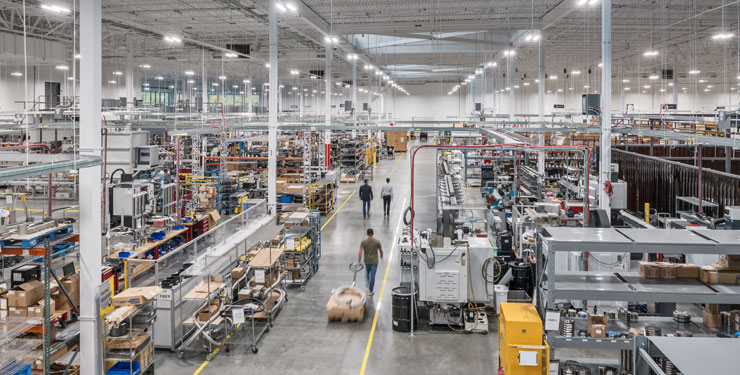
The industrial facility is no longer a fixed container. It is a platform designed for continuous upgrade.
Capital, Consumers, and Confidence
Capital is becoming more accessible as rate cuts approach. Infrastructure spending—particularly in AI and power—remains aggressive. Consumers remain stable, with wages growing above inflation and debt levels at historically low levels.
Even amid political and geopolitical uncertainty discussed by Greg Valliere, the overall tone across forums was one of cautious optimism.
Growth may be moderate.
But it is broad-based.
Implications for Industrial Real Estate
Three implications for the future of industrial real estate are clear.
First, power is the new square footage. Utility access, redundancy, and long-term grid coordination are now central to site feasibility.
Second, flexibility is non-negotiable. As productivity drives growth, facilities must accommodate automation upgrades, evolving production lines, and workforce shifts.
Third, capital discipline is real. Owners expect projects to be shovel-ready, phased intelligently, and aligned with long-term strategy.
Inspire People, Impact Results, By Design.
These early 2026 conversations reinforce this simple fact: industrial real estate is no longer just about clear height and dock doors.
It is about designing adaptive platforms for technology integration, workforce evolution, capital efficiency, and long-term resilience.
At BHDP, our commitment to designing for people remains foundational. But in this new industrial cycle, that commitment must be translated into measurable outcomes. The transformation inside industrial facilities is accelerating faster than ever, and that is where design must lead.
Author

Daniel Lessing, Industrial Market Leader
Daniel Lessing brings over 20 years of experience in plant and environmental engineering, project planning, and construction management to BHDP. As Market Leader for the Industrial team, he leverages his expertise in team management and strategic thinking to lead capital strategy and industrial development initiatives for clients worldwide. Well-versed in every stage of the capital project lifecycle, he is also highly skilled in design and construction. Daniel focuses on driving positive client outcomes through thoughtful planning, integrated design, and disciplined execution.