
Strategic Capital Planning for Enrollment Yield: Aligning Student Priorities with Institutional ROI
Executive Summary
Higher education leaders are facing a critical point in time. As pressures increase with declining enrollment and rising operational costs, every decision must serve both student success and protect the institution’s financial sustainability. Families are evaluating colleges and universities with sharper scrutiny, as nearly eight-in-ten high school seniors (79%) in the Class of 2025 identify cost and affordability as “very” or “extremely important” in their decision-making process. Academic reputation and campus life follow closely as priorities.
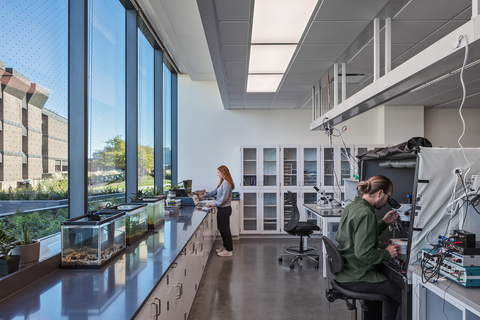
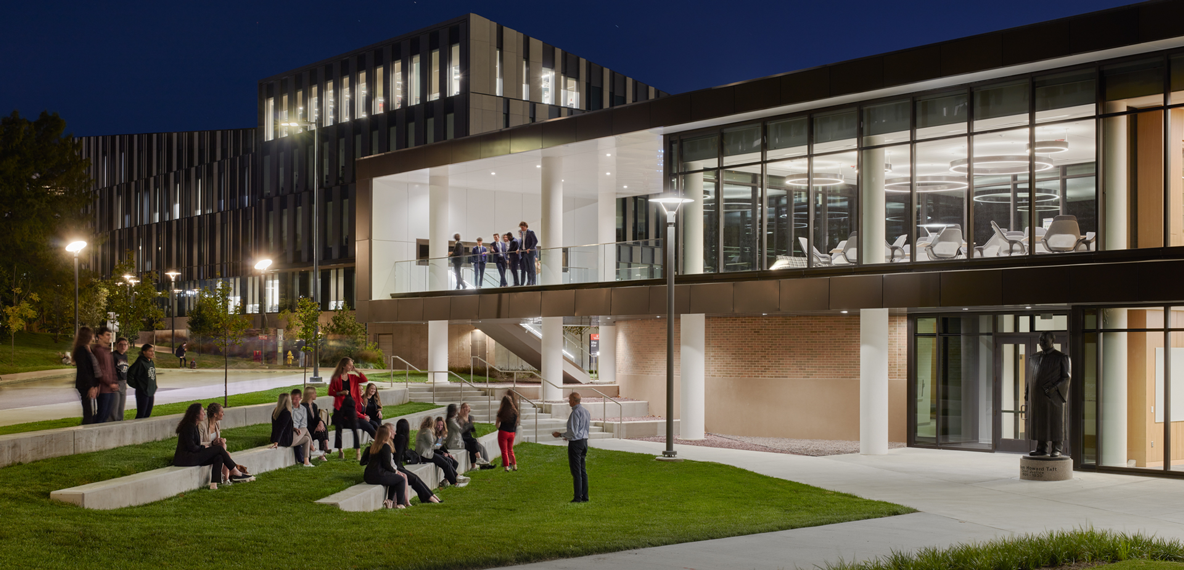
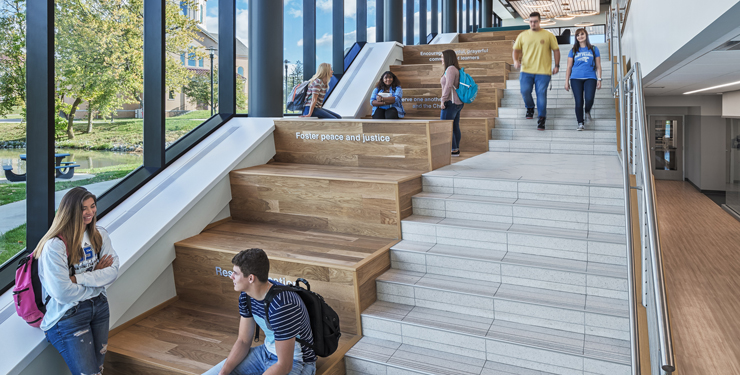
Against this backdrop, capital investments can no longer be viewed as simple infrastructure expenditures, but rather as strategic levers to drive enrollment and sustain retention, thereby shaping both institutional competitiveness and the student experience. Evidence from a dataset of over 200 higher education capital projects, compiled from multiple design and construction companies across the country, shows that research facilities and student life spaces consistently deliver positive enrollment returns, while academic spaces contribute more modest gains. Residence halls and dining facilities primarily safeguard retention and student satisfaction rather than drive new enrollment. Athletics, meanwhile, demonstrate wide variability.
BHDP—a national, multidisciplinary design firm specializing in higher education environments—recently conducted research in this space, combining quantitative analysis with qualitative research. This provided higher education leaders with a comprehensive view of facility return on investment (ROI) by integrating enrollment trajectory data, insights from 385 high school seniors surveyed, and insights from higher education construction projects. The goal was to offer actionable strategies for aligning capital planning with student priorities and institutional mission. The insights gained from the research and the roundtable will serve as the content for this white paper.
Click here to download a PDF copy of the full white paper.
Ready to take the next step with your higher education facility? Fill out the contact form below to see how we can help.
Author
Content Type
White Paper
Date
February 23, 2026
Market
Alejandro J. Medina, Client Leader
With over 16 years of experience, Alejandro J. "AJ" Medina works closely with his clients to understand their vision and values, identify strategic goals, and translate this understanding into the design of physical space that promotes the vision, values, and specific project goals. He builds strong relationships with his clients and successfully coordinates the efforts of architects, engineers, and key client stakeholders. AJ’s experience includes visioning, programming, and design for new construction and renovation projects, including student life, collaborative learning environments, health sciences education, athletics, residence life, and research and teaching laboratories.

Dr. Justin Ferguson, Director of Applied Research
With three decades of researching, teaching, and practicing community-engaged and organizational design and planning, Dr. Justin Ferguson brings both immense knowledge and enthusiasm to creating strategic and transformative environments. As Director of Applied Research, Justin seeks to uncover the challenges clients face with their organizational spaces, works with design teams to develop predictive design decision-making, and ultimately measures the efficacy of BHDP’s work. His extensive portfolio spans various markets across the U.S., including collaborations with major clients like the GSA and Fifth Third Bank, making him a unique asset to BHDP.