Non-Traditional Students on the Rise: How Campus Design Must Evolve
Over the last two decades, the average American college student has changed. Gone are the days of college campuses full of 18-to-22-year-olds who enter college right out of high school and largely rely on parental financial support.
The college student of today is just as likely to be “non-traditional”:
- Employed full-time
- Over 24
- Returning student
- Military-connected learner
- Parent or caregiver
According to the National Center for Education Statistics (NCES), non-traditional students make up nearly 40% of the undergraduate population in the United States. Data from NCES shows that over 70% of today’s students have at least one non-traditional attribute. These students have unique educational needs, from flexible/hybrid schedules to childcare access and more.
How can higher education serve these students? In order to do so effectively through campus design, institutions need to first define the parameters of a non-traditional student and identify what they need to succeed.

Know Your Audience: Defining The Target Demographic
Higher education institutions are reevaluating what their spaces look like and who they should serve. Colleges today have broader definitions of student success and campus engagement. To meet new demands and goals, higher education institutions need to adapt quickly to non-traditional students.
Using data from NCES, the results of a national survey conducted by BHDP, and other sources, BHDP defines non-traditional students as sharing these four characteristics:
- Financially independent
- Part-time or full-time employment
- Delayed college start
- 24 years of age or older
Their success directly impacts institutional outcomes, workforce pipelines, and regional economies. These non-traditional learners tend to pursue applied and professional fields – engineering, business, and health sciences – that align with U.S. fields facing critical labor shortages. Failure to support them can lead to lower graduation rates, higher attrition, and, potentially, diminished workforce readiness.
To support these students, institutions must reimagine digital and physical infrastructures to create environments that meet their needs. BHDP explored the shifting tides of student demographics to uncover their impact on physical environments, providing a framework for understanding what campus spaces need to look like moving forward.
How We Did It: Survey and Interviews
In addition to researching published sources and anecdotes about non-traditional students, BHDP conducted an anonymous online survey of college students nationwide in 2025. Of the 400 respondents, 91.4% answered ‘yes’ regarding their self-identification as a non-traditional student. We found that self-identifying as non-traditional markedly increased the number of non-traditional characteristics reported. This suggests that non-traditional identity exists in a continuum, rather than as a binary condition.
Survey questions asked about their experiences as non-traditional students, their feelings about their campus environment, and their level and type of engagement with their institution. The sample size represents 46 of 50 states and includes two- and four-year public and private institutions.
We also convened a panel discussion with private higher education institutional officers at a Southeast regional conference, as well as a podcast episode featuring the director of design & construction at Wake Technical Community College in Raleigh.
Survey Says: Insight Into Serving Non-Traditional Students
The needs of these students highlight both structural challenges (scheduling, affordability, advising) and spatial/physical requirements (study spaces, family-friendly environments, reliable technology).
Our research focuses on the impact colleges and universities (and particularly their physical environments) have on their non-traditional student population, centered on these five topics:
- Degree pursuit
- Learning modes
- Campus resources
- Challenges & support
- Non-traditional student experience
1. What Degrees Are Non-Traditional Students Most Commonly Pursuing?
61.6% of non-traditional students pursue bachelor’s degrees, followed by 32.4% pursuing associate’s degrees. Certificate programs are disproportionately composed of these students. Engineering and technology appear to be the most prevalent fields of study among these students – over 27.4% of respondents indicated majors in these areas.
2. What Modes of Learning Are Most Commonplace for Non-Traditional Students?
Considering how non-traditional students access their courses is another significant factor in accommodating their needs. 63.1% identify online learning as their primary mode of learning, and 59.8% as their preferred mode. In-class learning remains preferred by a minority (21.2%), particularly for younger students and those in hands-on fields.
Hybrid formats are common but are preferred less often. Our survey data suggests this correlates with uneven implementation. Many hybrid classes fail to deliver the flexibility or clarity non-traditional students require.
3. Which Campus Resources Impact Non-Traditional Students the Most?
Respondents were asked to identify the physical campus amenities and resources that most supported their academic success. The three most common responses included:
- Library or library resources (58.2%)
- Tutoring and/or academic support centers (27.8%)
- Study spaces or quiet areas (24.1%)
85% of respondents rated options for online classes as very or extremely important. Off-hours courses were also a major priority, with 60.2% assigning them high importance. 54.6% of respondents rated campus library resources as very or extremely important.
Scheduling flexibility helps shape the non-traditional student experience. For many, time flexibility may be a more significant constraint than physical location. The ability to access courses at times compatible with outside responsibilities shapes perceptions of institutional support more strongly than the location of learning.
4. What Challenges and Assistance Are Non-Traditional Students Experiencing?
To understand this and other factors, let’s examine the five most prevalent survey responses from non-traditional students.
- Time constraints and work-school balance
- Financial stress and affordability
- Family, childcare, and caregiving responsibilities
- Sense of belonging, an age gap, and social isolation
- Lack of confidence, imposter syndrome, and difficulty in returning to learning
A common thread in many of these challenges is a social component. Just over half of respondents (51.6%) reported feeling “slightly” or “not at all” engaged with their peers. Course format was the strongest driver of engagement, followed by time availability, structured opportunities, and shared life experiences. Online students reported the lowest peer engagement, though scheduling flexibility often kept them enrolled.
When asked to describe a positive initiative or action their institution implemented to support non-traditional students, most respondents mentioned more flexible, online, and asynchronous course delivery. Engagement levels were higher among students who reported strong institutional accommodation and more adequate campus resources. This suggests low engagement is not an inherent feature of non-traditional enrollment, but rather a consequence of misalignment between institutional structures and students’ lived constraints.
5. What Do Non-Traditional Students Want Most?
But are flexible course offerings and delivery methods really the most significant drivers of educational decisions for non-traditional students? According to the survey, the answer is a clear ‘yes’. When asked to list what would significantly improve their student experience, the most common responses were:
- Greater flexibility in courses and scheduling
- Financial support and affordability
- Childcare and family support
Non-traditional students are not choosing the school with the best football team, the best e-sports gaming lab, or the best Greek life and culture. They want an educational experience that fits neatly within the juggling act of the life they’ve already established.
A similar theme emerges regarding the physical campus, too. The top five responses to “What amenities or resources could be most improved?” were:
- Parking and transportation (mentioned in more than 120 coded responses)
- Food and dining options
- Study spaces and campus comfort
- Tutoring, advising, and academic support
- Childcare and family support
None of these are radical suggestions. They simply undergird the idea that non-traditional students prioritize learning spaces and places that provide the practical support necessary for success.
How to Serve Non-Traditional Students: Learning from Wake Tech Community College
Wake Tech Community College is North Carolina’s largest community college, serving over 70,000 adults annually. Kathy Monteiro, director of design & construction for the school in Raleigh, joined BHDP in 2025 for a conversation about incorporating non-traditional students into the college campus and structuring the experience so these students feel both present and represented.
This vocational and technical college has grown immensely in the community since the 1950s, reinforcing the survey’s evidence that non-traditional students primarily desire practical, academic, and professional support – not a romanticized college experience.
The college’s high level of flexibility is specifically appealing to non-traditional students. Monteiro pointed out several areas of the school’s flexibility – career paths, class offerings, and student resources. She also emphasized the crucial support systems her institution has in place. These include personalized support for students who:
- Are non-English-speaking
- Have difficulty working with technology
- Benefit from and thrive through hands-on learning
- Utilize financial support (particularly for students who lose their job or income during their studies)
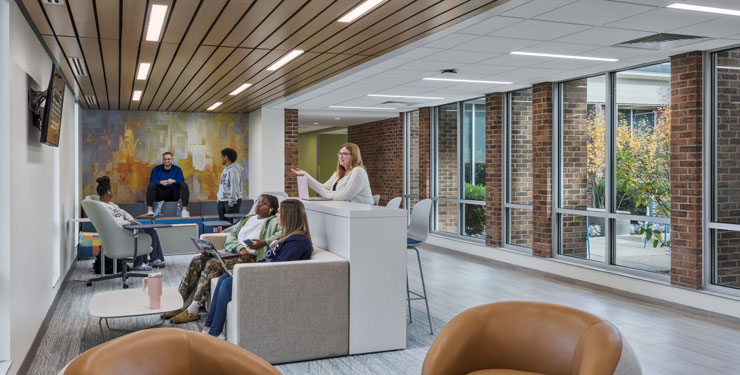
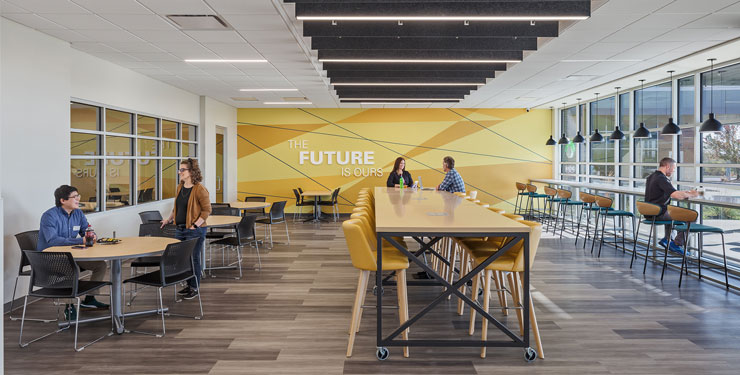
To appeal to these students, a welcoming physical space is critical. In Monteiro’s experience, she’s found community colleges are often poorly furnished and lack inviting spaces. This naturally makes prospective students ask, “Why bother coming here?” However, she described Wake Tech as inviting, engaging, and welcoming. She emphasized the importance of technology rooms, study spaces, access to printers, commuter spaces, and a general atmosphere that reflects where students want to spend their time.
Learning from Wake Tech’s strategies to engage students shows an obvious correlation between meeting their needs and building strong partnerships with designers, driven by their commitment to providing all students with a campus where they can build their careers.
Implications for Design and Leadership: The Non-Traditional Student Experience
The obvious, largest constraint on non-traditional students is time. Higher education institutions must consider how their campuses can match the rhythms of non-traditional student life. Even without a 24/7/365 campus, institutions should still carefully consider aligning factors such as safety, support (academic and financial), coursework and study, childcare, and transit more closely with the less standardized calendars of this demographic.
Across the survey, perceptions of institutional accommodation, a welcoming campus, and resource adequacy were consistently associated with lower reported difficulty in succeeding academically. Put simply, physical and operational design decisions materially affect non-traditional student outcomes.
Physical Design
The built environment should adapt to the needs of non-traditional students whenever and wherever possible. These are some best practices to achieve that goal.
Flexible Study Spaces
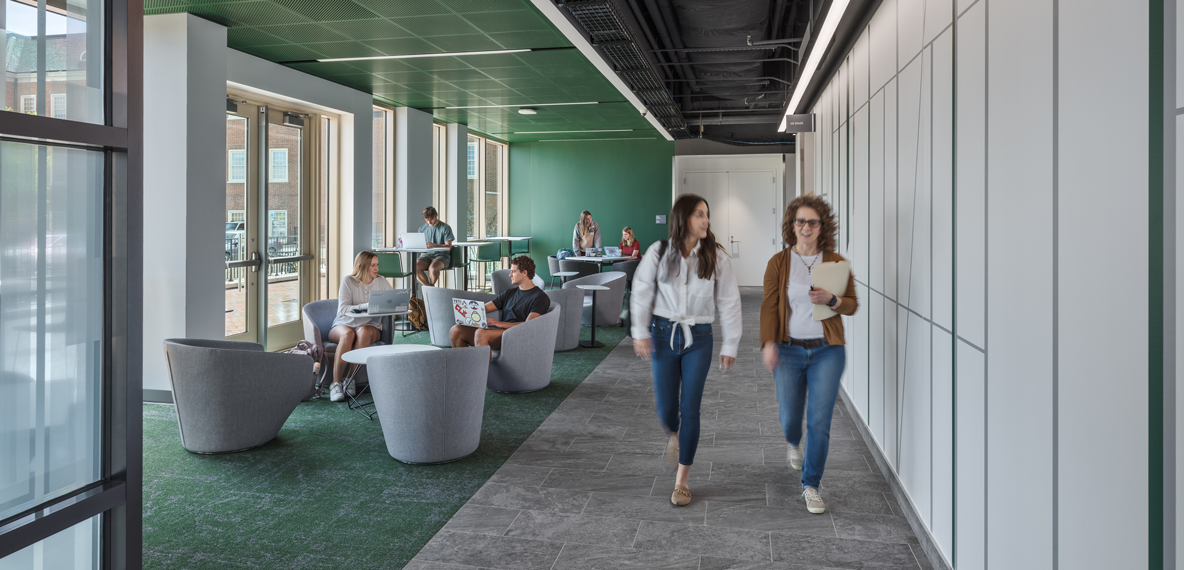
Co-locate writing help, tutoring, and other resources in a “Knowledge Commons”. Include multi-modal “success hubs” in libraries, academic support centers, and/or academic buildings. These hubs should offer quiet zones, group study rooms, in-person support, and extended hours with secure, verified student access for off-hours.
Family-Friendly Amenities
Provide family lounges and stroller-friendly circulation in academic and student life buildings. Offer lactation rooms where non-traditional students spend the bulk of their time on campus. Offer on-campus childcare, especially where it aligns with evening/weekend class schedules (which can support faculty and administration, too).
Hybrid-Ready Classrooms
Equip learning spaces and lecture halls with high-quality audio-visual technology and recording capability to create a flexible learning environment, to support multi-modal course delivery and fluid communication between teacher and students.
Transportation Infrastructure
Address parking shortages with dynamic space allocation. Provide on- and off-campus shuttle service with weekend and evening hours. Offer commuter-friendly common spaces throughout campus. Consider integration with existing municipal transit systems.
Wellness Infrastructure
Educational pursuits, especially for non-traditional students, can be stressful. Integrate wellness rooms and tele-counseling booths for emotional and mental health support within academic facilities.
Leadership Recommendations
Non-traditional students are not peripheral, but rather, central to the future of higher education. To remain competitive in recruitment and retention, institutions can adopt these measures to stay ahead of the curve.
- Redesign Systems: Embed flexibility and affordability at the heart of program delivery.
- Reframe Identity: Normalize non-traditional status as an equal experience of pursuing a course of study in higher education.
- Reconfigure Space: Prioritize non-traditional student success hubs.
- Elevate Support Services: Expand advising, mental health support, and childcare offerings in alignment with a diverse range of schedules.
- Measure and Adapt: Track Key Performance Indicators (KPIs) such as student engagement, persistence, utilization of services, and student satisfaction to drive continuous improvement.
Non-Traditional Student Design is the Way of the Future
Higher education can no longer be designed solely for the 18-year-old residential student. The future lies in meeting learners where they are – financially independent, balancing work and family, and seeking pragmatic pathways to advancement. By integrating structural, spatial, and cultural support, higher education can better accommodate the non-traditional student journey and create an equal educational experience for all learners.
At BHDP, we partner with higher education leaders to align campus planning and capital investment with what matters most: student success, recruitment and retention, and long-term institutional strength. We bring a collaborative, research-informed approach that connects mission, experience, and ROI, helping institutions make confident choices about what to build, renovate, and prioritize.
Ready to meet the needs of your target student demographics? Fill out the contact form below to see how BHDP can help.
Content Type
Date
March 26, 2026
Market
Topic
Campus Planning