

Healthcare, Meet Retail: Three Concepts Reshaping Healthcare Design
Healthcare finds itself in a period of intensified competition shaped by patient mobility, consumer expectations, and expanding access to alternative care providers. Clinical excellence remains essential, but it is no longer sufficient as the sole differentiator, as patients gain agency over their health and the care they receive. Increasingly, patients evaluate care through a broader lens that includes convenience, clarity of access, and confidence in the experience of care itself.
In such an environment, healthcare organizations may benefit from adopting strategies long familiar to retail environments: brand consistency, distributed service networks, and operational systems designed to reduce friction in the customer journey. These concepts have significant implications for healthcare architecture and facility strategy.
Patients Have More Choice Than Ever
Identifying this consumer-like behavior in the healthcare realm is far from novel. Market forces have converged over the past decade, providing patients with more mobility than ever to choose their source of care. Key factors in consideration include insurance, technology, portability, and convenience.
Insurance
Insurance policies such as High-Deductible Health Plans (HDHP), the creation and control of HSA/FSA accounts, and broader Consumer-Directed Health Plans (CDHP) have made those seeking care more price sensitive and likely to “shop” for services. Those in self-pay areas where coverage is limited or inconsistent are particularly likely to consider a variety of care options.
Technology
Technology has changed how prospective patients interact with a health system. Convenience and user experience of online registration, scheduling, and access to electronic medical records are of the first interactions with a health system. Wearables and home monitoring devices provide new touchpoints to health data between appointments. How health systems approach, interpret, and incorporate this data into care conversations and associated diagnoses are important factors for today’s health-conscious patient.
Portability
Digitization and policies such as Fast Healthcare Interoperability Resources (FHIR) have allowed medical records to become much more portable, bringing health history to a central location. The ability to forward medical records at the click of button, avoiding the dreaded fax machine, reduces the logistical/clerical barriers to switching providers.
Location
Decentralized care associated with the “close-to-home” concept extends access to care deep into the community. More locations create more convenience and choice for where patients can receive care. This is especially critical to individuals without immediate access to public or private transportation or access to reliable childcare.
If mobility is here to stay, how do we design environments and systems that retain trust, continuity, and loyalty?
What Healthcare Design Can Learn from Retail
Healthcare systems can’t control all the variables associated with these and other market forces contributing to increased patient mobility. But health systems do control two powerful levers: the types of care a location offers and the building environment that delivers it. Of those, the latter is often the most durable and visible expression of strategy to combat competition, and an area where retail design has decades of proven practice.
1) Environmental Brand Consistency
Retail brand isn’t just logos; it’s the total environment. A successful branded environment encompasses consistent physical/visual palettes, spatial quality, and familiarity/comfort to provide a unique care experience.
Physical/visual branding is not a foreign topic to healthcare design and construction teams. Many organizations utilize environmental design guidelines, robust logo standards, and signature “design anchors” to provide a consistent look and feel across their network. In our current era of building retrofits, finding that balance between capital investment and physical identity can make lingering signs of a building’s former use a challenge to overcome. Anyone remember Used to Be a Pizza Hut?
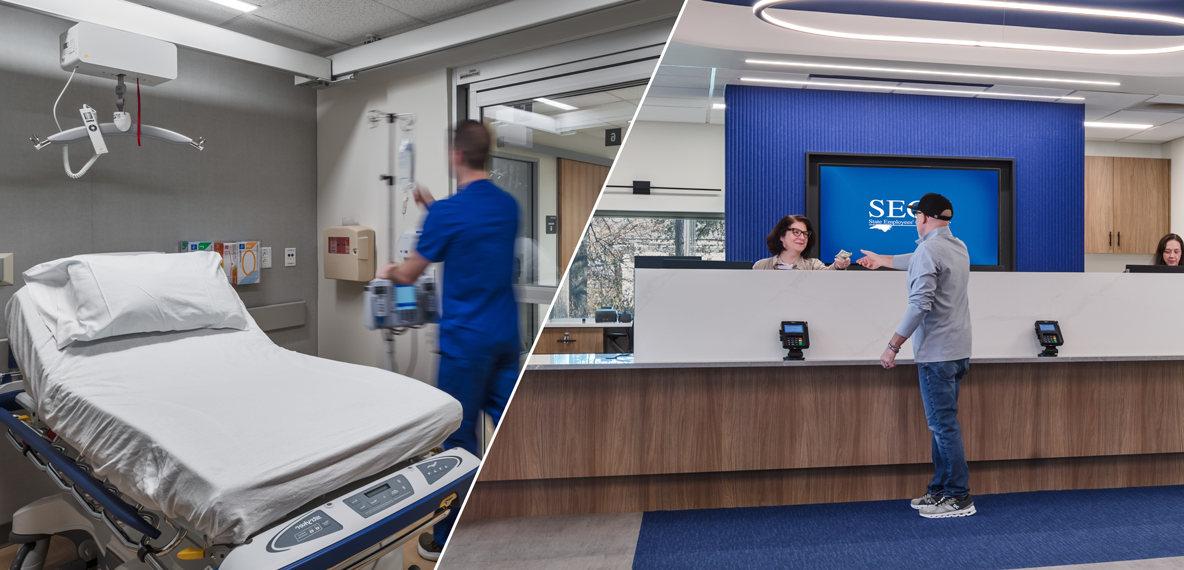
Familiarity and consistency may be even more important for a brand. When it comes to arrival, registration, and navigation, a patient should not have to re-learn the process every time they visit a new or different care site. The built environment should be designed to provide consistent arrival sequences, predictable check-in flows, intuitive wayfinding, and repeatable room layouts. These experiential qualities reduce anxiety and increase confidence – especially for patients already under stress.
2) Speed and Scale
The rapid decentralization from the traditional main campus has made “speed to market” a competitive differentiator. Health systems that can expand care services quickly are better positioned to capture market share, improve access to care, and build upon patient loyalty. Operationally, speed also protects overall system care performance. Getting the right care into the right setting sooner improves patient throughput and efficiency of care delivery. This strategy integrates patients into a system, driving more specialty and critical care at main campus and with other areas of the network.
For healthcare projects, designing for speed means leveraging prototypes, establishing repeatable room/clinic modules (utilizing prefabricated components is a plus), and providing consistent infrastructure. It is critical for owners, designers, and construction teams to have strategies with predetermined priorities to assist with tight timelines. Healthcare systems that have established strong design standards are better equipped to rapidly deploy new care sites.
3) Logistics-Driven Facility Planning
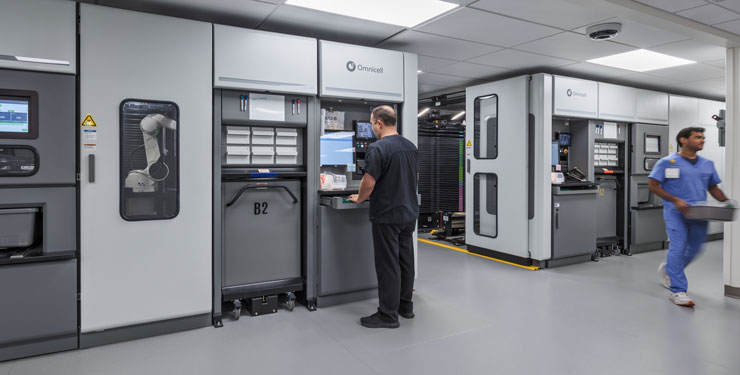
Delivery of care is inseparable from the reliable and timely movement of supplies and equipment through a health system’s facilities. This function is made even more complex with the ever-growing distribution of outpatient sites and wider range of SKUs. While the intent of retail supply management is different, the operational logic is familiar in healthcare settings–efficient movement of supplies, clear separation of back-of-house areas, and secure storage to control loss and manage counts.
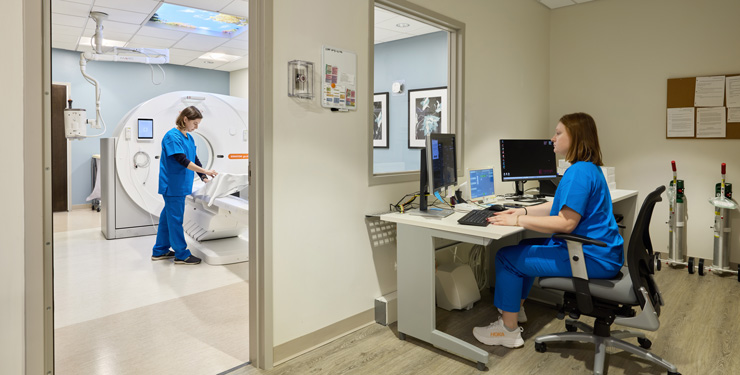
From bed towers to outpatient clinics, teams must embrace a stock logistics mentality. Design must support all stages of supply and equipment movement, including receiving, unpacking/breakdown, and efficient stocking.
How Customer Experience Informs Patient Experience
Retail environments have spent decades refining systems that support distributed networks, consistent brand experiences, and frictionless customer journeys. Healthcare systems are poised to do the same.
At BHDP, this perspective informs our HealthcareAND approach. Healthcare environments increasingly intersect with principles drawn from workplace, retail, science, and hospitality settings. Understanding and incorporating these practices allows design teams to create environments that support both clinical performance and patient experience – no matter the space.
Ready for an interdisciplinary and innovative approach to design? Fill out the form below and the BHDP team will be in touch soon.
Author
Content Type
Date
March 25, 2026
Market
Topic
Healthcare Design

Matt Scott, Client Leader
Matt Scott joins the BHDP team as a Client Leader on the Healthcare team. He has spent the last 11 years in the primary healthcare field, with a focus on pediatric healthcare design and planning. Matt is a Board-Certified Healthcare Architect through the American College of Healthcare Architects (ACHA). He believes healthcare design offers a unique opportunity to create environments that support care and healing, and that thoughtful design can foster well-being and improve health outcomes.