
Designing for Neuroinclusivity in Collegiate Athletics Facilities
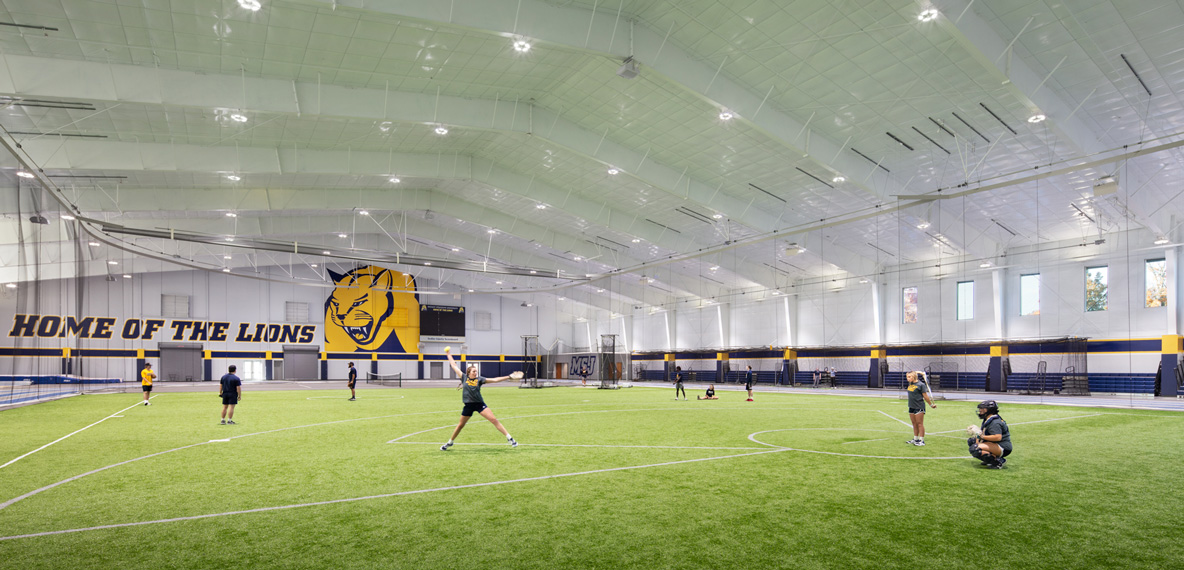
Gameday environments are built around intensity. Noise builds quickly, lighting shifts, movement is constant, and attention is pulled in multiple directions at once. Training facilities carry a different kind of pressure, but the sensory load remains day after day.
For many neurodiverse attendees, athletes, and staff, these conditions don’t just feel overwhelming. They can disrupt focus, slow recovery, and make it harder to stay engaged over time. When the environment works against the way someone processes information, performance is affected long before it shows up in results.
Designing for neuroinclusivity changes how these higher education spaces function. It introduces options for regulation, reduces unnecessary strain, and supports more consistent performance across both training and gameday settings.
Key Takeaways
- Neuroinclusivity in athletic facilities directly impacts focus, recovery, and performance
- Gameday environments require built-in relief options like sensory refuge spaces and transition zones, not reduced intensity
- Clear wayfinding and predictable layouts reduce cognitive strain in high-traffic settings
- Training environments need controlled lighting, acoustics, and visual conditions to support sustained focus
- Neuroinclusive design works best when integrated into the facility, not added later
- Programs that prioritize this approach create stronger athlete experiences and stand out in recruitment
Why Neuroinclusivity Matters in Athletic Environments
Neurodiversity isn’t a trending topic. It affects people and their families to a much higher degree than ever before. According to the CDC, the prevalence of children diagnosed with Autism in 2022 is 1 in 31, up from 1 in 36 in 2020, and an estimated 7 million, or 11.4%, of children in the U.S. have been diagnosed with ADHD.
Both Autism and ADHD can manifest in physical, emotional, and physiological ways, including emotional dysregulation, sensory sensitivities, social challenges, and more. In the world of athletics, performance depends on how well the body can regulate under pressure. In high-stimulation environments, that regulation becomes harder to maintain. When noise, lighting, and constant activity exceed what the nervous system can comfortably process, the body shifts into a stress response. Heart rate rises, attention narrows, and cognitive load increases.
That response is useful in short bursts, but over time, it becomes a barrier. Focus starts to drop, decision-making slows, and recovery takes longer than it should. In training environments, this can build up across sessions, and on gameday, it can affect performance in real time.
This is where the idea of protection versus performance becomes relevant. Environments that lack options for regulation force individuals to continuously manage stress, which pulls energy away from the task itself. When facilities are designed with neuroinclusivity in mind, they support the nervous system rather than work against it. That shift allows athletes, staff, and attendees to stay engaged, recover more effectively, and perform with greater consistency.
The Core Principles of Neuroinclusive Facility Design
Neuroinclusive design in athletic facilities comes down to how the environment responds to different needs in real time. It’s built into the space itself, through layout, zoning, and environmental controls that support regulation without interrupting activity.
Choice
People don’t experience environments in the same way, especially under pressure. Facilities need to offer different types of spaces so individuals can move between them as needed, whether that means stepping away from intensity or finding a setting that supports focus.
Variety
Athletic environments are not static. They shift between high-energy moments and quieter periods, and the facility should reflect that range. Spaces designed for competition, recovery, preparation, and downtime need to coexist, with clear differences in how they feel and function. They can also affect attendees and staff, as they need places to go when stressed, anxious, or overwhelmed. Predictable variety helps with wayfinding in a compassionate manner.
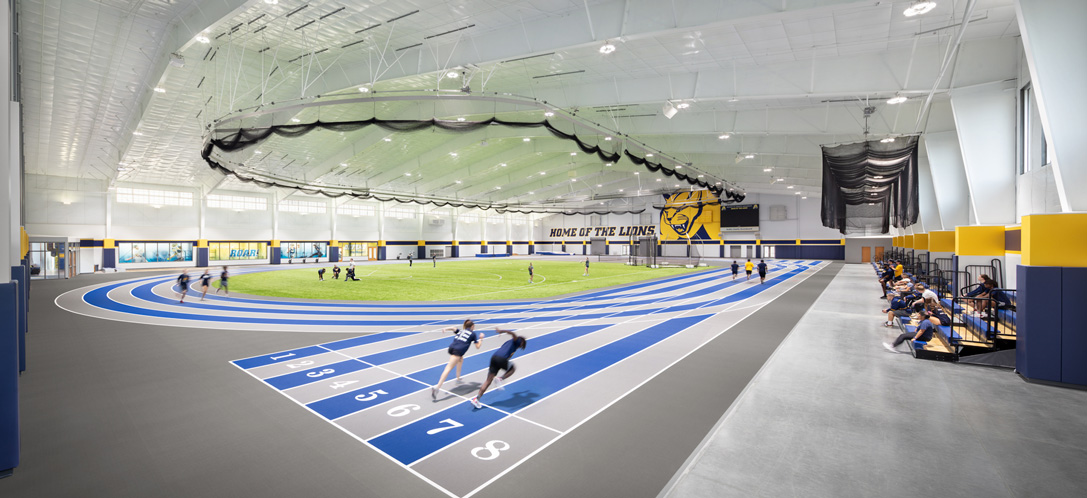
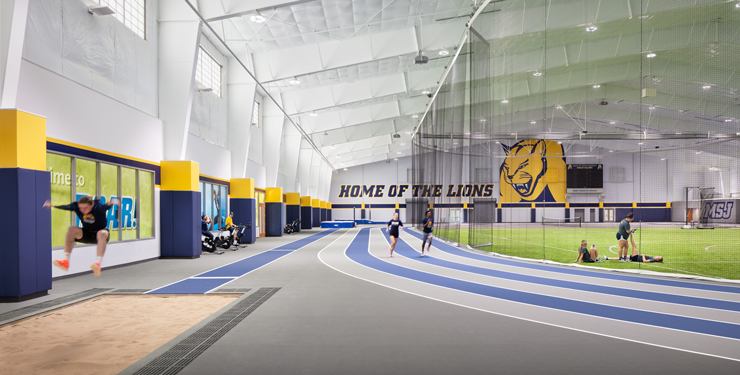
Mount St. Joseph University’s Centennial Fieldhouse & Austin E. Knowlton Fitness Center is home to the only indoor NCAA regulation-size track in the region.
Control
Small adjustments can make a significant difference. Access to lighting controls, acoustic buffering, and the ability to reduce exposure to visual or sensory input allows users to regulate their environment without leaving it entirely.
These principles rely on how the facility is planned and built. When they are embedded in the design, they become part of how the space works day to day, rather than something managed through policy or individual workarounds.
Designing Neuroinclusive Gameday Environments
Stadiums are built to amplify energy, where the sound carries, lighting is bright and often dynamic, and movement is constant. That intensity is part of the experience and doesn’t need to be reduced, but the challenge is making sure there are places within that environment where people can regulate when the sensory load becomes too much.
Sensory Refuge Spaces Within Stadiums
Well-designed sensory refuge spaces give the opportunity to not fully disengage with the event. They may include monitors or speaker systems controlled by the individuals within said space. This allows them to experience the event, but at their own chosen sensory level – or completely disengage, if needed.
Likewise, capacity becomes a key component depending on the number of people who need the space at the same time. Multiple options are necessary to ensure everyone in the space is being served to the level they desire.
Transition Zones (“Sensory Airlocks”)
Moving directly from a concourse or seating bowl into a quiet room can feel abrupt. Transitional spaces help bridge that gap. Wider corridors, vestibules, or buffered entry points can be designed to gradually reduce noise and visual intensity.
These areas are not always labeled, but they play a key role in helping people adjust their sensory load without needing to seek out a dedicated room.
Wayfinding and Predictability
Inclusive experience planning starts at concept. Appropriate arrival and exiting strategies consider the number of people arriving at a facility. Distributed entries are preferable to a single main entry to prevent overcrowding.
Staff training, operations management, and security can all create better experiences through measures like staggered entry times and guest services guides that make gameday more pleasant.
Inclusive Fan and Staff Experience
Support doesn’t need to be limited to physical space. Some venues provide sensory kits with items such as noise-reducing headphones that can be used throughout the event. Quieter seating zones can also be integrated into the layout, offering an alternative to high-density areas. These options make the environment more manageable while still allowing people to participate fully in the gameday experience.
Other options include:
- Digital trackers– these can assist in locating someone that has become separated from their group.
- Check-in procedures and safety plans– these inform at-risk individuals and their families where to go and who to talk to if they get separated or overwhelmed.
Neuroinclusivity in Training and Performance Spaces
Training environments are more controlled than stadiums, but the sensory load doesn’t go away. Athletes spend hours in the same spaces, often under physical and mental pressure, making even minor environmental issues more noticeable. When those conditions aren’t managed, they start to affect focus, energy levels, and recovery across sessions.
Managing Sensory Load in Training Environments
This encompasses all five senses (though taste to a lesser degree). Temperature and humidity controls are extremely important for performance. Being too hot, sweaty, or cold can not only be dangerous but also extremely distracting. HVAC systems that don’t properly ventilate can not only cause this but also fail to properly disperse smells and odors that distract.
Lighting is another common issue. Flicker, glare, or overly bright conditions can create constant low-level strain. Consistent, adjustable lighting helps reduce that pressure. Acoustics also matter, especially in spaces where multiple activities occur simultaneously.
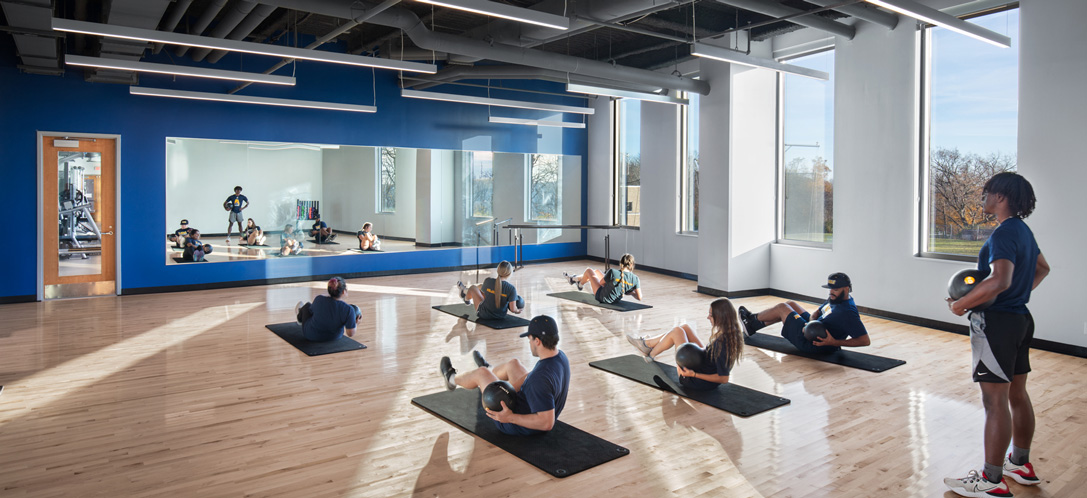
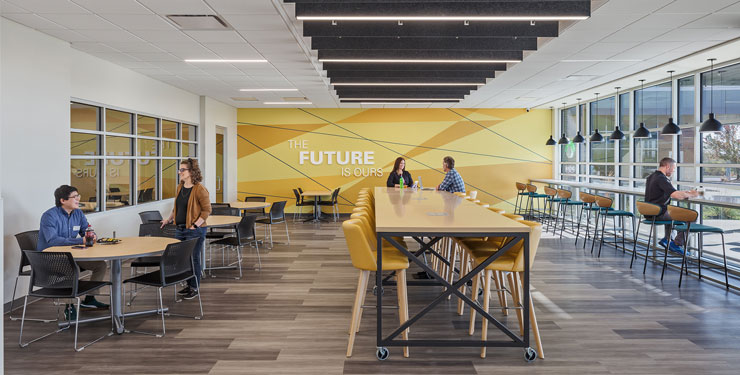
A multipurpose room inside the Centennial Fieldhouse & Austin E. Knowlton Fitness Center at Mount St. Joseph University in Cincinnati, Ohio.
Visual calm plays a role as well. Cluttered environments or high-contrast patterns can increase distraction. Overly active spaces with lots of people, or views of people doing things unrelated to the current activity (such as a busy campus parking lot or an entry lobby from a practice court) can also disrupt and prevent focus.
When these elements are addressed together, the space supports sustained focus rather than working against it.
Recovery and Regulation Spaces
Athletes need places where they can step away, reset, and recover between sessions. Quiet rooms, low-stimulation areas, and decompression spaces allow the nervous system to settle, supporting both physical recovery and mental clarity. These spaces are most effective when they are close to primary training areas and easy to access without disrupting the flow of the day.
A study released by Scientific Reports last November found that biophilic design reduces stress. According to the study, these include reductions in heart rate, blood pressure, electrodermal activity, and cortisol levels. This is appropriate for recovery and regulation spaces, as well as other training spaces.
Practice Environments That Support Focus
Not every part of training requires the same level of stimulation. Some activities benefit from energy and interaction, while others require concentration and precision.
Zoning within training spaces helps separate these conditions. By creating clear distinctions between high-intensity areas and more focused work zones, facilities can support different types of training without overlap. This reduces distraction and allows athletes to stay engaged in the task at hand.
Supporting the Modern Student-Athlete
Athletes are now expected to create content, engage with media, and manage their personal brand alongside training. This introduces a different kind of demand, often in spaces that were not designed for it. The presence of cameras can pose significant distractions, affecting practices and training.
Dedicated media spaces, separate from locker rooms and training spaces, retain some differentiation between the athletes/coaching staff’s public and private lives. Controlled lighting, improved acoustics, and defined recording or content-creation spaces prevent these activities from adding to the overall sensory load. They also allow athletes to switch between roles without carrying that pressure into training environments.
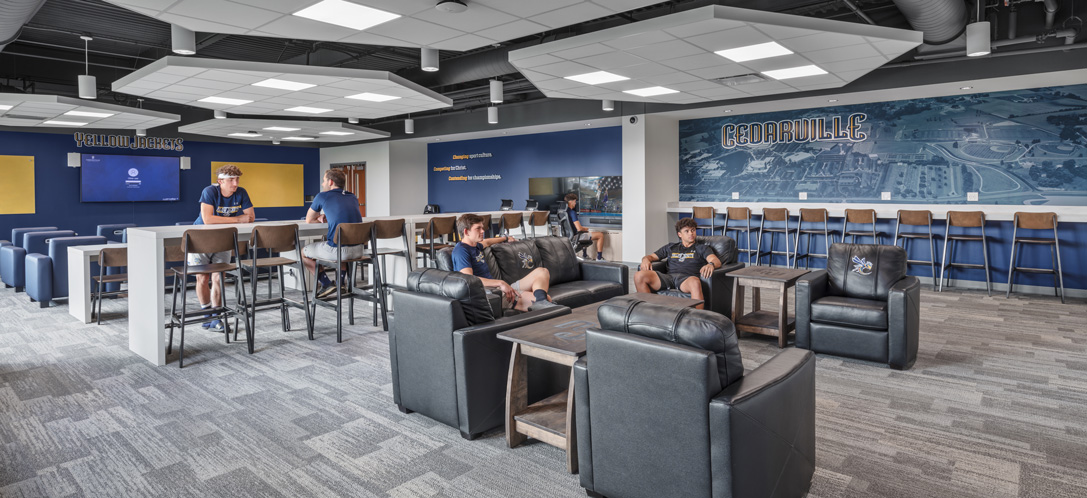
The Cedarville University Callan Athletic Center team room in Cedarville, Ohio.
Designing for Performance
Neuroinclusive design is often framed as something that sits alongside accessibility requirements. In athletic facilities, it plays a more direct role in how the environment supports performance. When spaces are designed with sensory regulation in mind, they help athletes maintain focus, recover more effectively, and stay consistent across training and competition.
Facilities that rely only on minimum compliance standards tend to miss this connection. They may meet requirements on paper, but still create conditions that increase fatigue or distraction. When neuroinclusivity is incorporated into core facility design, it becomes embedded in the space’s daily function, rather than being addressed through isolated features.
The Impact on Recruitment and Retention
Athletes notice how a facility feels long before they analyze how it performs. The ability to focus, recover, and move through the space without friction shapes their overall experience, even if they don’t describe it in technical terms.
Families pick up on this as well. Environments that support well-being signal that the program understands the demands placed on athletes and is prepared to support them. This contributes to a broader culture of care, which has become an important factor in recruitment decisions.
Programs that invest in this level of detail also stand out. Facilities that support both performance and day-to-day experience create a more complete offering, which can influence a variety of decisions.
5 Key Questions to Ask When Designing Athletic Facilities
Before locking in layouts and features, it’s worth stepping back and looking at how the facility will actually function day to day. Early decisions around movement, recovery, and environmental conditions shape how well the space supports athletes over time.
Where do users decompress?
Are there clearly defined, easily accessible spaces where athletes, staff, and visitors can retreat without leaving the facility entirely? Is access to nature (biophilia) provided?
How does circulation affect sensory load?
Do entry points, corridors, and transitions increase or reduce stimulation as people move through the building?
What spaces support recovery?
Are recovery areas distinct from trainings and competition zones, with conditions that allow the body to reset?
How consistent are environmental conditions?
Do lighting, acoustics, and visual elements create a stable experience, or do they introduce unnecessary strain over time? Are HVAC/temperature and humidity controls in order?
How much control do users have over their environment?
Can individuals adjust lighting, sound, or exposure when needed, without disrupting their workflow or routine?
When the environment is planned with these factors in mind, it becomes easier to maintain focus, recover effectively, and stay consistent over time.
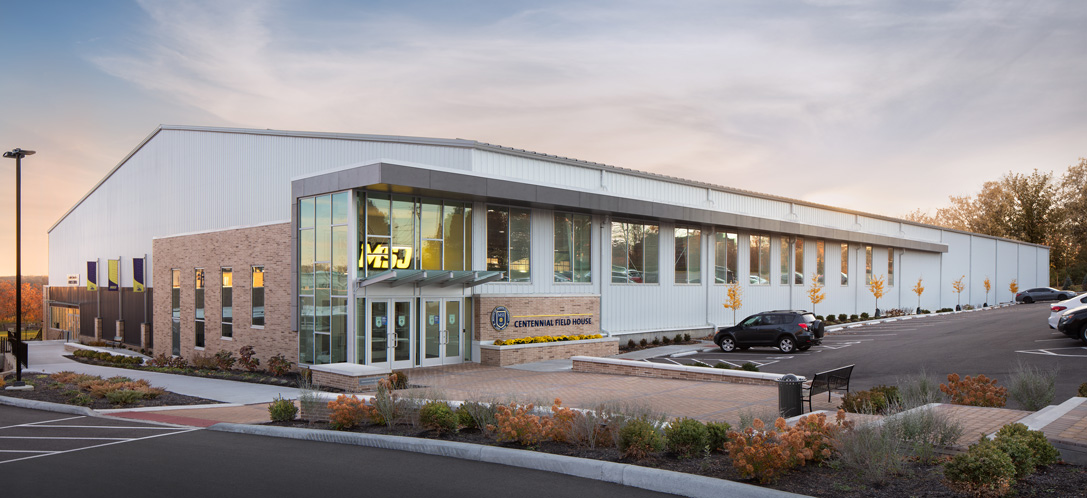
The exterior of the Centennial Field House and Austin E. Knowlton Fitness Center at Mount St. Joseph University in Cincinnati, Ohio.
Neuroinclusivity is Holistic Design in Action
Neuroinclusivity is about good design for everyone. These are spaces and design tenets that can help any attendee, athlete, or staff member have a better experience at an event. Stress, anxiety, distraction, and feeling overwhelmed at an event are experiences not limited solely to people who actively identify as neurodiverse; they can affect everyone.
When sensory conditions are overlooked, they introduce friction that shows up in missed focus and slower resets between efforts. However, when those conditions are addressed through design, the environment becomes more stable and easier to work within.
Designing Athletic Facilities That Support Everyone
If you’re planning a new facility or rethinking an existing one, now is the right time to look at how the environment supports performance beyond the obvious.
Explore how BHDP approaches athletic facility design through strategy and planning, or get in touch with our team to discuss your project.
Author
Content Type
Date
May 19, 2026
Market
Topic
Athletics

Justin Kaden, Design Leader
With over 30 years of architecture experience, Justin has led projects through all design phases—from planning and concept development to construction administration. He brings expertise to projects of all sizes, from tenant improvements to large-scale urban planning. His portfolio spans higher education, workplace, science and tech, professional sports (NHL/NFL stadiums), healthcare, community centers, and civic spaces. Justin focuses on sustainable, user-centered design that reflects each client’s culture and values and is passionate about creating spaces that enhance daily life.