
From Plant to Platform Part 2: What IAMC and the Montrose Forum Reveal About Industrial Real Estate’s Next Challenge
The beginning of 2026 saw a theme emerge for the industrial economy: rather than slowing, the sector is restructuring. Several months later, the IAMC Spring Forum and Montrose Forum both strengthened this thesis. But the conversation has evolved.
The question is no longer whether industrial growth is coming. Instead, it’s whether our infrastructure, workforce strategies, and development processes can keep pace with the speed and scale of transformation underway.
Across discussions on manufacturing, defense, energy, workforce, site selection, and data centers, it’s clear that industrial real estate is entering an era in which execution, not demand, will determine winners and losers.
Spring Forums Discuss Sector's High Demand, Mixed Readiness
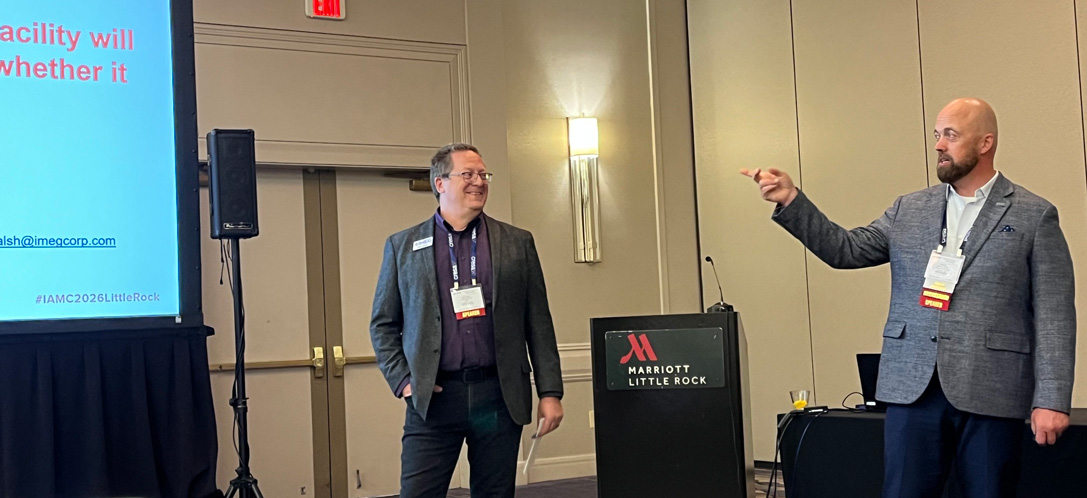
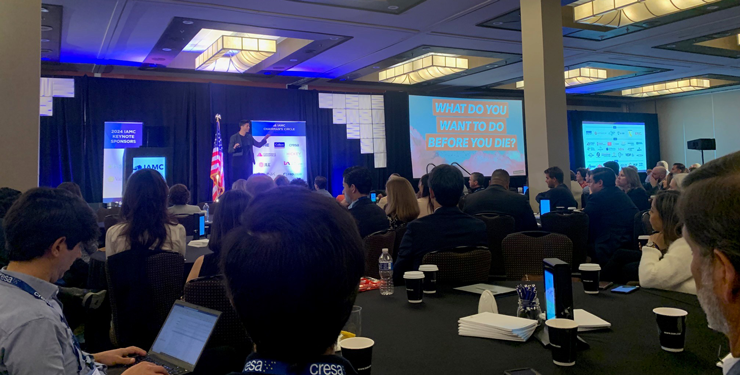
Daniel Lessing was a featured panelist in the IAMC Spring Forum’s Manufacturing Interest Group Session.
The IAMC Spring Forum presented a Manufacturing Interest Group session, From Plant to Platform: Designing Industrial Real Estate for Flexibility, Workforce, & Automation, which featured panelists including Daniel Lessing, Client Leader at BHDP, Greg Fox of Miller Valentine Construction, and Mike Walsh of IMEG.
That session focused on a challenge repeatedly seen across industrial real estate:
“We’re designing 30-year buildings for 5-year processes.”
Those same themes continued during the Montrose Forum, where Lessing joined the “Development Rapid Fire Roundtable” alongside leaders from development, brokerage, engineering, and construction, including representatives from Clayco, Newmark, NorthPoint Development, NAI Ohio Equities, Kleingers, and Archall. The conversation reinforced what many are seeing across the market: demand remains strong, but projects increasingly succeed or fail based on infrastructure readiness, workforce availability, utility coordination, community alignment, and speed of execution.
That mismatch is now shaping nearly every industrial real estate conversation.
Power Is Becoming the Primary Constraint
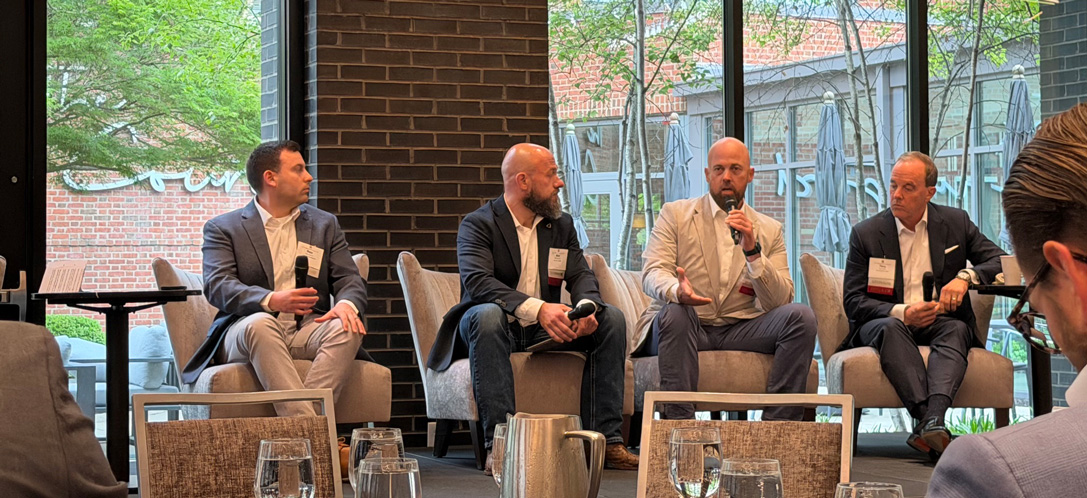
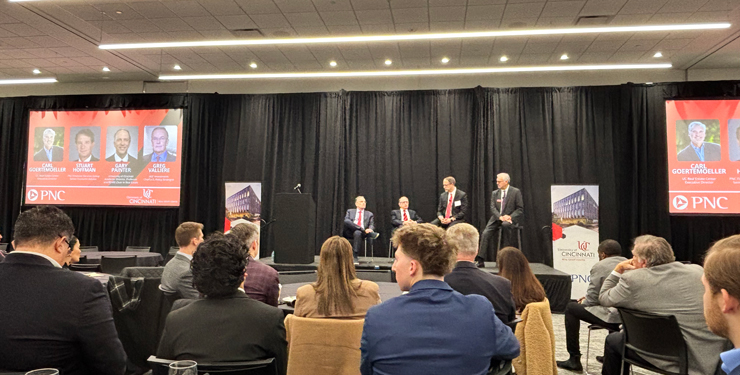
Daniel Lessing speaks at the Montrose Forum’s Development Rapid Fire Roundtable
For years, industrial development conversations centered around land, labor, transportation access, and incentives. Those factors still matter. But increasingly, power availability has moved to the front of the conversation.
At both IAMC and the Montrose Forum, panelists repeatedly emphasized that power infrastructure is now driving site feasibility, schedule certainty, and long-term competitiveness.
Data centers, advanced manufacturing, electrification, automation, and AI-driven infrastructure are all competing for the same electrical capacity.
Transmission timelines stretching 8–10 years are becoming a major development risk. Communities are facing increasing resistance to new power generation while simultaneously trying to attract highly technical industries with massive energy requirements.
One panelist stated it simply:
“Electrons are driving economic development.”
That observation extends far beyond data centers.
Manufacturing facilities are becoming increasingly power-intensive as automation, robotics, electrification, and advanced process systems continue to evolve. During the IAMC session, discussion included how industrial buildings are experiencing dramatic increases in power density, redundancy requirements, and infrastructure complexity.
At the same time, many organizations are still struggling to forecast future electrical demand accurately. One recurring theme throughout the forums was the disconnect between requested utility capacity and actual operational ramp-up needs.
That gap creates risk for everyone:
- Utilities
- Developers
- Municipalities
- Owners
The strongest projects today are aligning utility providers, process planners, and facility teams much earlier in the development cycle.
Power is no longer something solved later in facility design.
It is now one of the first strategic decisions.
Labor Is the New Infrastructure
Another major shift discussed throughout both forums was the evolution of workforce strategy.
Historically, site selection often prioritized labor availability primarily through wage rates and labor quantity. Today, the discussion is much broader:
- Workforce quality
- Talent sustainability
- Educational partnerships
- Quality of life
- Long-term pipeline development
One IAMC discussion framed it perfectly:
“Labor is the new infrastructure.”
That statement reflects a growing reality across industrial markets.
According to discussions citing Congressional Budget Office projections, U.S. birth rates are currently replacing only a portion of the future workforce needed to sustain economic growth. Combined with declining immigration levels, the labor challenge is becoming structural rather than cyclical.
At the same time, workforce expectations are evolving rapidly.
Kim Seeling Smith with Ignite Global referenced a PWC CEO survey stating that 42% of CEOs believe their businesses will not remain viable over the next decade unless they fundamentally change. Much of that pressure is being driven by three major disruptions:
- AI and technological acceleration
- Geopolitical instability
- The rise of the empowered workforce
That reality is reshaping industrial facilities themselves.
Owners are increasingly prioritizing:
- Automation adaptability
- Employee experience
- Operational flexibility
- Training environments
- Long-term workforce retention
The old perception of industrial facilities as purely functional “boxes” no longer reflects market reality.
The most successful industrial projects today are becoming integrated operational ecosystems designed to support technology, people, and continuous change simultaneously.
Community Alignment Is Becoming a Competitive Advantage
One of the most interesting conversations at the Montrose Forum centered around growing resistance to development.
The panel discussion titled “Site Development in a Populist Revolt” focused heavily on the increasing disconnect between municipal planning objectives and public sentiment.
Several themes repeatedly surfaced:
- Mistrust of development
- Misinformation
- NIMBY resistance
- Communities feeling development is happening to them rather than with them
This conversation appeared again during the data center panel discussions at both forums.
Panelists discussed the growing challenge of misinformation around:
- Water usage
- Electrical demand
- Tax impact
- Environmental concerns
- Long-term community value
The message from industry leaders was clear:
Early engagement and education matter.
Communities want transparency. They want clarity around benefits. And they want confidence that development aligns with the community's long-term goals.
One of the strongest observations from the Montrose Forum was this:
“We’re going into an era where everything is a fight, when it should be a problem-solving mentality.”
That statement captures the growing complexity of industrial development.
Projects today require alignment across:
- Municipalities
- Utilities
- Economic developers
- Educational institutions
- Developers
- The public
Economic development organizations are increasingly serving as the “grease,” helping coordinate those relationships and reduce friction between stakeholders.
The regions that succeed over the next decade will not simply be those with available land.
They will be the ones capable of creating alignment.
Speed and Certainty Are Becoming Competitive Weapons
Another major theme across both forums was certainty of execution.
Industrial users are operating in an environment where:
- Technology cycles are accelerating
- Geopolitical pressures are reshaping supply chains
- Capital deployment decisions are increasingly time sensitive
That means speed-to-market matters more than ever.
During discussions on aviation, defense, and energy, panelists highlighted how localization of manufacturing capacity is accelerating due to national security concerns, reshoring efforts, and supply chain resilience planning.
The defense industry alone is undergoing significant transformation:
- Unmanned systems
- Rapidly evolving technologies
- Supplier reshoring
- Changing funding structures
At the same time, organizations are trying to reduce schedule risk wherever possible.
That is why every potential project prioritizes:
- Shovel-ready sites
- Predictable zoning
- Utility coordination
- Infrastructure readiness
- Formalized incentive structures
Several panelists praised JobsOhio and Ohio’s broader economic development ecosystem for helping create faster pathways to execution.
That speed advantage matters.
Because in today’s market, delays in permitting, utilities, infrastructure planning, or stakeholder alignment can derail major capital investments.
From Plant to Platform
Industrial facilities are no longer static assets.
They are platforms for continuous operational evolution.
That shift changes how facilities must be planned, designed, and delivered.
At IAMC, three critical drivers shaping industrial real estate were discussed:
- Power determines feasibility
- Flexibility determines longevity
- Alignment determines execution
Those themes appeared repeatedly throughout both forums.
Industrial facilities are being asked to support:
- Evolving automation systems
- Changing product mixes
- Workforce transformation
- Electrification
- Supply chain restructuring
- Increasing operational complexity
At the same time, owners are facing more capital scrutiny than ever before.
That means industrial buildings can no longer be designed solely for Day 1 operations.
This line from the IAMC session captured the challenge directly:
“The question isn’t whether your facility will need to change…The question is whether it was designed to.”
That is the fundamental shift occurring across industrial real estate today.
Looking to the Industrial Future with BHDP
The next industrial cycle will not be won solely through incentives, square footage, or construction speed.
It will be won through alignment — alignment between infrastructure, workforce, utilities, capital strategy, technology, and community engagement.
Industrial real estate is no longer just about clear height and dock doors. It is about creating resilient platforms that can support continuous change.
Reach out to BHDP today to learn how we can help your company stay on the cutting edge.
Author
Content Type
Date
June 03, 2026
Market
Practice
Topic
Innovation
Conferences

Daniel Lessing, Industrial Market Leader
Daniel Lessing brings over 20 years of experience in plant and environmental engineering, project planning, and construction management to BHDP. As Market Leader for the Industrial team, he leverages his expertise in team management and strategic thinking to lead capital strategy and industrial development initiatives for clients worldwide. Well-versed in every stage of the capital project lifecycle, he is also highly skilled in design and construction. Daniel focuses on driving positive client outcomes through thoughtful planning, integrated design, and disciplined execution.