
From Site Selection to Start-Up
A manufacturer approves a new facility to increase production, serve customers, or bring a new product to market. That investment depends on when the operation can begin delivering those results. The building completion date is one milestone along the way.
A facility can be complete while the business is still waiting on utility service, equipment testing, operator training, or a production line that has not reached its planned output. Those gaps can begin months earlier, when a site decision, equipment assumption, or construction sequence moves forward without enough input from the people responsible for production.
At BHDP, we begin by understanding the business problem driving the investment, often before a project is fully defined. Connecting business strategy, operational requirements, and capital planning gives facility decisions a clear purpose and establishes how success will be measured once production begins.
Key Takeaways
- Define production readiness early, including the milestones between building completion and expected output.
- Evaluate sites against operating requirements and the timing of essential infrastructure.
- Connect facility design, equipment procurement, and construction sequencing throughout delivery.
- Give operations a continuing role in decisions that affect installation, commissioning, and ramp-up.
- Evaluate changes against their effect on production, operating cost, and the return on the investment.
Where Manufacturing Growth Loses Momentum
Manufacturing projects bring together people with different responsibilities. Real estate evaluates properties. Operations defines production needs. Designers develop the facility. Equipment suppliers refine their systems. Contractors plan construction. Each team needs information from the others to make sound decisions.
Problems develop when those decisions move at different speeds. A property may be selected while the production process is still being defined. Facility design may advance before equipment requirements are confirmed. A construction schedule may establish a turnover date without allowing for the work operations that must be completed afterward.
Individually, those decisions may appear reasonable. Together, they can create a gap between the facility being delivered and the operation the business expects to run.
Closing that gap requires someone to keep the full sequence visible. What information is still provisional? Who must confirm it? When does it become necessary for the next decision? Those questions give coordination a practical purpose and help teams focus on the issues that could affect production.
What Does Ready for Production Mean?
Before evaluating sites or developing layouts, the team should agree on the business outcome the facility must support. That includes the intended products, expected throughput, staffing assumptions, and the date production needs to begin. Where demand or equipment selections remain uncertain, the team should identify a working range and a date to resolve them.
The schedule should distinguish between construction completion, equipment installation, commissioning, initial production, and the ramp to expected output. Each milestone requires different conditions to be met. A finished production area may still need equipment connections, testing, training, or process adjustments before it can contribute usable capacity.
Working backward from the production target helps identify which decisions need attention first. It also creates a more useful conversation about speed. An earlier building turnover has value when the equipment, utilities, and operating team can use it. Otherwise, the project may achieve a construction milestone without advancing the business objective.
Evaluate the site against the operation and the schedule
Site evaluation establishes constraints that carry through the entire project. Building area and land cost matter, but the team also needs to understand how the property supports material movement, staffing, utility demand, and the planned production sequence.
Power illustrates the distinction. The question extends beyond whether service is available nearby. The team needs to understand the required capacity, any necessary improvements, and when that service can support equipment installation and testing. Similar questions apply to water, wastewater, transportation access, and other infrastructure on which the operation depends.
A site may be workable while requiring additional investment or a longer schedule. Identifying those conditions before committing allows leadership to compare their effect on the business case. Discovering them after design begins narrows the available choices.
The findings should remain visible after site selection. A utility commitment, access limitation, or approval assumption needs an owner and a follow-up date so it carries into design and delivery as an active requirement.
Design around how work will happen
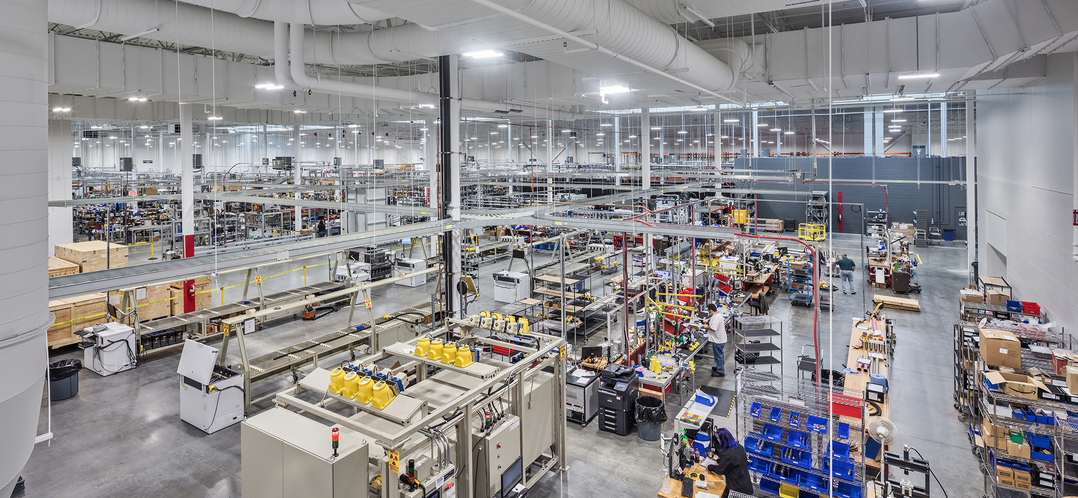
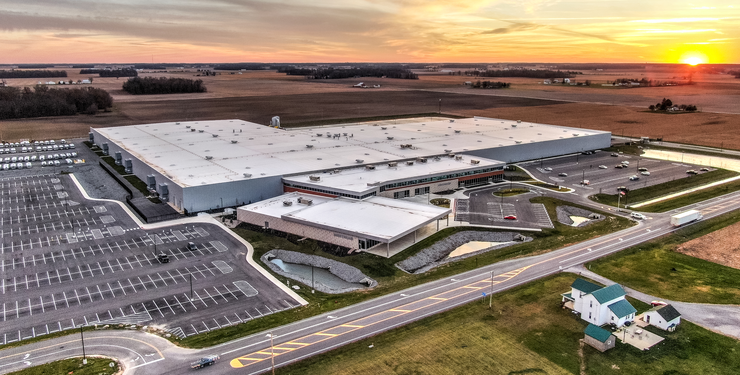
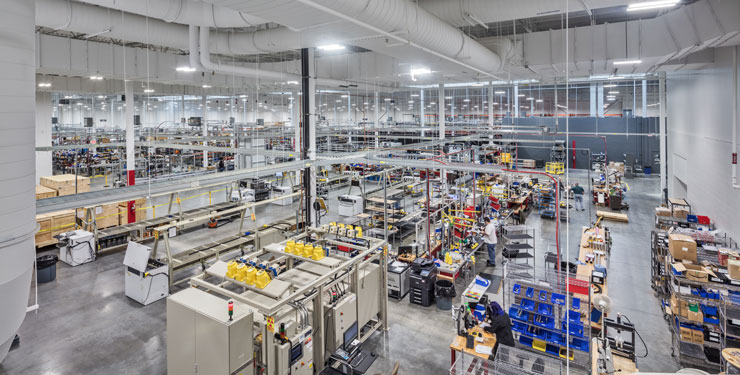
VEGA Americas’ advanced manufacturing facility houses components and parts, production and assembly, and finished product shipping operations. BHDP’s design connects the space to the business center and ensures all employees have access to the building’s
The production layout should explain how materials enter the facility, move through the process, and leave as finished goods. It should also show how people operate, maintain, and support that process. Equipment footprints alone cannot answer those questions.
Operations, maintenance, safety, and facility representatives bring different perspectives to design reviews. A layout that supports production may still leave insufficient maintenance access. A clear material route may conflict with employee circulation. Storage assumptions may work at average output but create congestion during peak demand.
Walking through the operation with these groups helps test the design before decisions become difficult to change:
- Where will incoming materials wait?
- How will a piece of equipment be serviced or replaced?
- What happens when one production step stops?
The answers can affect adjacencies, access, utility distribution, and space allocation.
These conversations also connect facility performance to the people doing the work. Safe movement, usable work areas, and access to support spaces deserve attention alongside production capacity. They are part of making the operation function as intended.
Keep equipment and construction decisions connected
Equipment requirements often emerge during the building design process. The team needs a clear way to distinguish confirmed information from assumptions and to understand when outstanding information will affect construction.
A change in equipment can reach well beyond its footprint. It may affect structural loads, utility connections, ventilation, maintenance clearances, or the route used to bring it into the building. Evaluating those effects together gives the owner a more complete basis for approving a change.
Consider a production line whose final electrical demand increases after the initial layout is approved. The immediate question concerns power capacity. The team must also check the effect on distribution equipment, space requirements, procurement, installation, and the planned testing date. This illustrative example shows why a seemingly isolated decision needs review across several disciplines.
A shared requirements record can make that review manageable. It should identify the current requirement, its source, unresolved assumptions, and who is responsible for confirmation. As decisions change, the team can update the affected drawings, procurement activities, and schedule milestones together.
The review should happen before the affected work is released for procurement or construction. Teams do not need every detail resolved at the same time, but they need to know which assumptions support an immediate commitment. Establishing those decision dates helps keep design moving while giving operations and suppliers a clear deadline for the information only they can provide.
Plan turnover around the production sequence
Start-up planning should influence how the facility is designed and constructed. Some areas may need to be ready before others to allow equipment installation, testing, or training. Those needs should be discussed while the team still has choices about construction sequencing and access.
Early equipment access, for example, requires more than a date on the schedule. The team needs to establish which spaces and systems must be available, how deliveries will reach the installation area, and how that work will be coordinated with ongoing construction. Responsibilities for protecting equipment and managing access also need to be clear.
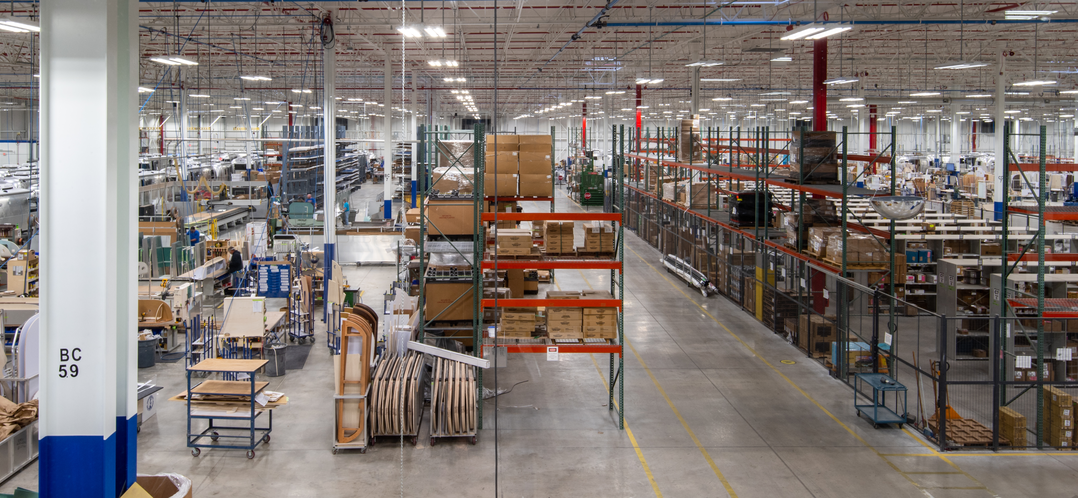
BHDP was enlisted by Airstream to develop a site and facility master plan to enable this iconic American brand to increase production and meet global demand.
Commissioning and operational preparation require the same attention. The owner, equipment suppliers, contractor, and design team should understand their respective responsibilities, the information each needs, and the conditions required to proceed. Testing for building systems and production equipment must be coordinated around those dependencies.
Planning this work early allows the team to evaluate phased turnover where it has value. It also helps prevent an assumed handoff from turning into a late disagreement over who completes the remaining work.
The turnover plan should identify the documents and training the operating team needs to use and maintain the facility. Access to current equipment information, system instructions, and lists of outstanding issues helps the owner prepare for that responsibility. Reviewing readiness before each planned handoff gives the team time to address incomplete work and confirm whether the next activity can proceed.
Evaluate the business cost of a disconnect
Change orders are a visible consequence of incomplete coordination. The broader effect may include delayed output, additional labor during ramp-up, or operating workarounds that continue after the project team leaves.
Those consequences belong in project decisions. A lower initial cost may require a longer installation period. Deferring infrastructure may reduce current spending while creating a later production interruption. Accelerating one construction package may have little value if another unresolved dependency controls the production date.
The owner needs to see those tradeoffs clearly. Reviewing capital cost alongside schedule and operating implications helps leadership decide where to spend, where to preserve options, and which risks require action. It gives the project team a common basis for decisions when priorities compete.
How BHDP Maintains the Connection
As a strategic partner, BHDP helps manufacturers translate business priorities into a facility strategy and an actionable investment roadmap. We align people, process, technology, and the built environment so decisions about scope, timing, and capital support the performance the business needs.
As the project develops, that understanding needs to stay current. Design reviews should revisit the operating assumptions behind the layout. Equipment changes should be evaluated for their effect on the facility. Questions raised during construction should be considered in light of installation and start-up needs.
This work depends on collaboration with the owner, engineers, equipment suppliers, and construction team. Responsibilities remain specific, while decisions are reviewed with their consequences for the other participants in view. The owner retains responsibility for operating the business; the project team helps establish the physical conditions needed to support it.
The goal is a consistent basis for decisions from the first site discussion through turnover, with a clear record of what has changed and what still needs to be resolved.
Questions to Ask Before the Next Major Commitment
At each stage, leadership should be able to answer a few practical questions:
- What must be true for this facility to begin production and reach the planned output?
- Which site, utility, or equipment assumptions remain unconfirmed, and when must they be resolved?
- Are operations and maintenance reviewing decisions before they become construction commitments?
- Does the schedule connect building turnover with installation, testing, training, and ramp-up?
- Who is responsible for resolving decisions that affect more than one team?
An unanswered question identifies work the team can address before it becomes an operating problem.
Keep the Production Objective in View
A manufacturing investment delivers value when the facility supports the output and performance the business planned. Keeping that objective visible requires continuity between the people choosing the site, designing the building, delivering construction, and preparing the operation.
That connection should continue after start-up. Comparing actual facility performance with the original objectives can identify operational improvements and inform the next capital decision. What the organization learns from one investment becomes the foundation for the next.
Starting Your Start-Up with BHDP
BHDP works with manufacturers to connect business strategy, facility investment, and operational performance throughout the life of their facilities. Contact our team to discuss the decisions shaping your next stage of growth.
Author

Daniel Lessing, Industrial Market Leader
Daniel Lessing brings over 20 years of experience in plant and environmental engineering, project planning, and construction management to BHDP. As Market Leader for the Industrial team, he leverages his expertise in team management and strategic thinking to lead capital strategy and industrial development initiatives for clients worldwide. Well-versed in every stage of the capital project lifecycle, he is also highly skilled in design and construction. Daniel focuses on driving positive client outcomes through thoughtful planning, integrated design, and disciplined execution.