
Building a Data Center: Top Five Factors to Consider
Building a data center is one of the most demanding projects in the built environment today. It has very little in common with the office or warehouse work most people picture when they think about construction. That’s largely because a modern data center is a machine, of sorts, as much as it is a building. Its job is to keep tens of thousands of servers running around the clock, and everything about the way it is sited, powered, and cooled is determined by that single requirement.
Over the past several years, demands on and for these buildings have grown to a scale that would have seemed unreasonable a decade ago. The amount of data the world needs to process keeps climbing, and the machines that process it keep getting hotter and hungrier. Computers like cold, and keeping the cold at the current and increasing scale is difficult, expensive, and increasingly challenging.
The BHDP Discovery & Science team tackles projects of this magnitude with a holistic comprehension of how each factor influences the next. This article covers the five factors that matter most when building a data center, in the order a design and engineering team typically encounters them. Each factor informs the next.
They include:
- Site selection
- Water usage
- Electrical usage
- Cooling
- Expandability
Executing each point perfectly—or failing to—could be the difference between a facility that runs well for decades and one that struggles from the start.
Factor One: Data Center Site Selection
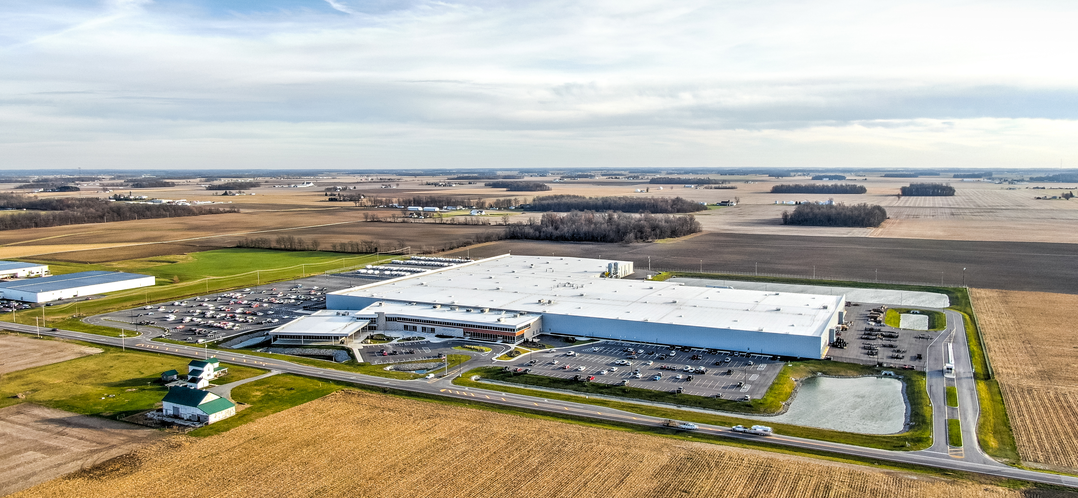
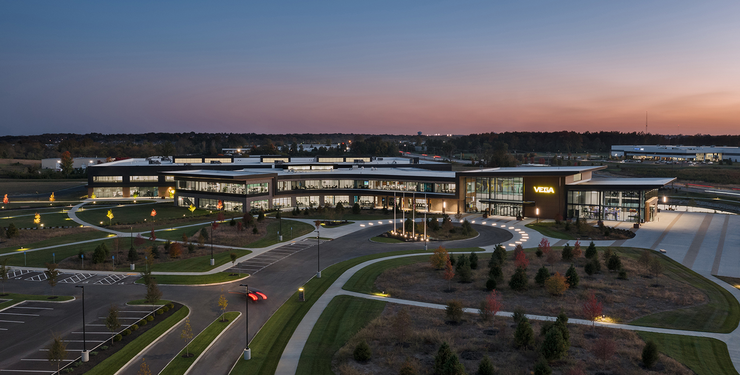
When planning for a large footprint, the selected site needs to do more than just hold the building; it must supply the resources the building will consume. Airstream occupied a 715,000 SF facility on a 50-acre site. | View Project
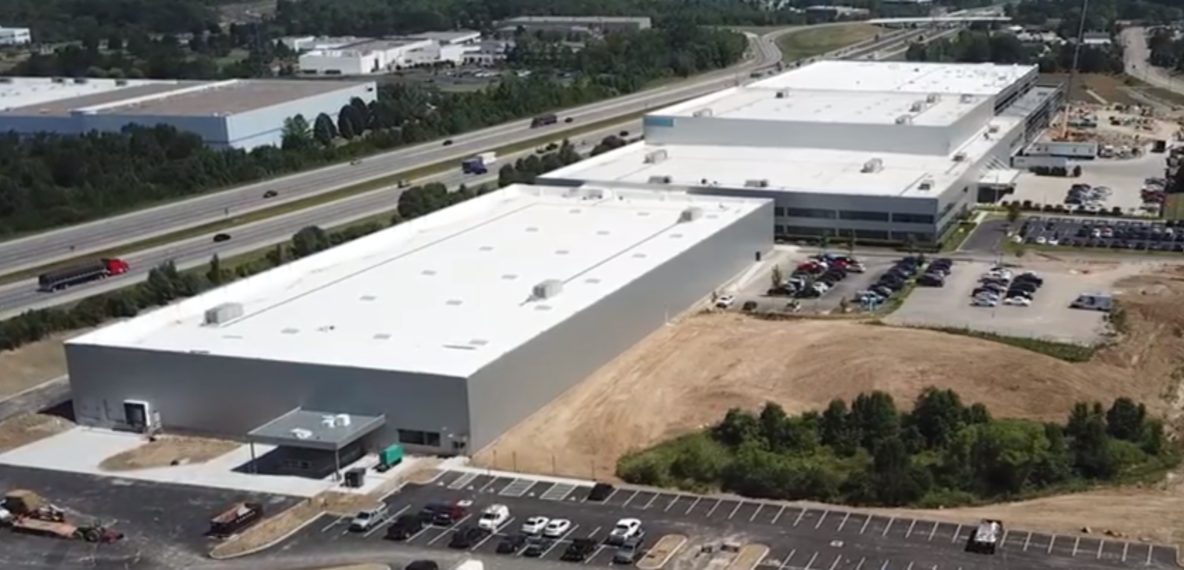
Data center site selection is where every project begins, and it carries more weight than any other early decision. Many of the major data centers being built now run to a million square feet or more, and the figure keeps rising because it is tied directly to how much data needs to be crunched. That demand shows no sign of abating anytime soon, and when planning a footprint that large, the site needs to do more than just hold the building. It has to supply the resources the building will consume.
A bigger site gives you greater options. Broadly speaking, you can spread the servers and equipment out so the facility runs cooler. This reduces strain on your cooling systems, although that comfort obviously comes at a price. More land costs more money, and the additional space still needs to be conditioned and cooled. The site's size becomes a balancing act between thermal performance and cost.
By the same token, the internal layout matters just as much as the acreage. A working data center is organized around hot aisles and cool aisles, an arrangement that keeps the equipment within the temperature band it needs to function. Getting that right is central to how the building performs.
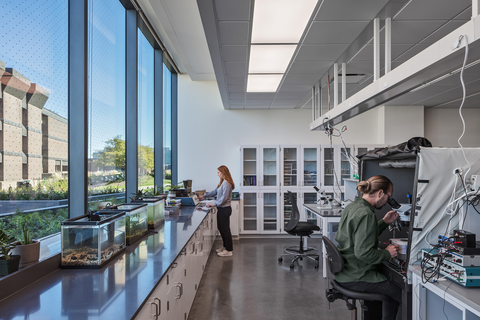
It is worth noting how few people occupy these enormous buildings. A million-SF facility might be staffed by only 30 to 50 people. These are not workplaces in the typical sense. They are highly controlled environments built for machines. Human presence[LS1.1] is minimal by design.
That reality shapes how the research and technical environments inside are planned, and it is one of the areas where a deep bed of experience changes how a team approaches the work.
Site selection also must consider what the surrounding area can provide over the long term. A location that looks ideal on paper can fall short once you calculate the water it will need or the load it will place on the local power grid.
Factor Two: Water Usage
Cooling a data center at modern server densities requires water, and a lot of it. This is a shift from how these buildings used to operate, and it is worth understanding why the industry moved in this direction.
In the past, data centers were cooled with air. As server racks have grown denser, air has stopped doing the job. When you pack processors as tightly as a modern rack demands, air cannot penetrate the density well enough to carry the heat away. Water can, because it moves heat far more efficiently than air does, consequently becoming the standard method for cooling data centers at scale.
The engineering discipline this calls for has a lot in common with the demands of a high-intensity industrial facility project, where resource loads are enormous and must be planned in detail.
This is the heart of why water usage has become such a concern. The volume is high, the sourcing is complicated, and the assumptions people make about easy reuse rarely hold up. Any team serious about responsibly building a data center has to treat water as a central design problem rather than a utility to be connected at the end.
Factor Three: Electrical Usage
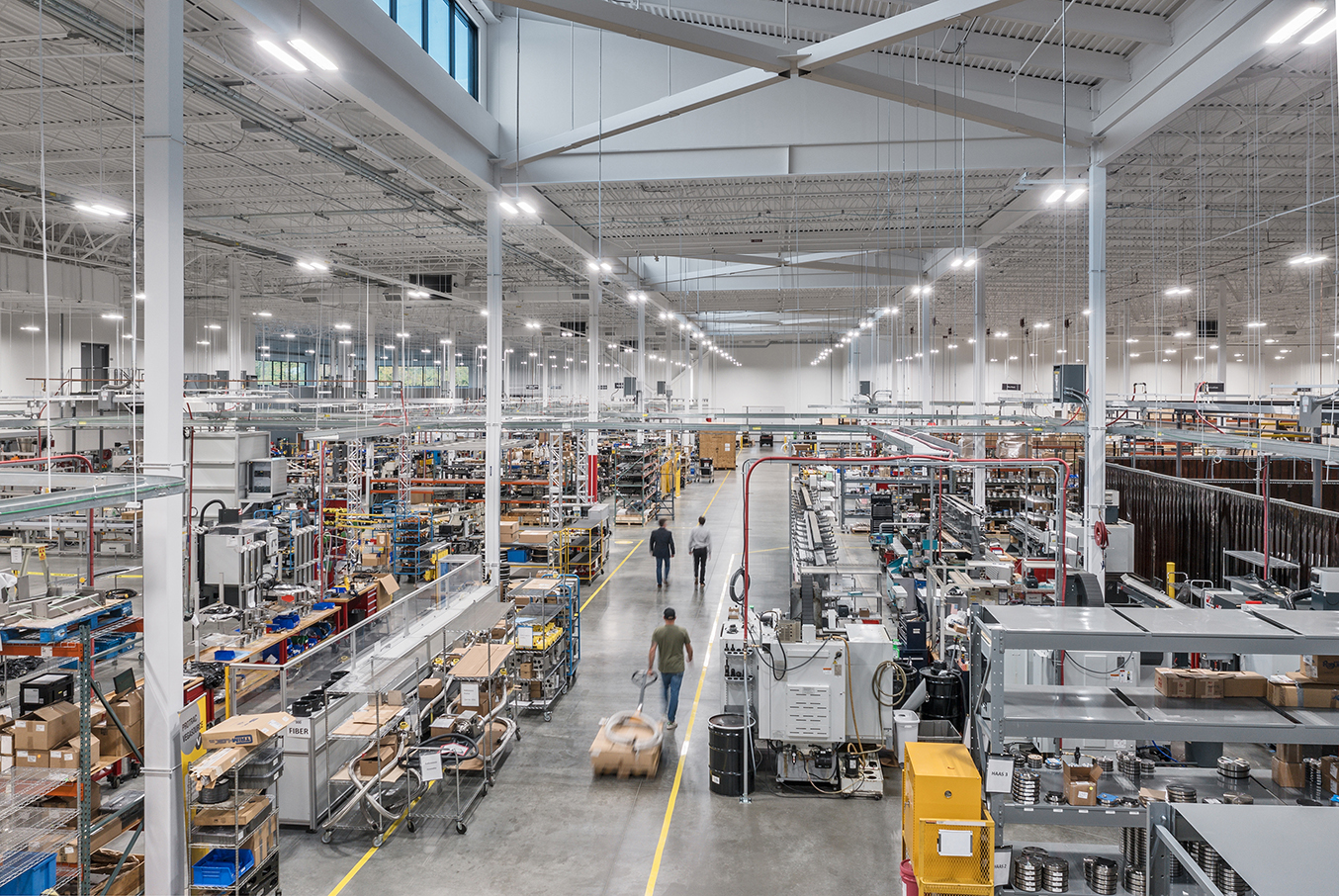
Electricity is not a background utility. It is a primary driver of where a data center can be built, how it will perform, and what it will cost to operate.
While water is the newer worry, electricity has always been the defining constraint for these buildings. A data center draws an enormous and continuous load, and that demand runs headlong into aging infrastructure. The need for substations, high-voltage lines, and a significant draw on the grid is one of the first things that must be worked out, and it can determine whether a site is viable at all.
This is why identifying sites with stable, capable infrastructure is so important. In the best cases, you are looking for a location where the utility already has the capacity to serve the facility, or where the utility has the ability and willingness to dedicate power to the site. Without that, a project can stall before it starts, no matter how good the location looks in every other respect. Power availability quietly sets the ceiling on everything else.
The scale of the electrical demand also feeds directly back into the cooling problem. Every watt that goes into running a server eventually turns into heat that has to be removed, so a facility's power draw and its cooling burden rise together.
You cannot solve one without accounting for the other, which is why the strongest teams handle power and thermal planning as a single connected effort rather than two separate line items. Sound architectural design services tie those systems together from the earliest concept stage, when there is still room to make the big moves that matter.
The takeaway on electricity is that it is not a background utility. It is a primary driver of where a data center can be built, how it will perform, and what it will cost to operate. Treating it as an afterthought is one of the surest ways to run into trouble.
Factor Four: Cooling
Cooling is where all the previous factors come to a head. How does cooling a data center work, and why has it become so much harder than it used to be? The answer runs straight through the physics of the chips themselves.
Data centers, like all computers, live under Moore's Law, which states that the number of circuits on a chip tends to double roughly every twenty-four months, steadily increasing a processor's power. That observation has held true since the 1970s and applies to essentially all semiconductor-based electronics. The consequence for anyone building a data center is that the machines keep getting denser and hotter with each generation, and the cooling has to keep pace.
As noted above, air cooling used to be an effective method—when data centers were less densely packed than they are today. It still has a role at lower densities, but there is a threshold for air cooling. Past a certain point, servers simply run too hot for air to keep up.
Why We Moved to Liquid
When you densify a server rack to the point where it might hold a hundred processors all working at once, water becomes the only medium that can remove the heat quickly enough to keep the equipment safe.
The root of the heat problem lies in the manufacturing of the chips. The industry still builds processors on silicon, starting with a platter, or wafer, roughly 300 and 450 millimeters across. That platter must be perfectly flat. It is then broken into small squares and etched into chips during the semiconductor process, which end up in a GPU, a CPU, or a phone.
Because we have not moved past this silicon-based process, the chips run hot, and until the industry develops processors on a material that handles heat dissipation better, we cannot pull heat away fast enough with air alone.
The trend is only intensifying. Over the last decade, circuits have shrunk from 21 nanometers to 1.8 nanometers, and the tighter you pack that circuitry, the hotter the chip runs. We have reached a level where these chips generate heat faster than air can carry it off. Major manufacturers, including Intel, Nvidia, Samsung, TSMC, and GlobalFoundries, are all working on non-silicon alternatives, but until those arrive, heat is the defining challenge.
Designing the building envelope to manage all of this heat load is a discipline in itself, and it overlaps heavily with the principles behind sustainable building design, where performance and efficiency are the whole point.
Factor Five: Expandability
The fifth factor is the one that is easiest to shortchange under deadline pressure, and the one clients thank you for later. Data demand grows constantly, which means a data center sized only for today's requirements is already behind. Expandability has to be built in from the start, because the cost and disruption of retrofitting capacity into a running facility are far higher than the cost of planning for it up front.
Expandability is not only about leaving room for more servers. It is about whether the power infrastructure, the water supply, and the cooling systems can all scale together when the time comes. A facility that can house more racks but cannot cool or power them has left little room to grow.
Genuine expandability means every one of the systems covered above was planned with headroom, so the building can take on more load without a fundamental rebuild. This is where long-range master planning services earn their keep, mapping how a site can evolve over ten or twenty years instead of just meeting the needs of the opening day.
The connected nature of these systems is the whole point. You cannot expand cooling without expanding power, and you cannot expand either without a site that had the water and the land to support it. The decisions made in factor one echo all the way through to factor five.
Bringing the Five Factors Together
Building a data center is an exercise in managing connections. Site selection determines your access to water and power. Water and power set the terms for cooling. Cooling determines how densely you can pack the facility, and expandability decides whether any of it can grow to meet tomorrow's demand. No single factor can be solved in isolation, and a weakness in one shows up as a problem in all the others.
The facilities that succeed are the ones where these questions were asked together, early, by a team that understood how tightly they are linked. That is the value of experience with complex, systems-driven buildings.
Build Your Future with BHDP
If you are planning a data center and want a design partner who understands how site, water, power, and cooling all affect one another, contact BHDP to learn how we can help.
Author
Content Type
Date
November 12, 2026
Practice

William Koonz, Discovery & Science Market Leader
William “Bill” Koonz II joins BHDP as Discovery & Science Market Leader, based in Raleigh. With over 30 years of experience, Bill’s portfolio spans a variety of industries, including life sciences, community, higher education, and workplace. His expertise includes lighting design, architectural design, master planning, laboratory planning, and GMP planning. Bill’s superior communication skills help him develop and maintain lasting relationships with clients and vendors. He holds several accreditations and is a registered architect in seven states.