
CACUBO 2026: Signals, Strategies, and What They Mean for Campus Investment (and BHDP)
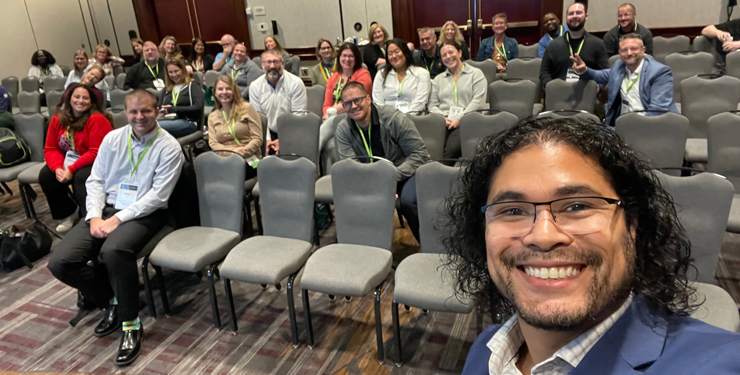
This year’s CACUBO conference marked my third consecutive year attending, and it continues to be a valuable “strategy accelerator” on my calendar. Colleagues came ready to share what’s working, where they’re experimenting, and how they’re adapting quickly to real pressures.
Candid Conversations
Across sessions and conversations, there was no shortage of unique solutions—less “doom loop,” more “design the next play.” Even the big topics that can sometimes feel heavy were framed with pragmatic optimism. AI, for example, wasn’t discussed as something to fear, but as a powerful tool, one that can help leaders see patterns faster, communicate more clearly, and make better decisions with greater confidence.
Likewise, mergers and acquisitions weren’t framed as taboo or purely financial maneuvers; they were presented as proactive, mission-aligned strategies intended to protect student access and institutional sustainability. And enrollment (unsurprisingly) was top of mind for nearly everyone. The energy this year was palpable: colleagues were not only candid about the challenge but also excited to exchange strategies making measurable differences at their institutions.
BHDP at CACUBO: An Opportunity for Connection
From a BHDP perspective, CACUBO’s value is straightforward and significant. It’s one of the best venues for connecting with higher education clients and colleagues in a setting where conversations go beyond projects to priorities:
- Yield
- Retention
- Student experience
- Affordability narratives
- Debt capacity
- Long-term planning
Open and transparent dialogue about these issues strengthens our relationships and sharpens our understanding of what leaders are truly balancing behind the scenes.
CACUBO also adds to our subject matter expertise in higher education, especially around capital planning as a strategic lever. As designers, we know the built environment can influence experience; CACUBO helps validate how institutional leaders are thinking about experience, risk, and ROI, and how they communicate those choices to boards, donors, and families.
Finally, CACUBO is a place where BHDP can present and test our own research in front of the very stakeholders it’s meant to serve, gaining feedback, credibility, and momentum for data-driven design strategies. That “research-to-practice” loop is one of the most important ways we deliver excellence and stay genuinely useful to our clients.
What I Heard in the General Sessions: Motivation with a Purpose
The general sessions this year leaned into practical motivation, equipping leaders and teams with mindsets and tools to keep pushing their missions forward, even amid constraints.
Creative production requires skills, ideas, and motivation.
A point of particular resonance? Creativity isn’t a personality trait. It’s a practice. In higher education, where many challenges feel structural, creativity becomes a leadership discipline: how to create conditions where good ideas become actionable initiatives across campus.
When met with real limitations, don’t fight the challenge. Use it.
What if constraints are positioned as prompts rather than barriers? This is a familiar concept in design, but helpful to hear framed for finance and operations audiences: budgets, timelines, labor pressures, and enrollment uncertainty are real, but they can also be catalysts for clarity and better prioritization.
Find a “creative buddy” and be more curious.
Collaboration and curiosity can be particularly useful as strategic advantages, especially in complex organizations. People who build relationships across silos tend to find better solutions faster, and they avoid the “single-point-of-failure” pattern that can stall change.
Burn bright—but don’t burn out.
Burnout remains top-of-mind across sectors. This advice isn’t new, but its relevance never diminishes: connect with what brings you joy, remove things from your plate, and remember that not everything worth winning belongs on a resume. For many in higher ed right now, the pace is intense; the message wasn’t “work less,” it was “work sustainably and meaningfully,” so the mission remains durable over time.
These themes aren’t just feel-good messaging. They are an acknowledgment that the human capacity to lead, innovate, and adapt is a finite resource. And when enrollment pressure is persistent, that human capacity becomes a strategic asset.
My Session: Capital ROI, Enrollment Yield, and a Board-Ready Narrative
My own session centered on BHDP’s research on the ROI of capital projects in terms of enrollment yield, building on the white paper released earlier this year and continuing our exploration into how current-generation student priorities translate into measurable facility outcomes.
The core question we posed was simple, but urgent: What should we build next—and why?
The framework: Three lenses, one story
One of our key ideas is that leaders need a unified narrative that aligns three perspectives:
- Student priorities
- Project ROI
- Leadership context
In other words, data alone doesn’t drive decisions, student expectations alone don’t set strategy, and leadership intuition alone can’t carry the accountability required today. But together, those three “lenses” can support decisions that are both defensible and mission-aligned.
What students optimize for: affordability, outcomes, and belonging
Affordability is the “front door” to yield. In our survey, 79% rated cost/affordability as “very” or “extremely important,” and among students who didn’t attend their first-choice institution, 40% cited cost or insufficient aid as the barrier. This doesn’t just reinforce what leaders already know—it elevates the importance of how institutions communicate value, aid, and long-term outcomes.
We also emphasize that academics still matter, but outcomes are the proof. In the survey results, 70% of students prioritized programs and reputation, and they respond strongly to measurable outcomes (licensure, placement, career readiness). That finding continues to shape how we advise institutions: academic facility investments must be framed—and designed—as outcome engines, not simply as upgraded square footage.
Finally, we assess belonging as infrastructure, rather than an amenity. Student life investments are increasingly tied to persistence, mental health, community, and the overall student experience—all of which are central to retention and, in many cases, yield.
Campus visits: the conversion moment
One of our most actionable findings? Visiting the campus a student ultimately chooses correlates with being roughly twice as likely to enroll, while visiting more than four campuses correlates with lower first-choice yield (decision fatigue). For strategic capital planning, that elevates the importance of first impressions and tour pathways. The physical campus experience must clearly demonstrate affordability narratives, outcomes, and belonging in a coherent, intentional sequence.
What the Data Suggests: Not All Project Types Perform Equally
We also provided a high-level snapshot of how different facility categories correlate with enrollment changes, based on our dataset and methodology (tracking enrollment two years prior to and three years post completion). The most important executive takeaway: ROI has a lag—leaders should expect a ramp, not a spike.
At a category level, the presentation summarizes the median enrollment change and CAGR correlations with the top three as follows:
- Research facilities: median change +6.0%, CAGR 1.16% (noting correlation, not causation).
- Student life facilities: median enrollment increase +5.2%, strong per-SF efficiency; bundled improvements with residence/dining can boost yield >7% in some cases.
- Academic facilities: median change +1.15%, CAGR 0.23%; returns depend heavily on program alignment and demand.
For many leaders, these distinctions are clarifying because they reduce a complex debate (“We need better facilities”) into a strategic portfolio conversation. Which projects drive yield, which protect retention, and which build brand or donor engagement? That difference matters when debt capacity is tight, and every initiative must earn trust.
Personal Notes: Service, Sponsorship, and the Value of Presence
On a personal level, one of the highlights of this year was serving on the CACUBO Business Advisory Council. Being part of that group gave me a meaningful opportunity to help shape the conference's success—not only by sharing feedback, but also by representing what business partners and institutions actually need from the experience. It also created a deeper peer network across the industry, which is invaluable when you’re trying to stay current on emerging strategies, new delivery models, and shifting priorities.
I appreciated how our presence as a firm showed up in a tangible way. We sponsored the headshot photo booth, which was genuinely popular—and it aligned with BHDP’s values and our direction. We’re in an aesthetics-driven field, but more importantly, we’re in a people-driven business. Supporting attendees with something practical, professional, and confidence-building felt like a small but meaningful contribution to the community.
Even without a booth, I enjoyed the freedom to walk the floor and connect: re-engaging familiar faces at institutions, having strategic conversations about needs and pressures, and learning from other vendors about what they’re seeing across campus environments. Those vendor conversations, in particular, were quite useful—they often surface the “friction points” our clients are experiencing (and the solutions they’re asking for) before those needs fully translate into design projects.
The BHDP Takeaway: Design Strategy That Matches the Moment
If I were to summarize CACUBO 2026 in executive terms, it would be this: higher education leaders are not waiting for perfect conditions—they are making proactive, mission-oriented decisions in real time, and they’re looking for partners who can help them do it with clarity and confidence.
For BHDP, the conference reinforced three strategic imperatives:
- Relationships matter, because trust is what allows early, candid conversations that shape the right projects before they become urgent.
- Insight matters, because higher education is changing quickly, and our work is strongest when it reflects the real drivers of yield, retention, and student success.
- Research matters, because when capital must “earn its keep,” leaders need more than inspiration. They need evidence and a narrative they can take to boards, donors, and communities.
CACUBO continues to validate that we’re asking the right questions—and that BHDP’s combination of design expertise, strategic planning, and applied research can help institutions invest with purpose. I am encouraged by the creativity in the field, the openness to tools like AI as accelerators (not threats), and the shared commitment to serving students through smart, transparent, mission-aligned decisions.
As we continue building on our research and client work, that’s exactly the kind of momentum we should carry forward.
Author
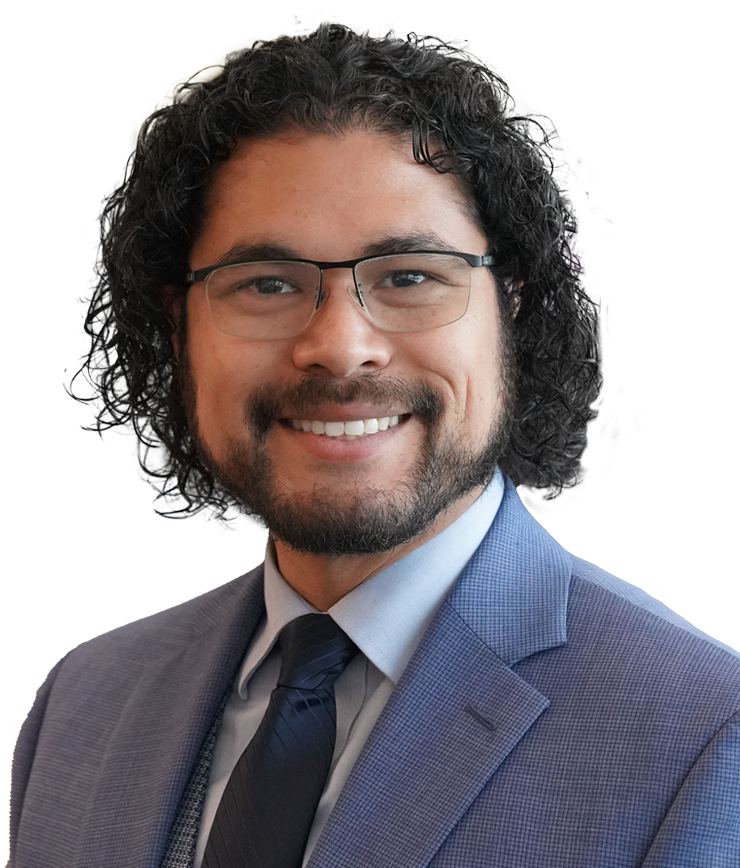
Alejandro J. Medina, Client Leader
With over 16 years of experience, Alejandro J. "AJ" Medina works closely with his clients to understand their vision and values, identify strategic goals, and translate this understanding into the design of physical space that promotes the vision, values, and specific project goals. He builds strong relationships with his clients and successfully coordinates the efforts of architects, engineers, and key client stakeholders. AJ’s experience includes visioning, programming, and design for new construction and renovation projects, including student life, collaborative learning environments, health sciences education, athletics, residence life, and research and teaching laboratories.