
From Policy to Place: Designing a Hybrid Workplace Strategy That Works
Many organizations have defined their hybrid work policies on paper. A set number of days in the office, clear return-to-office guidance, and updated policies to restore structure to how teams work. In practice, however, the results are often uneven.
Offices sit half full on some days and overcrowded on others. Opportunities for in-person collaboration, when multiple employees are in the office at the same time, go unrealized. At the same time, spaces designed for full-time occupancy don’t support how hybrid work functions today.
The gap is between what policy asks people to do and the conditions that enable them to do it well. A hybrid workplace strategy connects people, process, technology, and place around a clear purpose: supporting the work employees need to accomplish and the outcomes the organization wants to achieve.
Key Takeaways
- A hybrid workplace strategy works best when people, process, technology, and place are aligned
- A return-to-office policy establishes attendance expectations; a workplace strategy defines what in-office time should enable. Hybrid work environments require a clear purpose for in-office time and should support variation in use throughout the week
- Workplace design should reflect the full range of work activities, including focused work, collaboration, and virtual participation
- Measuring success moves beyond attendance to utilization, experience, and business outcomes
Why Policy Alone Is Not a Workplace Strategy
When policy is set without a broader workplace transformation strategy, it often creates inconsistency. Teams can:
- Interpret the guidance differently
- Use space unevenly
- Feel unsupported by the workplace infrastructure when they do come in
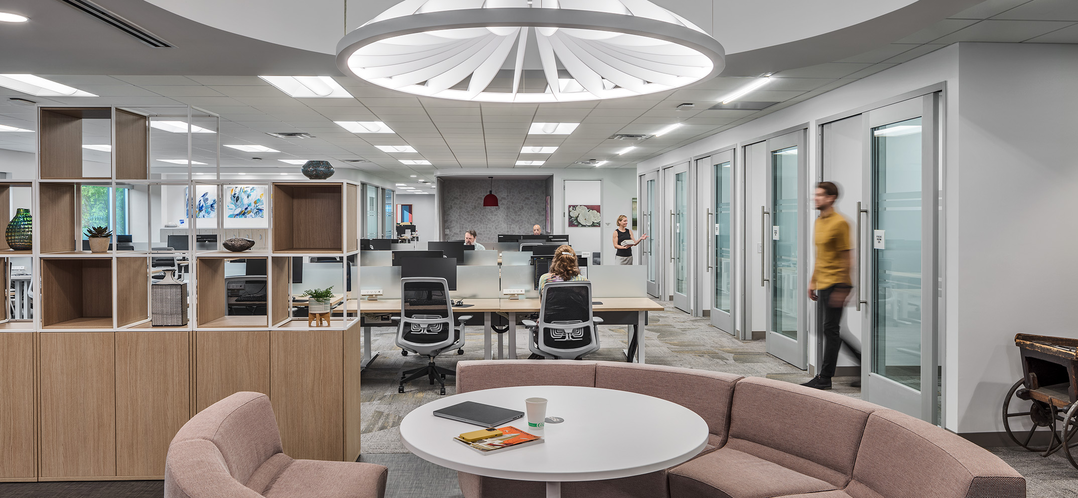
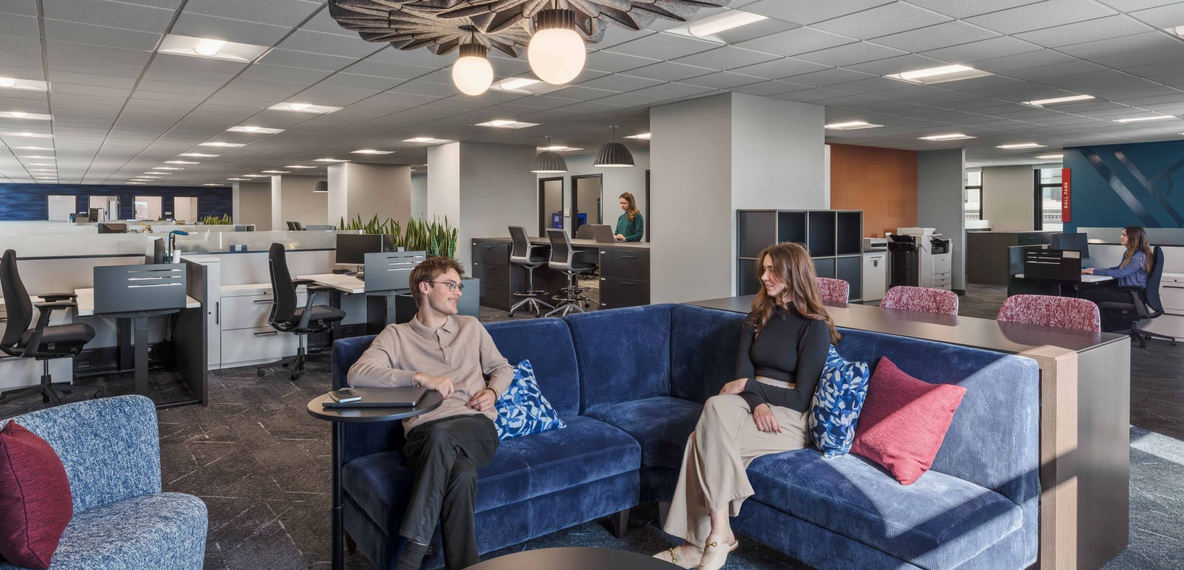
BHDP worked with Oxford University Press in Cary, North Carolina to bring their new hybrid work model to life with an office environment design that prioritizes connection and provides choices in where and how to work throughout the day. | View Project
A return-to-office mandate can bring clarity at the surface level, but it rarely solves underlying issues. Asking people to come into the office two or three days a week does not define what those days should be used for, or how teams should coordinate their time. Without that alignment, employees may meet attendance expectations without gaining the intended benefit of being together.
This is where many hybrid workforce strategies begin to lose traction. The office becomes a place people are required to be, rather than a setting that supports specific types of work. Over time, this can reduce engagement and diminish the value of in-person attendance, even when attendance targets are technically met.
Adding Collaboration Spaces Isn’t Enough
To combat low engagement, many organizations invest in hybrid workplace design by adding more collaboration areas, informal meeting zones, or flexible workspaces.
While these changes can improve the environment, they don’t address how work is structured or how teams use the space. Without a clear connection between workplace design for hybrid work and actual work patterns, new spaces may go underused or serve a purpose other than intended.
An effective hybrid workplace strategy considers and supports how people plan their time, how teams interact, and how the office supports those interactions. Space alone cannot resolve gaps in process or expectations.
Clarifying the Purpose of In-Office Time
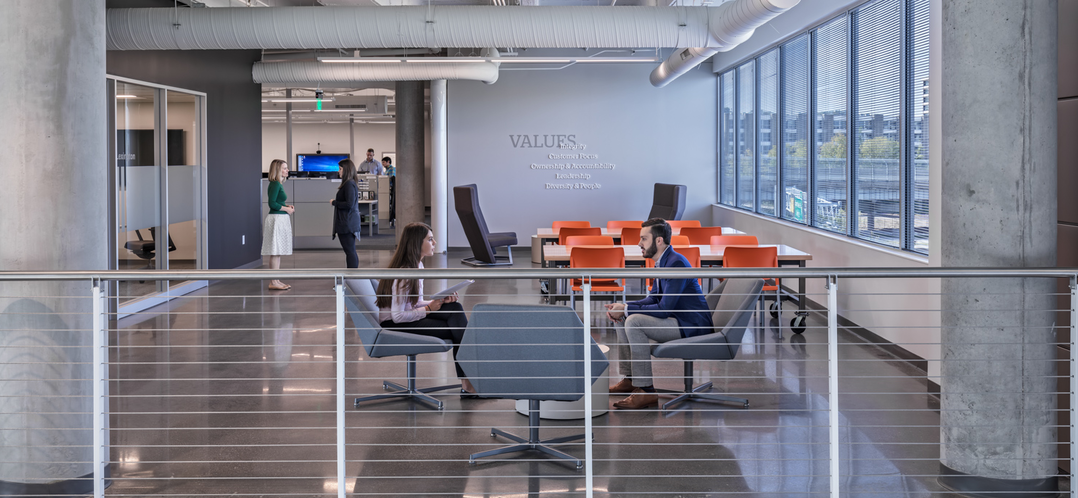
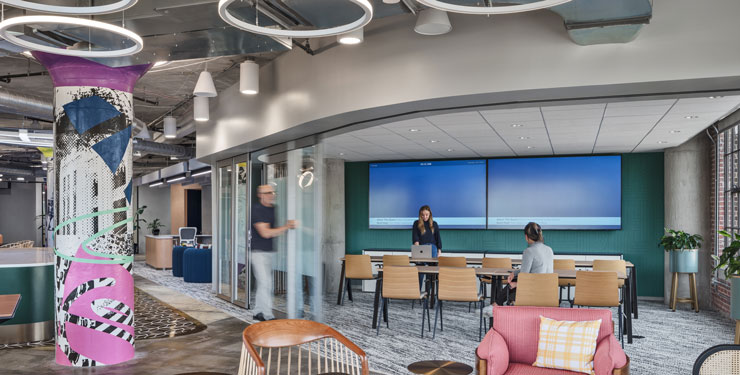
Messer Construction partnered with BHDP to renovate its Cincinnati office, expanding a limited layout to create a best-in-class facility. BHDP’s design includes open work stations and huddle rooms where teams can easily collaborate. | View Project
Employees expect their time in the office to have a clear purpose and parameters. This includes access to the right types of spaces, coordination across teams, and a shared understanding of how time in the office should be used. Without this clarity, the office risks becoming a default location rather than a place that adds value.
Before selecting design solutions, define what successful in-office time should enable for employees and the organization. Priorities may include more effective collaboration, timely decision-making, or stronger team connection. Then identify the activities, coordination practices, tools, and spaces needed to support those priorities.
The Four-Pillar Hybrid Strategy Framework
With the purpose of in-office time established, the next step is to align the conditions that support it. People, process, technology, and place provide a framework for translating that purpose into everyday work. The four pillars should be considered together, rather than as separate initiatives.
Pillar 1 - People: Understanding Behaviors and Needs
Begin by understanding how people work and what they need to accomplish, individually and in teams. Consider:
- How often they collaborate
- What tasks require focus
- How teams coordinate across locations.
This helps define what employees need and expect from remote and in-office work. It also provides a clearer foundation for decisions about hybrid workplace design, ensuring the space supports daily activities.
Pillar 2 - Process: Redesigning Work for Distributed Teams
Hybrid work changes how teams plan, communicate, and deliver work. Processes built around everyone being physically together often need to be adjusted to support distributed teams.
This includes:
- How meetings are scheduled
- How decisions are made
- How information flows across the organization.
A strong hybrid workplace system defines what work happens where and how teams coordinate their time.
Pillar 3 - Technology: Enabling Seamless Hybrid Collaboration
Technology plays a central role in connecting in-person and remote work. Tools need to support communication, collaboration, and access to information without creating friction between different work settings.
In a hybrid work environment, technology should feel consistent regardless of location. Meeting rooms, personal devices, and shared platforms all need to work together.
Pillar 4 - Place: Designing the Balanced Office
The way employees think about and use the physical workplace has changed. While traditional workplaces often emphasize individual, desk-based work, hybrid workplaces need to provide a balanced variety of spaces that support different work activities.
Following the pandemic, the emphasis on collaboration led some workplaces to expand collaborative spaces at the expense of dedicated work areas. Although this addressed a need for collaboration, it risked creating a different imbalance. Collaborative spaces should complement, rather than displace, spaces for concentration. Designing a balanced office does not mean allocating equal space to each activity, but providing a mix aligned with the work employees need to accomplish and the outcomes the organization wants to achieve.
With people, process, technology, and place aligned around a clear purpose, design decisions can respond to the work the office needs to support. The question is not which hybrid workplace features to add, but which combination of spaces will support those activities.
Design Considerations for Hybrid Environments
The design task is to translate the priorities identified through the four pillars into an appropriate mix and arrangement of spaces. Offices need to support variation, with different teams using the space in different ways on different days, for different tasks, and with varying levels of interaction.
A strong hybrid workplace design focuses on flexibility, giving people access to the types of spaces they need without overcommitting to one way of working.
Space Types That Support Hybrid Work Modes
Hybrid workspaces need to support a range of activities that require different conditions. These include:
- Focused work
- Collaboration
- Virtual meetings
- Informal interaction
A balanced mix of spaces is essential.
Quiet areas support concentration, while open zones encourage discussion and teamwork. Meeting rooms equipped with the right technology support participation by both in-person and remote attendees. Technology should be matched to the intended use of each setting, supporting collaboration where needed without compromising spaces intended for concentration.
Organizing a Balanced Mix of Spaces
Many offices were originally designed around individual desks, assuming most employees would be present at the same time. In a hybrid workplace, that model often leads to underutilized areas alongside pressure on shared spaces.
Collaborative neighborhoods are one option for organizing this mix, rather than a default solution for every team. Teams are grouped within zones that combine different types of space, including shared desks, quiet settings, meeting areas, and informal spaces. This allows people to move between tasks more easily while keeping teams connected when they are in the office.
Amenities and Experience That Support In-Office Work
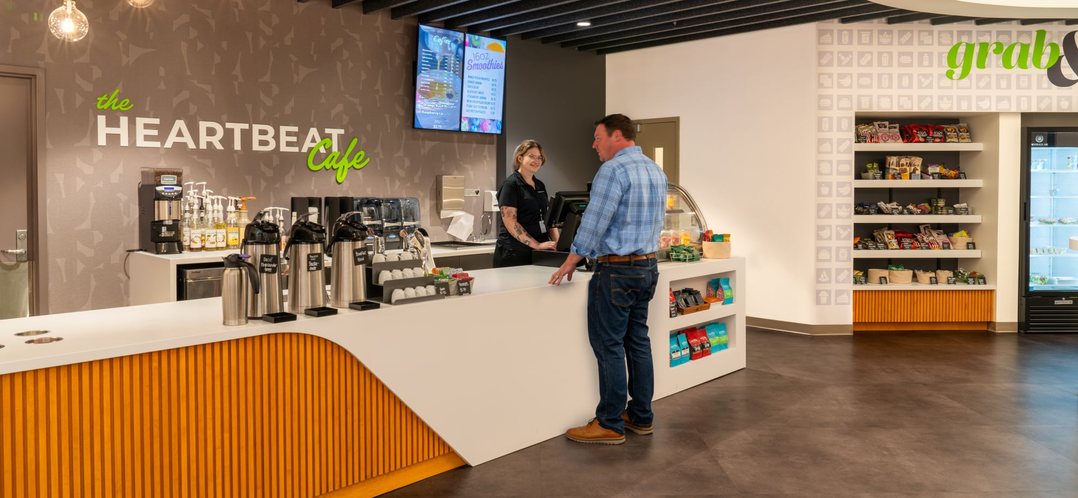
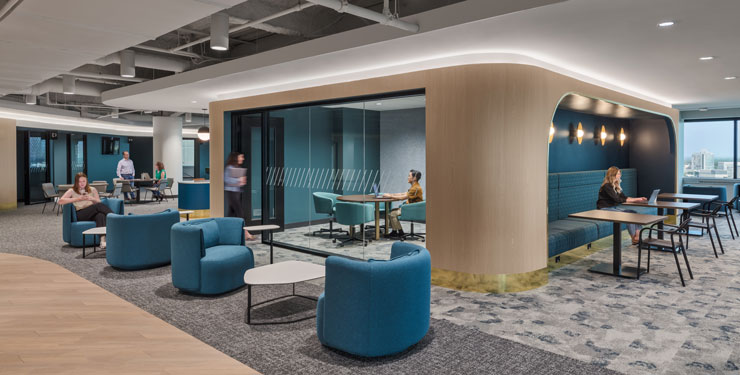
Dayton-based CareSource sought to rejuvenate its headquarters to support new ways of working and foster a sense of community. BHDP’s design focused on transforming the second floor into a vibrant amenity hub including the Heartbeat Café. | View Project
Amenities should complement the work people come to the office to do. Spaces for informal interaction, access to food and drink, areas that support well-being, and easy-to-use, reliable technology all contribute to a more engaging environment.
Within a modern workplace strategy, these elements are not extras. They influence how and why people choose to come into the office.
Flexible workplace design plays a central role here. Natural light, varied seating, access to amenities, and thoughtful layout all contribute to a more appealing environment.
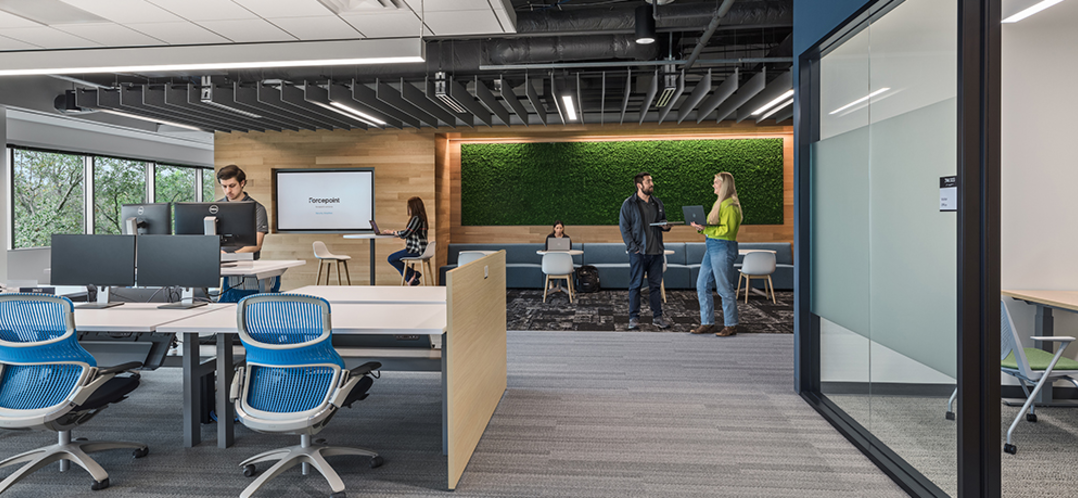
The cybersecurity company ForcePoint enlisted BHDP to downsize their office into an engaging central hub for remote and in-office employees. Among other design decisions, BHDP incorporated green walls as well as a custom plant feature in the kitchen. | View Project
Together with coordinated work practices and integrated technology, these design elements should make in-office time more useful, not simply more attractive. The goal is to align workplace experience with expectations, rather than ask design to compensate for unclear policy.
Case Study: P&G Toronto's Hybrid Workplace Transformation
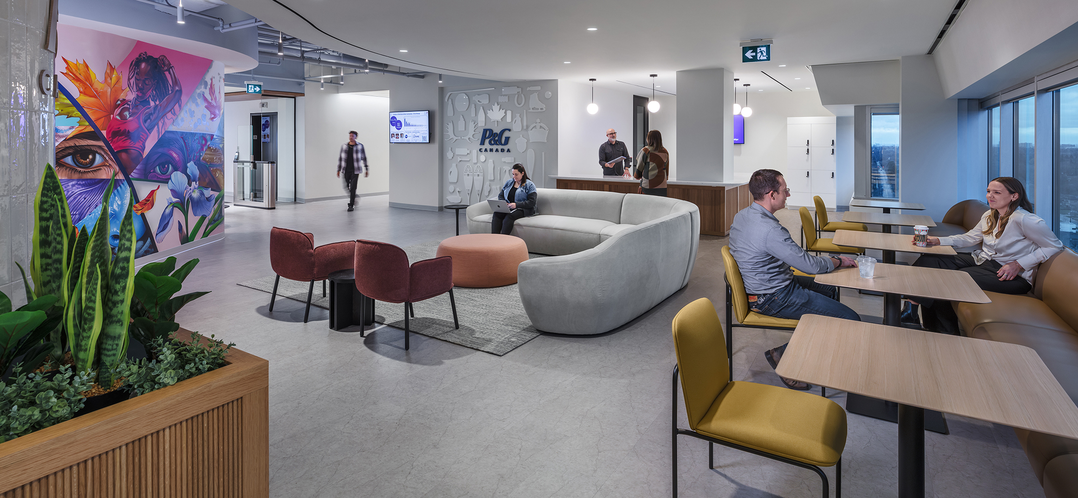
P&G Canada sought to relocate the Toronto General Office to a new, collaborative, and flexible workspace. BHDP was tasked with designing an environment that sparks interactions and empowers employees to curate their day.
P&G Canada’s Toronto office illustrates how employee input can inform a hybrid workplace strategy and the spaces designed to support it.
The Challenge: Supporting Hybrid Work and Employee Autonomy
P&G Canada needed a workplace that could support hybrid work while giving employees more control over how they structured their day. The existing office did not reflect how teams collaborated or how often they came in, which made it harder to use the space effectively.
The Strategy: Aligning Policy with Adaptable Space Design
BHDP approached the project by connecting workplace strategy with real employee needs. Surveys and focus group data helped define how people worked, enabling alignment of the hybrid work environment with the company’s broader return-to-office guidance.
The Design: Diverse Spaces + Technology + Cultural Expression
The design introduced a range of hybrid workspaces, including collaborative areas, quiet zones, and meeting rooms supported by integrated technology. Experiential graphic design elements reflected both P&G’s global brand and its Canadian context, creating a stronger sense of place.
The Outcome: Space That Enhances Productivity and Collaboration
The workplace was designed to support flexible work, in-person connection, and the expression of organizational culture. The project illustrates how employee input can guide decisions about space variety, technology, and cultural expression.
Measuring Hybrid Workplace Success
The success of a hybrid workplace strategy depends on how effectively it supports people, how consistently space is used, and how well it contributes to business outcomes. A clear set of measures helps organizations understand what is working and where adjustments are needed. This allows a strategy to evolve based on evidence rather than assumptions.
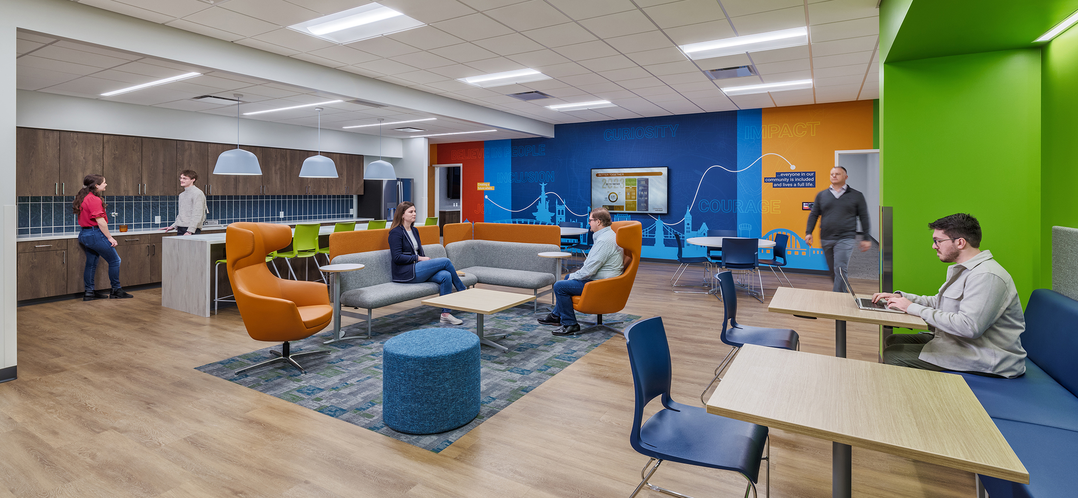
Easterseals Redwood sought to bring six main groups of services provided to the community under one unified roof. BHDP's redesign transformed the site into a flexible, multi-use environment, that fosters collaboration and connection. | View Project
Place Metrics: Utilization and Space Type Performance
Place metrics include overall utilization and how different space types perform throughout the week. Some areas may be consistently busy, while others remain underused. Meeting rooms, collaboration zones, and focus spaces can all show different use patterns depending on how teams work.
Tracking these trends helps refine hybrid workplace design and ensures that space aligns with demand.
People Metrics: Satisfaction and Connection
Employee experience is essential in a hybrid working environment. It is important to gather feedback on how people perceive the workplace, how easily they can collaborate and focus, and whether they feel connected to their team. These measures identify gaps between policy and experience.
They also show whether the workplace supports engagement and a sense of belonging—key to making hybrid work sustainable.
Business Metrics: Collaboration and Innovation
Workplace strategy ultimately needs to support business performance, including:
- How effectively teams collaborate
- How quickly decisions are made
- How ideas are developed and shared
Looking at these outcomes provides a broader view of how the hybrid work environment contributes to organizational goals. It also helps ensure that workplace transformation continues to support the business's evolution. It is important to interpret changes in these outcomes alongside changes in policy, process, and technology, rather than attributing them to physical space alone.
Strategy Before Space, Space Before Success
A hybrid workplace strategy connects organizational priorities with the conditions people need to do their work. When people, process, technology, and place are aligned, the workplace becomes easier to use and more consistent across teams.
Clarity at the strategy level gives design decisions a purpose. Ongoing evaluation then helps the organization understand what is working and what needs to change. Over time, this approach creates a workplace that adapts with the business, rather than falling behind it.
Ready to Design Your Hybrid Workplace Strategy?
If your hybrid work strategy is not delivering the results you expected, start by clarifying what the workplace needs to accomplish and where policy, work practices, technology, and space are misaligned.
Reach out to see how BHDP can help you build out your workplace strategy and hybrid environment.
Author
Content Type
Date
October 20, 2026
Market
Topic
Hybrid Work
Workplace Strategy

Dr. Justin Ferguson, Director of Applied Research
With three decades of researching, teaching, and practicing community-engaged and organizational design and planning, Dr. Justin Ferguson brings both immense knowledge and enthusiasm to creating strategic and transformative environments. As Director of Applied Research, Justin seeks to uncover the challenges clients face with their organizational spaces, works with design teams to develop predictive design decision-making, and ultimately measures the efficacy of BHDP’s work. His extensive portfolio spans various markets across the U.S., including collaborations with major clients like the GSA and Fifth Third Bank, making him a unique asset to BHDP.