
When to Redesign Your Office Space: Eight Workplace Change Triggers
Workplace projects rarely begin with design. They tend to start when something no longer fits how the business operates.
A change in hybrid work policy, a lease decision, or steady growth can expose gaps in how space is used. Some teams may struggle to collaborate, while parts of the office remain underutilized. In many cases, these are early signs that the workplace is out of step with current needs.
These kinds of workplace change triggers are becoming more common across corporate real estate strategy. The challenge is recognizing them early and responding with a clear plan, rather than waiting until the pressure forces a rushed decision.
Key Takeaways
- Workplace change is typically triggered by business events, not design decisions
- Growth, hybrid work strategy, and consolidation often expose gaps in how space is used
- Underutilized office space is often a signal of misalignment, not excess capacity
- Corporate real estate strategy benefits from a structured, proactive approach
- Workplace decisions should reflect how people work today, not past assumptions
Why Trigger Events Matter: The Cost of Reactive vs. Proactive Planning
Change tends to surface gradually, then all at once when pressure builds. When these moments are recognized early, they create an opportunity to step back and plan with intent.
The difficulty is that many organizations don’t act at that stage. Decisions are delayed, often because the issue doesn’t yet feel urgent or because stakeholder alignment takes time. By the time action is taken, the conversation has already shifted from strategy to delivery. Timelines tighten, options narrow, and the focus moves toward solving the immediate problem rather than understanding the wider system.
A reactive strategy leads to short-term fixes: expanding space in one location, reducing footprint in another, or adjusting layouts without a clear view of how people actually work. These decisions may address the symptom, but they rarely improve or solve the problem.
A proactive approach begins by recognizing trigger events as signals, not disruptions:
- Expansion presents an opportunity to rethink office space optimization across the portfolio.
- A return-to-office policy opens a broader conversation about hybrid workplace planning and how different teams work and use space.
- Consolidation or divestiture can be used to realign the workplace with business priorities, rather than simply reducing costs.
The difference shows up in outcomes. Reactive decisions tend to increase complexity over time, while proactive planning creates a more stable foundation for future change. Instead of responding to one issue at a time, organizations can shape a workplace strategy that supports how the business is evolving, not just where it is today.
8 Events That Force A Workplace Rethink
Workplace change is usually tied to a specific moment when something shifts in the business, and the existing space no longer supports it practically. In some cases, the trigger is obvious, such as growth or a lease decision. In others, it builds more gradually, through underutilized office space, changing work patterns, or pressure to improve performance.
What matters is recognizing these signals early and understanding what they reveal about workplace function.
The events below most often lead organizations to reassess their workplace strategy.
1. Growth Without Increasing Real Estate
Growth is one of the most common workplace change triggers. Many organizations are expected to accommodate more people, new teams, or additional functions but stay within the same footprint. In many cases, space is available but not used effectively. Some areas remain underutilized, while others are consistently over capacity.
Without a clear workplace strategy, the default response is often to add more space. This increases costs and doesn’t always solve the underlying problem. A more effective route starts with understanding:
- How the space is currently used
- How different teams work
- Where adjustments can support growth without expanding the footprint
When handled well, this kind of trigger leads to better balance across the workplace.
2. Return-to-Office and Hybrid Work Policies
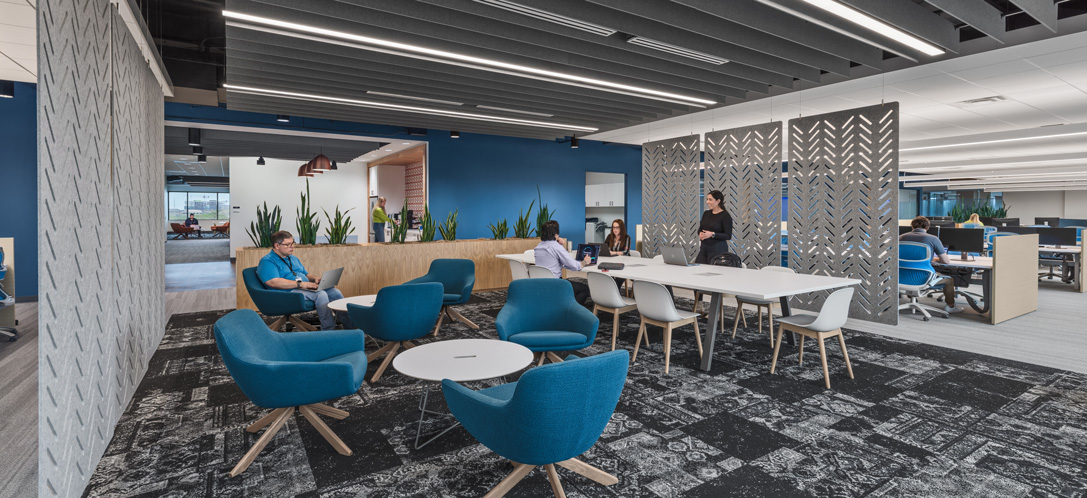
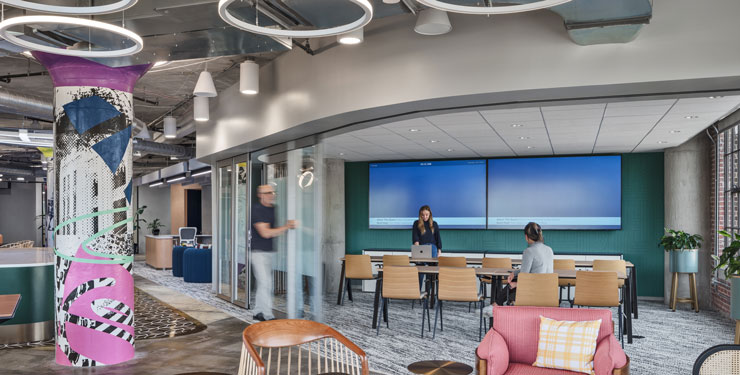
Forcepoint in Austin, TX found a hybrid model was efficient and attractive for their workforce, and enlisted BHDP to create a central hub that provides flexibility and excitement.
Few shifts have a bigger impact on workplace strategy than return-to-office policy. For many, attendance patterns are uneven. Certain days are busy, others quiet. Collaboration spaces fill up, yet portions of the office remain underused.
Hybrid workplace planning starts with understanding:
- When and why people come in
- What types of spaces they need
- How technology supports both in-person and remote collaboration.
Handled early, this creates an opportunity to reshape the workplace around flexibility rather than retrofitting existing space to new expectations.
3. Mergers, Acquisitions, and Divestitures
Corporate restructuring often leads to workplace disruption. Mergers and acquisitions bring together different teams, cultures, and ways of working, while divestitures require separation across systems, people, and space.
Decisions need to be made about which locations to keep, how to integrate teams, and how to align workplace environments. Teams may be split across locations, or existing layouts may not reflect new workflows.
Without a clear plan, this can lead to short-term fixes that become long-term inefficiencies.
4. Consolidation and Shrinking Footprints
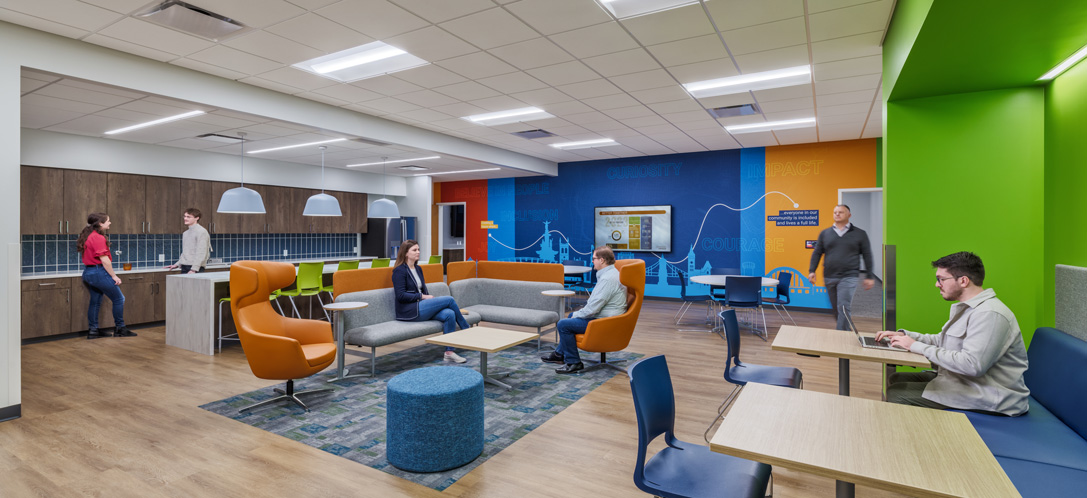
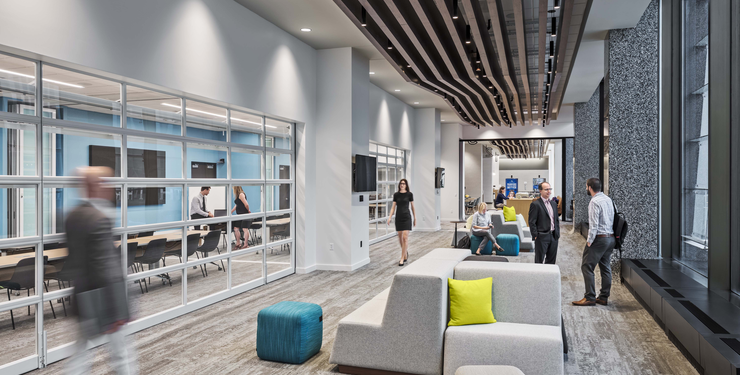
Easterseals Redwood in Cincinnati, OH sought to bring several of its services under one roof, unifying internal programs while creating a welcoming and fully accessible campus for the surrounding community.
Reducing space is a common move across corporate real estate management strategy, especially as organizations reassess cost and efficiency across their portfolios. But reducing square footage doesn’t automatically improve performance. Consolidation can create new pressure points. Teams compete for space, collaboration becomes challenging, and the workplace feels constrained.
A more effective approach reviews utilization data, understanding how different functions operate, and identifying which locations or spaces don’t align with current needs.
5. New Work Processes and Behaviors
Changes in how work is performed can shift workplace needs just as much as headcount or location changes. New tools, different team structures, or evolving expectations around collaboration often make existing layouts less effective over time.
Addressing performance issues in the workplace involves understanding:
- How work flows across teams
- How often people interact
- What types of environments support these patterns
This is where hybrid workplace planning and workplace strategy come together, especially in organizations balancing in-person and remote work.
6. Failing or Outdated Space
Some workplace change triggers, like aging infrastructure or poor layouts, are harder to ignore because they affect day-to-day performance.
Meeting rooms don’t support hybrid collaboration, systems fall behind, or certain areas are avoided altogether. Over time, this starts to impact how people work, even if the overall footprint hasn’t changed.
Addressing performance issues requires more than a surface-level refresh. It calls for a closer look at how space, technology, and user needs align.
7. Standards Rollout and Global Workplace Guidelines
As organizations grow, consistency across locations becomes more important. If clear standards aren’t established, projects tend to vary widely in quality, cost, and delivery timelines. Rolling out these standards brings its own set of challenges. Global consistency needs to work alongside local requirements, including culture, regulations, and market conditions.
Handled right, this trigger supports faster decision-making, more predictable outcomes, and a clearer direction for future workplace investments.
8. Leadership Change and Talent Pressure
Leadership changes often bring a new perspective on how the workplace should support the business. Priorities shift, expectations evolve, and there is usually a stronger focus on how space influences performance and culture. At the same time, pressure to attract and retain talent continues to shape workplace decisions.
Addressing this trigger proactively enables organizations to align the workplace with leadership direction and create environments that support both business goals and employee needs.
Case Study: How BHDP Responded to a Hybrid Work and Growth Trigger
A shift in hybrid work strategy, combined with relocation, created a clear inflection point for P&G Canada. The Toronto General Office needed to support new ways of working while still reflecting the company’s identity and culture.
BHDP approached this as a workplace strategy challenge rather than a standard redesign. They gathered employee input through surveys and focus groups, identifying gaps in the previous space and clarifying how the new workplace needed to function within a hybrid model.
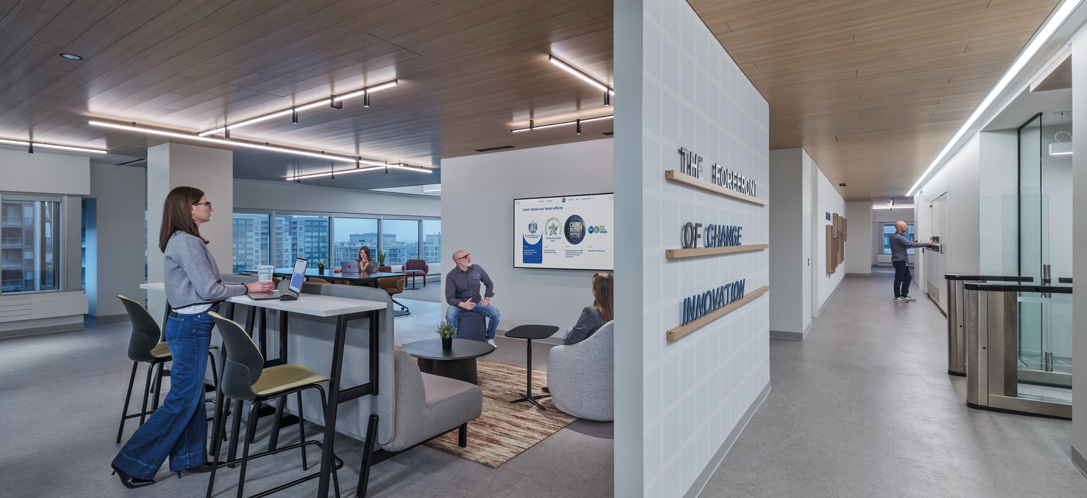
P&G Canada’s redesigned headquarters features a variety of work areas, meeting spaces, and quiet zones to support different work patterns.
The team created open, adaptable work areas supported by technology for in-person and remote collaboration. They introduced a mix of meeting spaces and quiet zones to support different work patterns without forcing a single way of working.
They also integrated experiential graphic design (EGD) that connected the office to both P&G’s global brand and its Canadian context. Wayfinding drew on geographic references, while local artistic elements reinforced a sense of place.
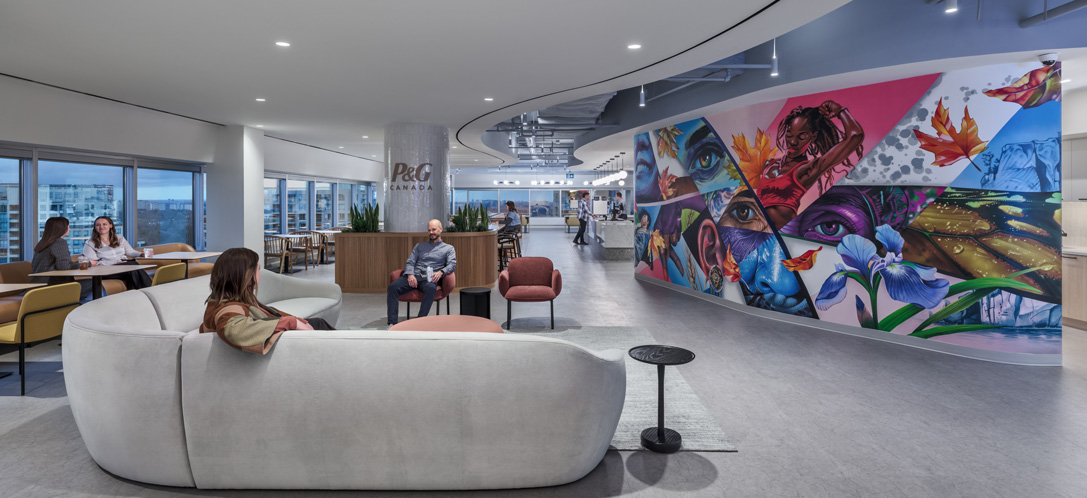
P&G Canada’s redesigned headquarters integrated experiential graphic design and local artistic elements to reinforce a sense of place.
The completed 55,000 SF workplace improved collaboration and supported hybrid work in a more practical way. It also demonstrated how responding early to a clear trigger event can lead to a more effective outcome.
A Framework for Responding to Workplace Triggers
Recognizing a trigger event is only part of the process. The real impact comes from how it is handled. Without a clear structure, decisions tend to focus on immediate issues, leading to short-term fixes and repeated adjustments over time.
By connecting workplace strategy, user needs, and long-term business goals, organizations can move forward with clarity, rather than reacting under pressure.
Step 1: Diagnose the System, Not Just the Symptom
Most workplace issues appear in specific areas but are often part of a wider pattern. Start by looking at the full system, including:
- How different teams operate
- How often they interact
- How space supports those patterns
Understanding the broader context enables addressing the root cause.
Step 2: Establish Success Criteria Upfront
Workplace projects are often measured after completion, making success difficult to define. Instead, identify criteria for success early in the process:
- How the workplace should perform
- How it should support employees
- How it aligns with business priorities.
Create a shared reference point to guide decisions throughout the project.
Step 3: Use Data to Inform the Conversation
Data should help leaders understand the workplace, not reduce the workplace to a single metric. Utilization, occupancy, employee feedback, observation, business priorities, and stakeholder input each reveal a different part of the system. The strongest workplace strategies interpret these inputs together so that decisions are grounded in both behavior and experience.
Step 4: Engage Stakeholders from Day One
Workplace decisions involve multiple groups, each with its own priorities and expectations. When these perspectives are not aligned early, direction can shift, delays can happen, and costs can increase.
Bring stakeholders into the process from the beginning—leadership, real estate teams, HR, and end users. This builds a clearer understanding of needs and reduces the risk of late changes.
Step 5: Design for Alignment, Acceptance, and Adoption
Even the most well-designed space needs to reflect how people work and whether they understand the purpose behind the changes. Otherwise, adoption is limited and slow. Focus on creating alignment early for acceptance during delivery and to help employees adapt once the space is in use.
Key Questions to Ask Before Acting on a Trigger Event
Before moving forward, it helps to slow the process down just enough to understand what the trigger is pointing to. A few focused questions can bring clarity and prevent decisions that solve one issue but create others elsewhere.
- What has changed in the business, and how does it affect the workplace?
- How is the current space performing today? Think space utilization, occupancy patterns, team usage, etc.
- What patterns of work need to be supported? Collaboration, focused work, hybrid work?
- Where are pressure points across the portfolio?
- What outcome are we trying to achieve?
Workplace change is unavoidable. What matters is early recognition and clear understanding. When trigger events are treated as signals rather than disruptions, they offer an opportunity to make more informed decisions about how space should support the business.
Ready to Assess Your Workplace?
If you’re starting to see pressure build across your workplace, now is the right time to step back and assess what’s driving it. Early clarity makes it easier to plan, align stakeholders, and avoid rushed decisions later in the process.
Explore how BHDP approaches workplace strategy through applied research, interior design, and workplace planning, or take the next step and get in touch with our team to discuss your workplace challenges.
Author
Content Type
Date
July 14, 2026
Market
Topic
Workplace Strategy
Change Management

Dr. Justin Ferguson, Director of Applied Research
With three decades of researching, teaching, and practicing community-engaged and organizational design and planning, Dr. Justin Ferguson brings both immense knowledge and enthusiasm to creating strategic and transformative environments. As Director of Applied Research, Justin seeks to uncover the challenges clients face with their organizational spaces, works with design teams to develop predictive design decision-making, and ultimately measures the efficacy of BHDP’s work. His extensive portfolio spans various markets across the U.S., including collaborations with major clients like the GSA and Fifth Third Bank, making him a unique asset to BHDP.