
Top Five Considerations for Health Science Simulation Design
Health science simulation is rapidly evolving from a single teaching tool into a strategic, multi-dimensional learning environment. As programs face increasing pressure to expand enrollment, improve patient safety outcomes, and better prepare students for the realities of clinical practice, the design of simulation spaces and curricula has become more complex—and more critical. Today’s most effective programs move beyond isolated high-fidelity experiences to create integrated ecosystems that reflect the full spectrum of healthcare delivery.
This shift is driven by several converging factors:
- The growing recognition that care is fundamentally human-centered
- The necessity of interprofessional collaboration
- Persistent constraints around clinical access and scalability
- Clear demand from students for confidence and workforce readiness.
Evidence consistently shows that technical skill alone is insufficient. Communication, clinical judgment, teamwork, and emotional intelligence are equally essential to safe and effective care.
The following five considerations outline the key principles shaping modern simulation design—emphasizing integration over isolation, human factors alongside technical training, and scalable models that maintain authenticity. Together, these strategies provide a framework for developing simulation environments that not only educate but truly prepare students for the complexities of real-world healthcare.
Simulation is an Ecosystem
Simulation functions most effectively as an integrated ecosystem rather than a single modality. Its core objective is to prepare learners for the complexity and variability of real-world clinical environments, which requires a multimodal instructional design strategy. Reliance on high-fidelity mannequins alone is insufficient; evidence supports a blended approach that incorporates task trainers, immersive technologies, and human-centered experiences.
Task trainers, for example, are strongly associated with improved psychomotor skill acquisition and learner confidence. Studies have shown that deliberate practice with task trainers can improve procedural accuracy by up to 30–40% in early-stage learners, while also reducing anxiety before live patient interaction. Complementing this, digital visualization platforms (including virtual reality (VR), augmented reality (AR), and 3D systems like an Anatomage Table) enhance spatial understanding and clinical reasoning. Meta-analyses suggest that VR-based education can improve knowledge retention by approximately 15–25% compared to traditional methods, particularly in anatomy and complex procedure training.
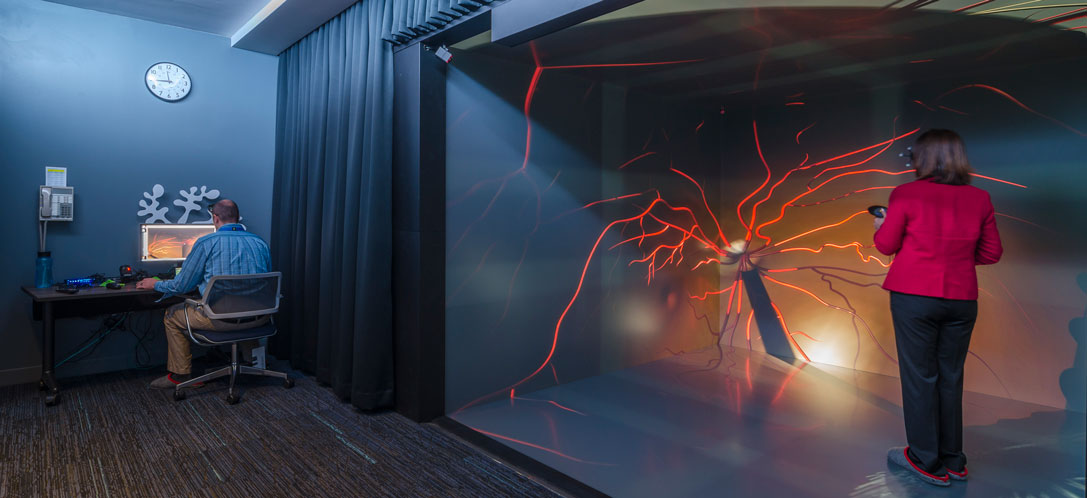
The University of Toledo Interprofessional Immersive Simulation Center in Toledo, OH.
At the same time, standardized patients are seeing renewed emphasis, driven by the recognized need to strengthen communication, empathy, and clinical judgment. Research indicates that simulation involving standardized patients can improve communication competency scores by over 20% and significantly enhance students’ ability to manage nuanced patient interactions.
The strategic challenge, then, is not selecting individual tools but designing a cohesive simulation environment that intentionally integrates these modalities. High-performing programs align modalities across learning objectives—using task trainers for skill acquisition, immersive technologies for conceptual understanding, and standardized patients for interpersonal application—creating a seamless progression from competence to clinical readiness.
Simulation in Action
At Manchester University, the nursing program has established a compact, integrated simulation ecosystem at its Fort Wayne Health Sciences Campus. The environment combines a traditional skills lab, high-fidelity mannequin simulation, and a dedicated VR learning classroom to support multiple instructional modes. An Anatomage Table is centrally located within the nursing space and remains accessible outside scheduled class time, reinforcing its role as a self-directed learning resource. In addition, the university has plans for an on-site community clinic, creating a controlled clinical environment with strong operational and educational alignment to the institution.
Care is Human-Centric
Care delivery is fundamentally human-centric, and simulation design should reflect this by prioritizing clinical judgment, communication, and relational competence alongside technical skill execution. While procedural proficiency remains essential, evidence consistently shows that non-technical skills—such as situational awareness, decision-making, and communication—are critical determinants of patient outcomes.
A landmark report by the Institute of Medicine (To Err Is Human) estimated that 44,000–98,000 deaths annually in the United States were attributable to preventable medical errors, many of which were linked to communication breakdowns rather than technical incompetence. Subsequent analyses, including data from The Joint Commission, have reinforced this finding—identifying communication failures as a contributing factor in approximately 60–70% of sentinel events.
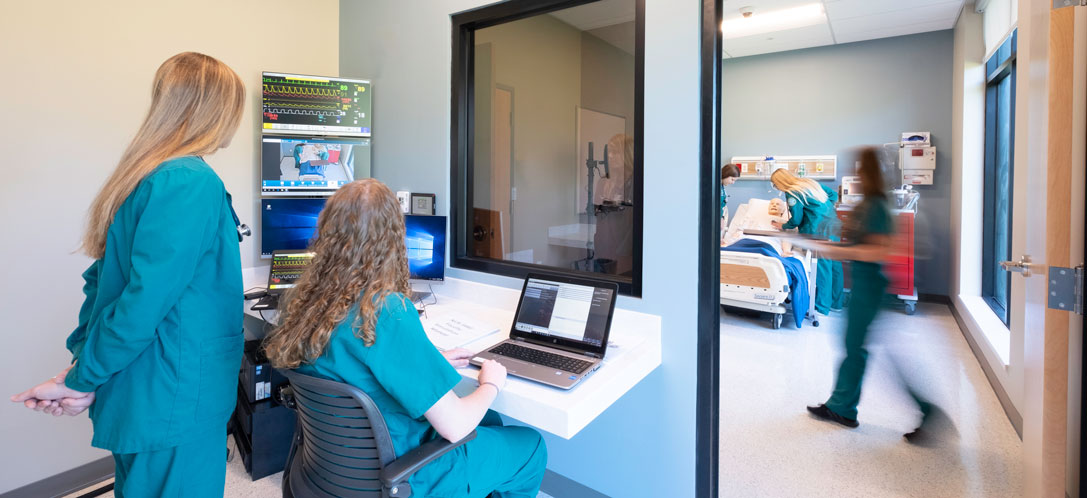
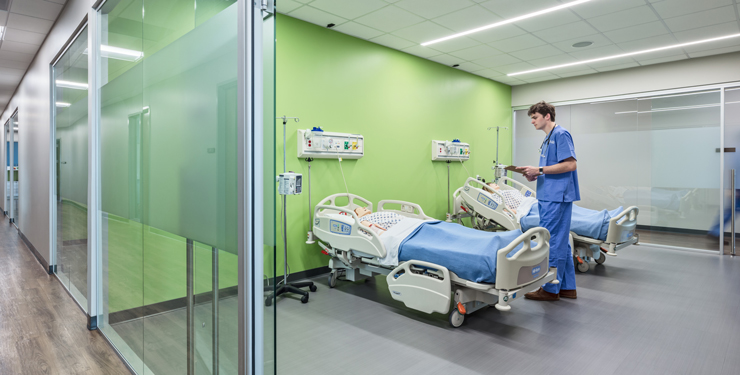
A simulation lab at Wright State University—Lake Campus, in Celina, OH.
Simulation-based education that incorporates standardized patients and communication-focused scenarios has demonstrated measurable impact. Meta-analytic evidence indicates large effect sizes in affective and communication domains (Standardized Mean Difference (SMD) ≈ 0.70+), supporting the intentional inclusion of scenarios such as patient handoffs, family discussions, behavioral health crises, de-escalation, and patient education. These experiences develop learners’ ability to navigate ambiguity, manage emotional complexity, and build therapeutic relationships.
This emphasis is particularly important given the psychological context of care. Studies show that up to 60% of patients experience significant anxiety during hospitalization, which can negatively affect comprehension, adherence, and overall outcomes. Clinicians who effectively communicate and demonstrate empathy can improve patient satisfaction, adherence to treatment plans, and even clinical recovery trajectories.
Creating Holistic Care with Simulation Training
The implication for simulation design is clear: care cannot be reduced to task completion. High-quality simulation programs deliberately embed human factors into scenario design—integrating communication challenges, ethical considerations, and emotional dynamics—so that learners develop not only the ability to perform interventions, but to care for the whole person.
This model of human-centered care is often intuitive in nursing education but can be less visible in other disciplines. At Xavier University, BHDP partnered with faculty to reframe this dynamic by developing a Speech-Language Pathology clinic. During the programming phase, the concept evolved into a broader community care setting that intentionally integrates counseling services.
This approach recognizes that patient needs frequently extend beyond physical or diagnostic concerns, creating opportunities for interdisciplinary learning and co-treatment. For example, students can collaborate across disciplines to support patients experiencing emotional or behavioral challenges, while also engaging family members—such as offering group therapy for parents during a child’s assessment and treatment. The result is a more holistic care model that reinforces both clinical and psychosocial dimensions of patient well-being.
Interprofessional Education
Interprofessional education (IPE) reflects the operational reality of healthcare delivery: safe, effective patient care is the product of coordinated team performance across disciplines, including physicians, nurses, pharmacists, social workers, therapists, and allied health professionals. Simulation-based education is one of the most effective mechanisms for exposing learners to this team-based environment early in their training, allowing them to develop communication, role clarity, and shared decision-making skills before entering clinical practice.
The World Health Organization defines interprofessional education as a critical strategy for strengthening health systems, noting that collaborative practice improves both patient outcomes and safety. Empirical evidence supports this: a systematic review published in the Journal of Interprofessional Care found that IPE interventions lead to significant improvements in teamwork behaviors, communication, and attitudes toward collaboration (Reeves et al., 2013). Additionally, simulation-based IPE has been shown to produce moderate-to-large effect sizes (SMD ≈ 0.60–0.80) in team performance and communication outcomes (Cook et al., 2011; updated reviews in Medical Education).
From a patient safety perspective, teamwork is not optional, it is foundational. The Joint Commission has repeatedly identified communication and teamwork failures as contributing factors in over 60% of sentinel events, underscoring the need for structured training in team-based competencies.
Interprofessional Simulation Creates Well-Rounded Practitioners
As a result, many undergraduate healthcare programs are embedding interprofessional simulation early in their curricula. Accrediting bodies and educational frameworks increasingly emphasize early exposure to team-based care, recognizing that collaboration skills are best developed longitudinally rather than deferred to clinical environments.
A strong applied example is the Cincinnati State Technical and Community College Allied Health Simulation Lab, where BHDP designed a flexible, multi-program simulation suite to support interprofessional learning across nursing, respiratory care, medical assisting, and EMS programs. One simulation room is paired with two adjacent debriefing rooms—an intentional design strategy that enables learners to participate in a shared clinical scenario while debriefing within their respective disciplines. This configuration preserves the integrity of interprofessional interaction during the scenario, while allowing faculty to tailor feedback, reinforce discipline-specific learning objectives, and highlight team-based “teaching moments” from multiple professional perspectives.
The broader implication is that simulation environments should be designed not just for individual skill acquisition, but for team-based performance—aligning physical space, technology, and pedagogy to replicate the collaborative dynamics of real-world care delivery.
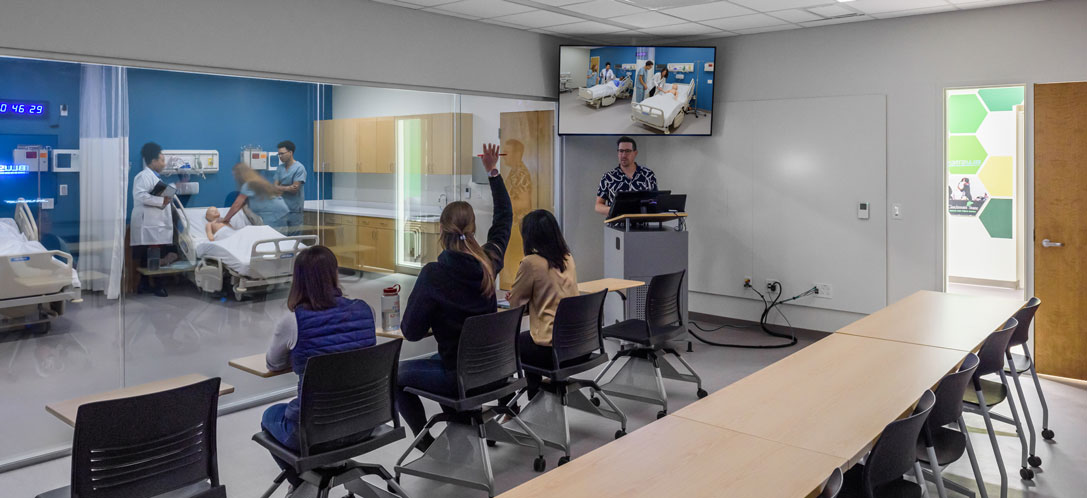
The Cincinnati State Technical and Community College Allied Health Simulation Lab in Cincinnati, OH.
Scalability and Access
Scalability and access remain structural constraints in health sciences education, with both clinical placements and simulation capacity acting as primary bottlenecks to enrollment growth and student progression. Limited availability of clinical sites, competition among programs, and preceptor shortages continue to restrict placement opportunities, while simulation—although effective—is capital- and labor-intensive to build and operate.
The American Association of Colleges of Nursing reports that U.S. nursing programs turned away over 65,000 qualified applicants in a recent admissions cycle, citing insufficient clinical sites, faculty shortages, and resource limitations as key barriers.
To further address scalability, programs are increasingly adopting virtual simulation modalities. Systematic reviews indicate that virtual simulation and VR-based learning produce moderate improvements in knowledge outcomes (SMD ≈ 0.4–0.6) and offer significant advantages in repeatability, accessibility, and standardized exposure—particularly for rare, high-risk, or logistically difficult clinical scenarios. These modalities allow learners to engage in deliberate practice without the scheduling, staffing, and space constraints of physical simulation labs. As a result, a hybrid model is emerging: high-frequency, scalable virtual experiences paired with fewer, high-value in-person simulations that focus on complex, team-based, and human-centered interactions.
However, there is a critical design consideration. While technology enhances access and scalability, it cannot fully replicate the interpersonal dynamics of patient care. Over-reliance on digital modalities risks underdeveloped communication, empathy, and real-time clinical judgment. High-performing programs, therefore, balance efficiency with intentional human engagement—ensuring that the drive for scale does not outpace the development of relational and professional competencies essential to safe, effective care.
Students Want Confidence
Students are fundamentally seeking confidence—defined not as overassurance, but as the integration of competence, judgment, and readiness to perform in real clinical environments. Simulation plays a central role in building this confidence by bridging the gap between theory and practice, particularly before students enter high-stakes clinical placements or the workforce.
Evidence supports this connection. A meta-analysis of simulation-based healthcare education found significant improvements in learner self-confidence and clinical competence (effect sizes ≈ 0.70), reinforcing simulation’s role in preparing practice-ready graduates (Cook et al., 2011, JAMA). Similarly, the National Council of State Boards of Nursing National Simulation Study reported that students who participated in high-quality simulation (replacing up to 50% of clinical hours) demonstrated no differences in clinical competency or readiness for practice, while reporting high levels of confidence entering the workforce (Hayden et al., 2014).
Student feedback consistently highlights two primary drivers of confidence:
1. Access to current, real-world equipment.
Learners place a high value on training with the same or comparable equipment they will encounter in clinical settings. This includes technologies such as medication dispensing systems (e.g., Pyxis MedStation) and diagnostic or imaging tools. Familiarity reduces cognitive load during clinical transitions and improves task efficiency. Research on simulation and skill transfer suggests that environmental and equipment fidelity enhance skill transfer and reduce performance anxiety, particularly for novice learners (INACSL Standards of Best Practice; Lateef, 2010).
As BHDP designed the reimagined Shawnee State University Radiology Teaching Lab, both students and faculty emphasized the need for a C-arm X-ray system, given its prevalence in clinical environments. Although the cost and shielding requirements associated with an energized unit made full implementation impractical, the program identified substantial educational value in installing a de-energized system. This approach allows students to develop proficiency in equipment positioning, movement, and workflow—core operational competencies—without the expense and regulatory burden of live imaging.
2. Engagement with faculty who bring real-world experience.
Students also seek mentorship from faculty who can contextualize learning with practical insight—especially in complex or emotionally charged situations. Simulation debriefing literature shows that guided reflection with experienced facilitators significantly improves clinical judgment, confidence, and emotional preparedness (Dreifuerst, 2012). This includes preparing students for difficult first experiences, such as patient deterioration or loss, which are rarely addressed through technical training alone.
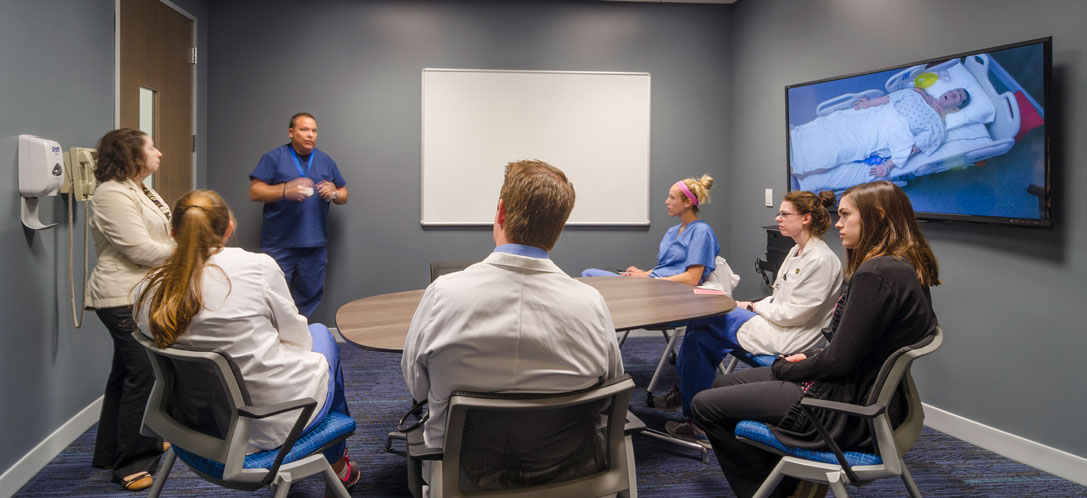
The debriefing room in the Interprofessional Immersive Simulation Center at the University of Toledo in Toledo, OH.
The implication is that confidence is not built solely through repetition, but through authenticity and mentorship. High-performing simulation programs align equipment, scenarios, and faculty expertise with current clinical practice, ensuring that students graduate not only with skills but with the confidence to apply them effectively in real-world care environments.
Creating Space for a Variety of Simulation Needs
Simulation is more than a curriculum component—it is a formative experience that shapes how students think, act, and grow into healthcare professionals. The environments we create directly influence how learners build confidence, process complexity, and develop both technical and human-centered competencies. When simulation is thoughtfully designed, students are not just practicing skills; they are learning how to navigate uncertainty, communicate under pressure, collaborate across disciplines, and care for the whole person.
These are the moments that define their transition from student to practitioner. Equally important is the role of space in this process. Architecture is not neutral; it actively enables or constrains learning. The adjacency of simulation rooms to debrief spaces, the flexibility to support multiple modalities, the visibility of shared resources, and the intentional design for interprofessional interaction all contribute to how effectively a program can deliver its educational mission. Well-designed environments reinforce realism, support reflection, and allow programs to scale without sacrificing quality or human connection.
As simulation continues to evolve, the opportunity—and challenge—is to align pedagogy, technology, and space into a cohesive ecosystem that supports both learning and growth. This requires more than selecting equipment; it requires strategic planning, stakeholder alignment, and a deep understanding of how the environment shapes experience.
Design Your Simulation Space with BHDP
BHDP Architecture brings deep expertise to the table, helping institutions program, plan, and design simulation environments that are not only functional, but transformative for the students who learn within them.
We learn more about your current simulation environment, your goals, and the challenges you are facing to create the simulation space that satisfies your needs and your constituents.
Fill out the form below to start a conversation about how your space can better support student learning, growth, and clinical readiness.
References
Alsharo, M., Gregg, D. G., & Ramirez, R. (2017). Virtual team effectiveness: The role of knowledge sharing and trust. Information & Management, 54(4), 479–490.
Cook, D. A., Hatala, R., Brydges, R., Zendejas, B., Szostek, J. H., Wang, A. T., Erwin, P. J., & Hamstra, S. J. (2011). Technology-enhanced simulation for health professions education: A systematic review and meta-analysis. JAMA, 306(9), 978–988.
Dreifuerst, K. T. (2012). Using debriefing for meaningful learning to foster development of clinical reasoning in simulation. Journal of Nursing Education, 51(6), 326–333.
Gallup. (n.d.). State of the global workplace (report series). Gallup.
Hayden, J. K., Smiley, R. A., Alexander, M., Kardong-Edgren, S., & Jeffries, P. R. (2014). The NCSBN National Simulation Study: A longitudinal, randomized, controlled study replacing clinical hours with simulation in prelicensure nursing education. Journal of Nursing Regulation, 5(2 Suppl), S3–S40.
Institute of Medicine. (2000). To err is human: Building a safer health system. National Academies Press.
International Nursing Association for Clinical Simulation and Learning. (2021). Healthcare simulation standards of best practice™. INACSL.
Lateef, F. (2010). Simulation-based learning: Just like the real thing. Journal of Emergencies, Trauma, and Shock, 3(4), 348–352.
Reeves, S., Perrier, L., Goldman, J., Freeth, D., & Zwarenstein, M. (2013). Interprofessional education: Effects on professional practice and healthcare outcomes (update). Cochrane Database of Systematic Reviews, 2013(3), Article CD002213.
The Joint Commission. (n.d.). Sentinel event data and statistics (summary/series). The Joint Commission.
World Health Organization. (2010). Framework for action on interprofessional education and collaborative practice. World Health Organization.
Author
Content Type
Date
May 04, 2026
Market
Topic
Nursing Education

Alejandro J. Medina, Client Leader
With over 16 years of experience, Alejandro J. "AJ" Medina works closely with his clients to understand their vision and values, identify strategic goals, and translate this understanding into the design of physical space that promotes the vision, values, and specific project goals. He builds strong relationships with his clients and successfully coordinates the efforts of architects, engineers, and key client stakeholders. AJ’s experience includes visioning, programming, and design for new construction and renovation projects, including student life, collaborative learning environments, health sciences education, athletics, residence life, and research and teaching laboratories.