
Academic Program Prioritization, Athletics, and Campus Master Planning: Strategic Design Partnerships in Higher Education

Ask university leaders what an architect does, and you'll usually hear: They design buildings. They perform a service you call in after you’ve done your due diligence and internal strategizing.
Because the first call a president or CFO who’s sitting on an outdated campus master plan thinks to make isn’t usually to an architecture firm – after all, most architects don’t do that. But what if it should be?
You don’t need to make all your strategic decisions in a vacuum. From considering which programs to grow or cut to how to fit athletics into the budget and optimize facility utilization, the right architecture firm can help you make these choices holistically.
Four Areas BHDP Works in Before Design
Our services begin prior to traditional design. Our higher education practice operates across four connected areas outside of traditional design from day one:
- Academic program prioritization
- Athletics program optimization
- Facility optimization
- Integrated strategic and master planning
Why Strategic Partnership Starts Before the Drawing Board
A master plan built in isolation tends to be aspirational rather than achievable. Richard Dober, a founding voice of campus planning, once described early master planning as building a kind of manifest destiny for an institution. Master planning at the time espoused a big vision that often had little connection to whether the institution could afford it or whether the market wanted what was being built.
Two Teams That Rarely Talked
Strategic planning came later, and for a long time, it ran on a separate track. One team looked at academic quality, culture, and mission. Another team looked at buildings and site plans. They rarely talked.
The result? Something disjointed and not fully informed. A strategic plan created in isolation might call for growing a health science program with no clear answer for where the nursing labs go, or whether the basic science classrooms can absorb the load.
Meanwhile, a campus might be sitting on underused space that could have housed that exact program at a fraction of the cost, if anyone had looked.
How BHDP Closes the Gap
BHDP closes that gap through named, structured methodologies rather than informal conversations. Across both academics and athletics, we partner with Terra Firma Consulting Services to deliver a coordinated approach to optimization, aligning strategy, resources, and performance to drive measurable results.
In facilities and master planning, it means treating the strategic and physical plans as one, integrated exercise rather than two documents that happen to share a logo.
Academic Program Prioritization: Aligning What You Teach With What You Need
To get this job done, BHDP partners with Terra Firma Consulting Services, a higher education consulting firm focused on institutional renewal, restructuring, and academic strategy. Together, the two collaborate on an Academic Program Prioritization: a structured review of a university’s degree programs against the local economy, the labor market, demographic shifts, and what comparable institutions are doing.
The process looks at things most architects never touch:
- Which programs have genuine labor-market demand, and which are coasting on legacy enrollment
- Where demographic forecasting suggests growth and where it suggests decline
- How the institution's program mix stacks up against direct competitors
None of this is guesswork. It's a multifactorial review of mission fit, internal and external demand, and the size, cost, and revenue performance of each program.
What makes this relevant to a master plan rather than just a provost's spreadsheet is the translation step. Once you know which programs are worth investing in, you know what kind of space they'll need, how instructional delivery has to change, and where capital should go.
A campus that builds first and asks questions about academic direction second tends to end up with buildings that don't match where the institution is headed.
Case Study: Belmont Abbey College – Gaston Science Building Renovation
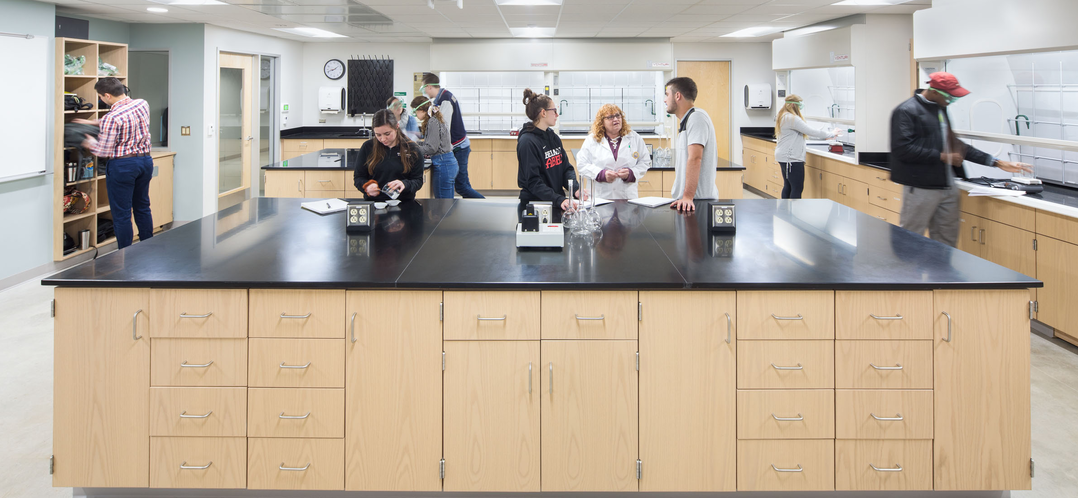
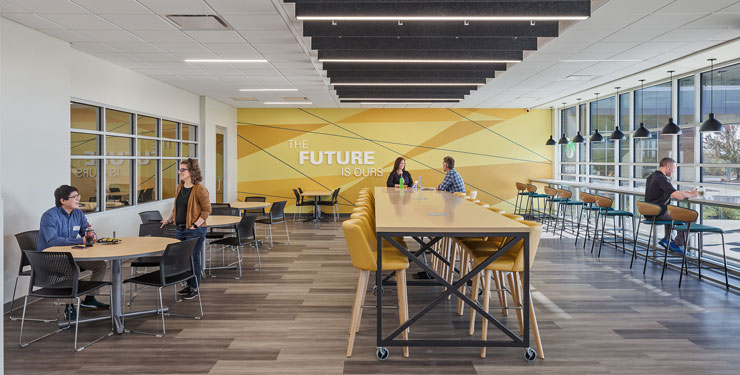
BHDP was tasked with creating a transformative 21st-century science facility within the existing William Gaston Science Building at Belmont Abbey College. | View Project
Belmont Abbey College brought BHDP in to look at the aging William Gaston Science Building, constructed in 1967, with the goal of creating a modern science facility within its existing walls.
Rather than jumping straight to design, BHDP's team analyzed more than 50,000 SF of space as part of a broader strategic master-planning engagement, examining how the building functioned, where inefficiencies lay, and what a 21st-century science program at a Benedictine liberal arts college actually needed.
From Analysis to a Phased Renovation
That analysis shaped a phased renovation. Phase one converted existing classrooms and labs into new chemistry and biochemistry space. Phase two added a new exterior entry. The finished building reduced the office footprint through open layouts, freed up room for classrooms, labs, and collaboration space, and improved wayfinding and collaboration for students.
It's a smaller-scale example than a full Academic Program Prioritization engagement, but it makes the same point.
The strategic analysis came first. The building came second. And the resulting building made sense because the thinking behind it did, too.
Athletics Program Optimization: Athletics as an Institutional Asset, not a Cost Center
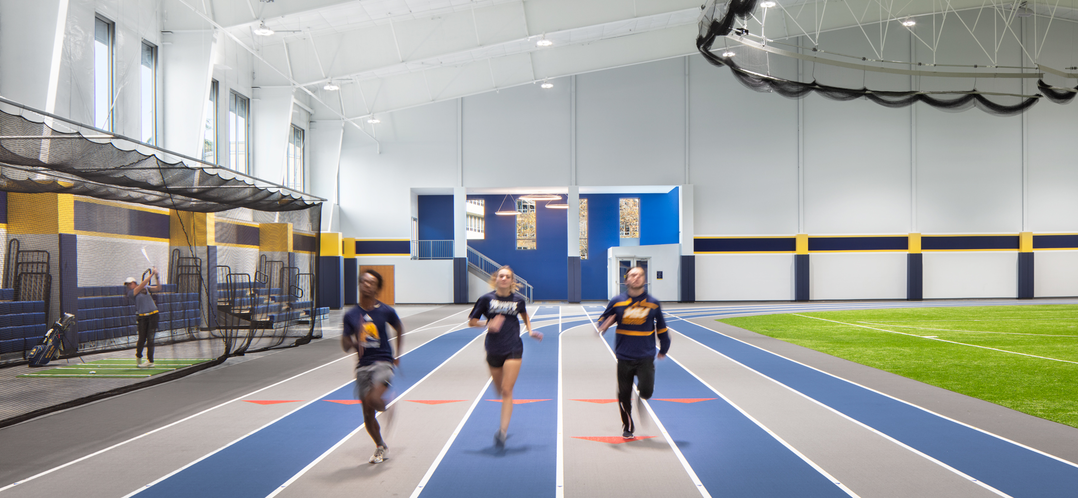
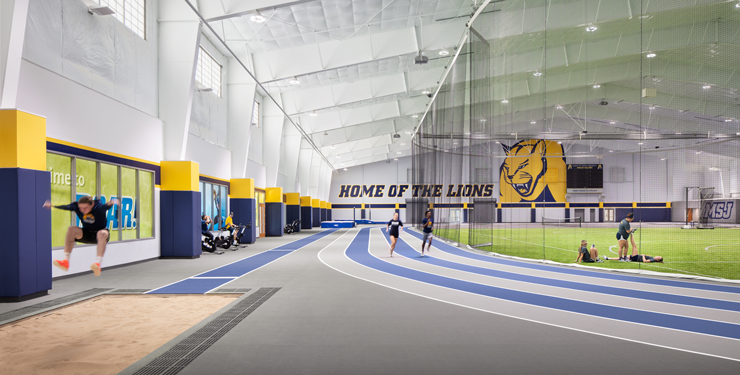
BHDP designed the Centennial Field House, a hub for recreational sports and fitness, at Mount St. Joseph University to provide a space that better supports the needs and wellbeing of all students, faculty, and staff. View Project
Most campus conversations about athletics start and end with the budget line. Is the program costing too much? Should we cut a sport? It's a narrow way to look at something that, done right, drives enrollment, shapes campus culture, and gives donors a reason to show up.
BHDP's Intercollegiate Athletics Program Optimization service, delivered in partnership with Terra Firma Consulting, exists to ask a better set of questions. It's built specifically for college presidents, athletics directors and other NCAA Division II and III executives trying to figure out whether their athletic offerings are working for the institution, rather than simply running alongside it.
Roster Composition, Financial Aid, and Title IX
The assessment starts with the basics that most athletic departments never formally audit:
- Are current rosters sized to support enrollment goals, or are teams carrying numbers that don't translate into tuition revenue?
- Is financial aid being deployed strategically to recruit the right students, manage discount rates, and protect net tuition revenue, or is it just being spent?
Any serious look at roster composition and program expansion also runs into Title IX, which shapes which programs can grow and how, whether it shows up as a line item in the audit or not.
Facility Adequacy and Competitive Positioning
The second half of the assessment looks outward and at the physical plant:
- Are existing athletic, club sport, and intramural facilities sufficient for the programs the institution wants to run?
- Is there a mismatch between ambition and infrastructure?
- How does the institution compare to its peer group on these same metrics?
Benchmarking against comparable universities tends to surface gaps that are invisible from inside a single campus. The point isn't to treat athletics as a separate department with its own consultants. It's to fold athletics into the same strategic and master-planning conversations as academics and facilities, because that's where it lives on a real campus.
Facility Optimization and Integrated Strategic and Master Planning
Here's a number worth sitting with. Research from the Society for College and University Planning found that only 25 percent of institutions report a strong correlation between their strategic plan and their campus master plan. BHDP ran its own national survey of college presidents and CFOs and found something similar: only about half felt their strategic plan and master plan were actually related, coordinated, or linked at all.
That's not a small gap. It means three out of four institutions, by SCUP's numbers, are operating with two planning documents that don't talk to each other.
Independent colleges and universities in particular are re-thinking the campus plan as enrollment pressure makes the old approach harder to justify. One describes where the institution wants to go academically and financially. The other describes what gets built.
When they're disconnected, you get exactly the kind of problems Paul Orban has described: growth plans with nowhere to physically land, or campus space sitting unused while new construction gets approved a quarter mile away.
From Two Documents to One Plan
Strategic planning defines an institution's mission, near-term goals, and academic direction. Master planning translates that into physical space, property decisions, and capital sequencing. Done separately, on separate timelines, you risk building things the strategic plan never asked for, or making strategic commitments the campus has no physical way to support.
This is a synchronization problem. You don't do a strategic plan, shelve it, and then call an architect two years later. You run both processes together, or close enough in sequence that the master plan reflects the strategic plan's actual priorities rather than a stale snapshot.
Facility optimization fits into this same frame: it's not about renovating buildings because they're old, it's about matching existing space to where the institution's academic and athletic priorities are headed, which is often cheaper and faster than new construction.
Where Renewal, Restructuring, and Enrollment Growth Connect
This is also where institutional renewal, restructuring, enrollment growth, and financial stability stop being four separate conversations. The conversation BHDP has been having with CFOs about campus futures and financial strategy reflects exactly this shift.
A campus working through a genuine restructuring effort needs its facilities plan to reflect the leaner, more focused institution it's becoming. A campus chasing enrollment growth needs space that can actually absorb new students in the programs that are growing, not just more square footage in general.
Treating strategic and master planning as one integrated process makes that kind of alignment possible rather than accidental.
What This Means for Your Institution
Before you hire a firm to design anything, it's worth finding out whether they can answer questions that have nothing to do with design.
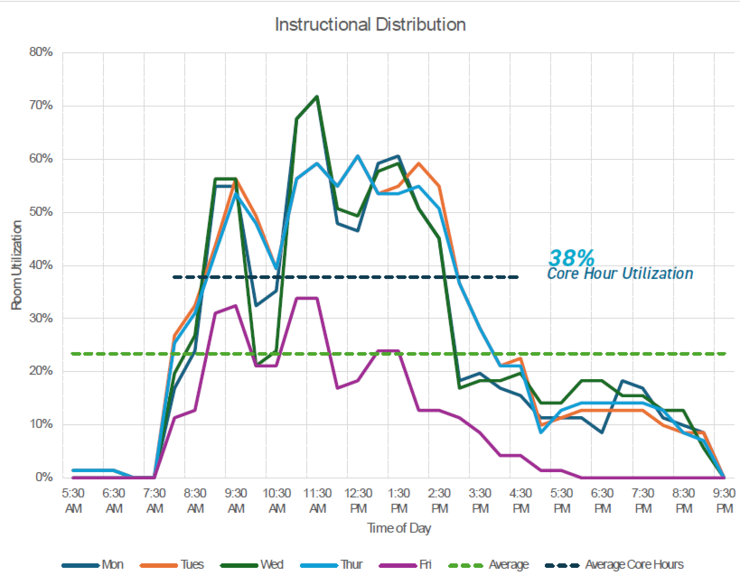
Space utilization analysis evaluates how effectively existing campus facilities are being used to identify opportunities for greater efficiency—helping clients make data-driven planning decisions and prioritize future investments where most needed.
Questions to Ask a Potential Architect Today
- Do they have a structured process for evaluating which academic programs deserve investment?
- Is it backed by labor-market and demographic data, or is it a conversation?
- Do they treat athletics as part of the campus's financial and enrollment strategy, or as someone else's department?
- Can they show you a campus space utilization analysis before they show you a rendering?
If the answer to all of that is no, you're hiring a firm that will execute a plan, not help you build one.
Early Engagement = Lower Risk, Higher Reward
The earlier a strategic partner gets involved, the more options stay on the table. Bringing in a firm after the strategic plan is finished and the budget is set means you've already foreclosed on the cheaper path, the one where existing space gets optimized instead of replaced, where an academic program review happens before construction commitments rather than after.
Institutions that involve a strategic and design partner early tend to spend less and get facilities that match where they're headed, not where they were when the planning process started.
Rethinking the Role of the Architect in Higher Ed
The architects-just-design-buildings model was never entirely accurate, but it's becoming actively counterproductive for institutions facing real pressure on enrollment, finances, and program relevance.
BHDP's work across academic program prioritization, athletics optimization, facility optimization, and integrated strategic and master planning isn't an attempt to rebrand architecture as something else. It's a recognition that none of those four things function well in isolation, and that the institutions getting this right are the ones treating strategy and structure as a single conversation from the start.
Invest in Your Institution with BHDP
Contact BHDP to talk through where your campus stands today and what an integrated approach could look like for your institution.
Author
Content Type
Date
October 28, 2026
Topic
Higher Education Strategic Partnerships
Athletics
Campus Planning

Derick Stadge, Higher Education Market Leader
With over 20 years in design and construction, Derick is passionate about turning ideas into meaningful built environments that leave a lasting impact on campuses, communities, and cities. His expertise spans design and planning, sustainable strategies, project management, construction administration, and client leadership. Derick has led a wide range of higher education projects—from labs and classrooms to residence halls and public spaces—managing varying scales, budgets, and complexities. His background working within a major university’s planning and design team gives him a unique perspective on strategic and capital planning, the design process, leadership, risk management, and the value of effective collaboration.